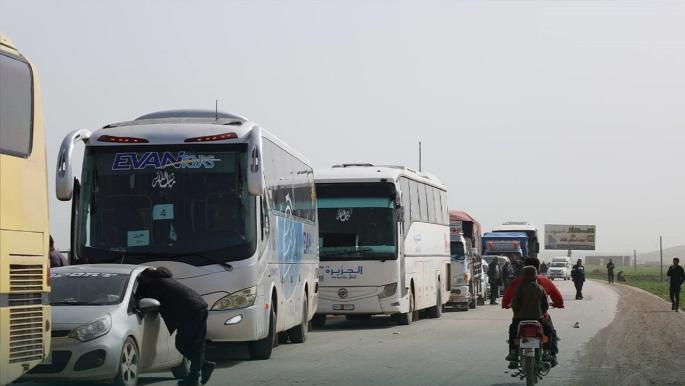
On Saturday, the Syrian presidential team began overseeing a new convoy of approximately 200 families from the city of Qamishli, preparing for their transfer to the city of Afrin. This initiative is part of an agreement reached with the Syrian Democratic Forces (SDF) on January 29.
This step is part of the Syrian government's efforts to facilitate the return of displaced persons to their original areas, as this convoy represents a component of a comprehensive plan aimed at enhancing stability in regions that have experienced armed conflicts. The convoy was organized in collaboration with relevant authorities, ensuring that all necessary needs for the transferred families were provided.
Details of the Event
The convoy that departed from Qamishli consists of families who had been displaced due to the ongoing conflict in the region. This initiative is part of the government’s efforts to resettle displaced persons in areas previously under the control of the Syrian government. It has been confirmed that the convoy will head to Afrin, which has witnessed significant demographic changes as a result of the conflict.
It is noteworthy that the agreement reached on January 29 between the Syrian government and the SDF includes several provisions aimed at improving humanitarian conditions in the area, including facilitating the movement of displaced persons and providing humanitarian aid.
Background & Context
Historically, the northeastern region of Syria has experienced multiple armed conflicts, resulting in the displacement of large numbers of residents. Qamishli and Afrin have been among the areas most affected by these conflicts. In recent years, the Syrian government has attempted to regain control over these areas, leading to understandings with the SDF, which controls vast parts of northeastern Syria.
This convoy is part of a larger process aimed at restoring stability to conflict-affected areas, as the government seeks to strengthen its presence in these regions by resettling displaced persons and providing support to them.
Impact & Consequences
This step is expected to positively affect the humanitarian situation in the region, as it will contribute to improving the conditions of displaced families and providing a more stable environment. Additionally, this initiative may enhance dialogue opportunities between the Syrian government and the SDF, potentially leading to further agreements in the future.
However, the greatest challenge remains how to address the existing tensions among various armed factions in the region, which may impact the success of this initiative. Therefore, careful monitoring of events will be essential to ensure that the desired objectives are achieved.
Regional Significance
This step holds particular importance for the Arab region, reflecting the Syrian government’s efforts to rebuild trust with local populations and enhance stability. It also represents a potential model for other countries facing similar challenges in returning displaced persons to their original areas.
In a broader context, this initiative could influence relations between Arab countries and Syria, as it may open the door for further cooperation in humanitarian relief and reconstruction efforts. Consequently, the success of this convoy could have positive regional implications.
In conclusion, the launch of this convoy represents a significant step towards restoring stability to conflict-affected areas in Syria. As government efforts continue, hope remains for achieving positive outcomes that contribute to improving humanitarian conditions in the country.