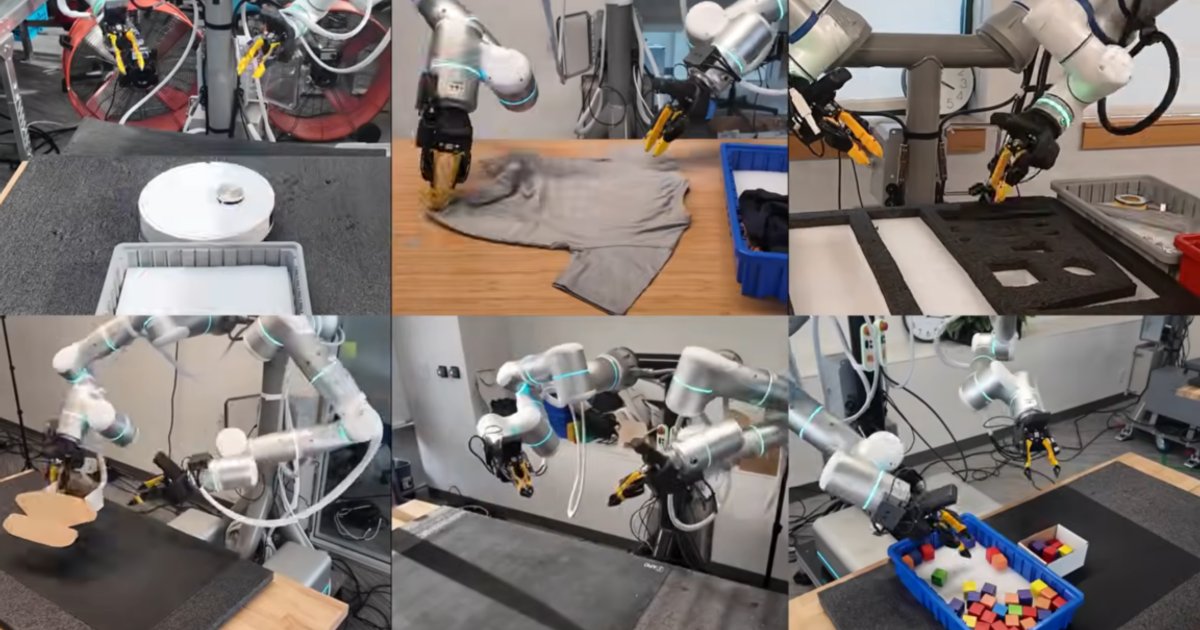
A leading company in robotics technology has unveiled its new GEN-1 model, which features a reliability rate of 99% in performing various tasks. This model represents a significant leap towards enhancing the performance of robots in dynamic work environments, enabling them to effectively respond to unforeseen challenges.
The GEN-1 model possesses a unique ability to learn from past experiences, allowing it to execute movements that it has not been specifically trained for. This feature enhances the adaptability of robots to changing conditions, marking a revolution in the field of industrial robotics.
Details of the GEN-1 Model
The GEN-1 model is designed to perform a wide range of tasks, from packing boxes to repairing vacuum cleaners. This versatility reflects the model's capability to operate across multiple domains, making it a preferred choice for many companies.
Tests have shown that the model can handle complex situations, such as changes in the work environment or the emergence of unexpected obstacles. This adaptability means that robots can play a larger role in industrial processes, increasing production efficiency.
Background & Context
Historically, robots relied on fixed programming to perform specific tasks, which limited their ability to adapt to changing conditions. As technology has advanced, companies have begun developing smarter models, such as GEN-1, which utilize machine learning.
Impact & Consequences
The GEN-1 model is expected to significantly impact the robotics market, potentially leading to increased reliance on robots in industrial operations. This reliance could contribute to improved productivity and reduced human errors, benefiting companies.
Regional Significance
The introduction of the GEN-1 model represents a crucial step towards automating industrial processes, which can enhance efficiency and reduce costs. This advancement is particularly important for industries in the Arab region, where technology adoption can drive economic growth.
In conclusion, the GEN-1 model not only showcases the latest advancements in robotics but also sets the stage for a future where robots are integral to industrial operations, ultimately transforming the landscape of various sectors.