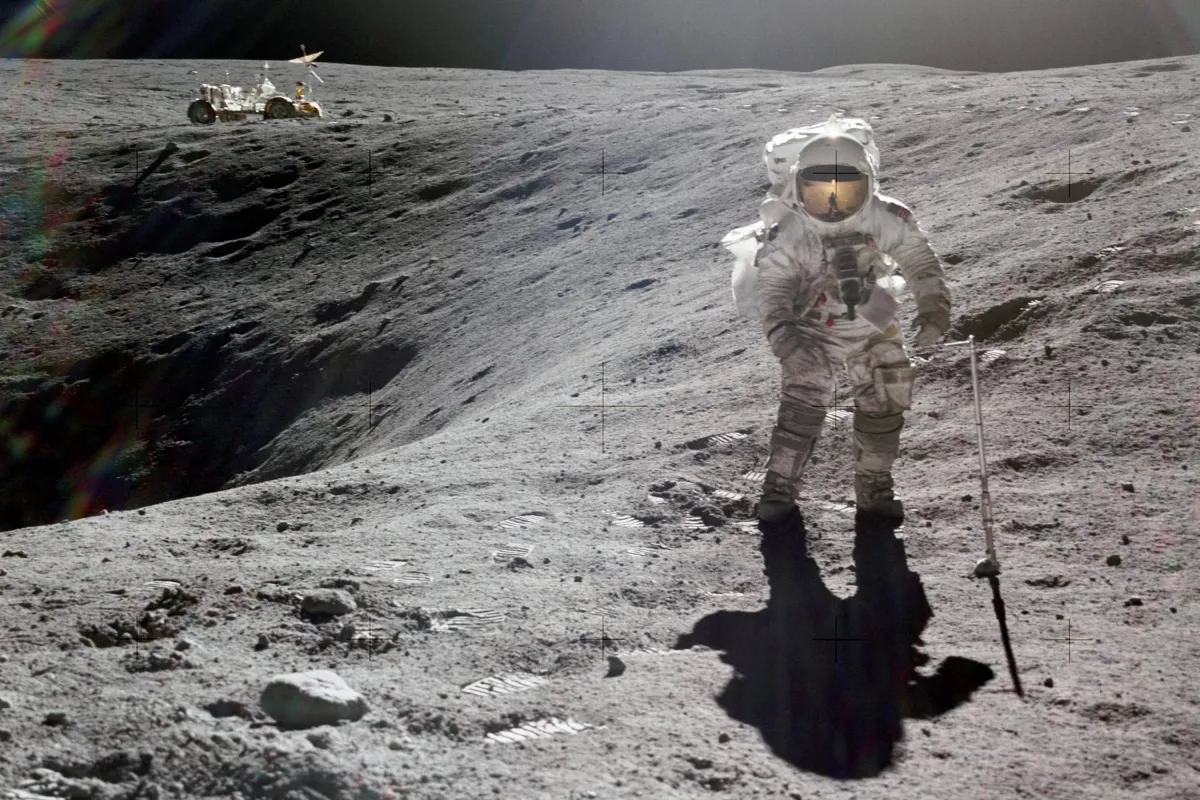
The 'Artemis 2' mission, organized by the U.S. space agency NASA, launched on Wednesday evening from the Kennedy Space Center in Florida, carrying four astronauts on a ten-day journey to lunar orbit. This mission represents the first crewed flight to the moon in over fifty years, with the last crewed mission to the moon occurring in 1972.
The crew includes three American astronauts: Reid Wiseman, Victor Glover, and Christina Koch, along with Canadian astronaut Jeremy Hansen. Hansen expressed his excitement before the launch, stating, "We are leaving for all of humanity," reflecting the collaborative spirit that this mission aims to embody.
Event Details
The journey will last ten days, during which the astronauts will reach lunar orbit without landing on the moon's surface, with an actual landing planned for 2028. This mission has generated significant interest in both scientific and public circles, with many people gathering to witness this historic event.
This mission is part of the 'Artemis' program announced during the presidency of former U.S. President Donald Trump, which aims to establish a permanent human presence on the moon as a precursor to exploring Mars. Despite the challenges and delays faced by the program, the launch of 'Artemis 2' represents a crucial step towards achieving these goals.
Background & Context
This mission recalls the 'Apollo 8' mission, which was the first crewed flight to lunar orbit in 1968, marking a turning point in the history of space exploration. The first mission where humans landed on the moon was 'Apollo 11' in 1969, and the last mission to the moon was 'Apollo 17' in 1972.
NASA aims to establish a base on the moon, which would enable it to launch future explorations to Mars. These plans come at a time when competition is increasing with China, which is planning to send a crewed mission to the moon in 2030.
Impact & Consequences
This mission is fraught with risks, as the spacecraft carrying the astronauts has not been tested in space missions before. The spacecraft must reach the moon, located over 384,000 kilometers from Earth, which poses a significant challenge compared to the International Space Station, which orbits Earth at an altitude of approximately 400 kilometers.
Former NASA chief astronaut Peggy Whitson states that every astronaut must prove they have performed their duties to the fullest, as the consequences can be fatal. Some experts suggest that the U.S. agency has set itself a challenging goal of landing on the moon by 2028, given the need to develop a new landing vehicle.
Regional Significance
This mission is seen as a scientific and technological achievement that concerns all nations, including Arab countries, which are striving to enhance their capabilities in the field of space. This mission may inspire a new generation of scientists and engineers in the Arab world, boosting their efforts in space exploration and technology development.
In conclusion, the 'Artemis 2' mission represents an important step towards re-establishing the United States in space, opening new horizons for lunar and Martian exploration, reflecting human aspirations in space.