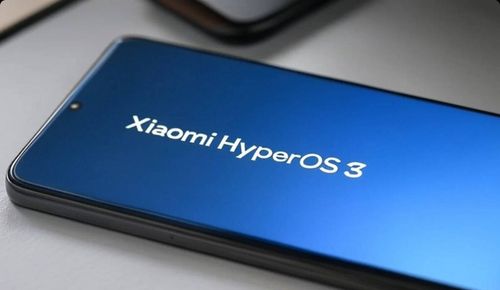
Xiaomi has announced the launch of its new operating system, HyperOS 3.1, in the Chinese market, where the update has begun reaching several of its global devices such as Xiaomi 17, Xiaomi 17 Ultra, POCO Pad, and Redmi Pad Pro in Europe. This update is part of the company's efforts to enhance user experience and improve the overall performance of its devices.
The new update carries the version number OS3.0.301.0.WPCEUXM for the Xiaomi 17 device, while the Xiaomi 17 Ultra comes with the same number but with the addition of WPAEUXM. As for the POCO Pad and Redmi Pad Pro, both received an update with the version number OS3.0.301.0.WNSEUXM.
Event Details
The update is currently available in Europe, and it is expected to be expanded to more regions in the near future. Users can check for the update by going to the "Settings" section, then "About Phone," and clicking on the HyperOS logo at the top to check for available updates.
HyperOS 3.1 is built on Android 16 and offers a range of system-level and user interface improvements, enhancing user experience and productivity. Xiaomi has also rewritten some core applications to achieve more efficient resource usage, resulting in a more responsive performance.
Background & Context
Xiaomi is considered one of the leading companies in the technology sector and has achieved significant success in recent years due to continuous innovations in its products. The HyperOS system is part of the company's strategy to provide an integrated experience for users across various devices, reflecting a trend towards improving performance and efficiency.
Operating systems are a fundamental part of the user experience, and with continuous updates, companies like Xiaomi strive to offer new features that meet the increasing needs of users. HyperOS 3.1 represents an important step in this direction, providing noticeable improvements in performance and interaction.
Impact & Consequences
The HyperOS 3.1 update could significantly impact user experience, introducing new features such as HyperIsland, which was first introduced on tablets. This feature now supports richer animations, deeper integration with external applications, and easier real-time activity tracking.
Additionally, the update enhances connectivity across different platforms, as it has added native support for Apple AirPods, enabling features like quick pairing and access to spatial audio on compatible headphones. This move reflects the company's direction towards enhancing interaction between different devices.
Regional Significance
With the increasing use of smart devices in the Arab region, the HyperOS 3.1 update represents an opportunity for Arab users to benefit from the new features offered by Xiaomi. This update is expected to improve the experience of Arab users, thereby enhancing their loyalty to the brand.
Moreover, the support of Arab devices by advanced operating systems like HyperOS 3.1 reflects the companies' interest in expanding their user base in emerging markets, which could lead to increased competition in the Arab market.