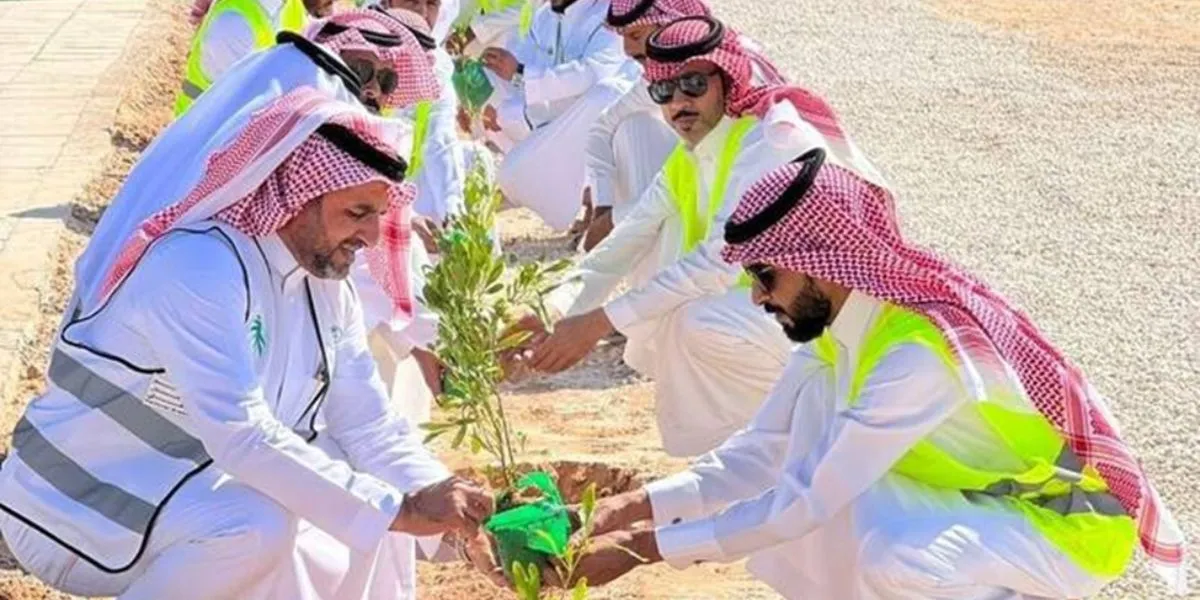
Saudi Arabia has launched a project to plant 159 million trees, reflecting its commitment to achieving sustainable development and protecting the environment. This initiative is part of national efforts to combat desertification and enhance vegetation cover, contributing to improved air quality and reduced carbon emissions.
Through this project, the Kingdom aims to achieve the goals of Vision 2030, which focuses on promoting environmental sustainability and enhancing the quality of life. This project is considered part of a comprehensive national strategy aimed at increasing green spaces in a country facing significant environmental challenges.
Details of the Initiative
The tree planting plan includes identifying strategic locations across various regions of the Kingdom, where suitable tree species will be selected to match the local climate. Modern agricultural techniques will also be employed to ensure the project's success and sustainability in the long term.
The plan also involves engaging the local community in the planting process, which raises environmental awareness and encourages active participation in environmental conservation. This project is expected to create new job opportunities and boost the local economy.
Background & Context
Saudi Arabia faces significant environmental challenges, including desertification and water scarcity. These challenges have necessitated urgent action to preserve the environment and improve quality of life. In recent years, the government has increased its investments in environmental projects, including rehabilitating degraded areas and tree planting.
This initiative is part of the Kingdom's efforts to mitigate the impacts of climate change, as it seeks to balance economic development with environmental preservation. Studies have shown that increasing vegetation cover can play a crucial role in reducing temperatures and improving air quality.
Impact & Consequences
The project to plant 159 million trees is expected to have a positive impact on both the environment and society. This initiative will contribute to improved air quality and reduced carbon emissions, enhancing the Kingdom's efforts in combating climate change.
Moreover, increasing green spaces will help improve the daily lives of citizens by providing new recreational areas and promoting public health. Additionally, the project will support the growth of eco-tourism in the Kingdom, contributing to the diversification of national income sources.
Regional Significance
This initiative serves as a model for other Arab countries facing similar environmental challenges. It can inspire neighboring nations to adopt similar strategies aimed at promoting environmental sustainability and increasing green spaces.
Furthermore, regional cooperation in environmental matters can facilitate knowledge and experience sharing, enhancing the ability of Arab countries to collectively address environmental challenges.
In conclusion, planting 159 million trees represents a significant step towards achieving a sustainable environment in Saudi Arabia and reflects the government's commitment to sustainable development and environmental protection. The success of this project relies on collaboration between the government and the local community, enhancing the chances of achieving the goals of Vision 2030.