The United States, in collaboration with Israel, has announced the start of a military campaign against Iran, focusing on its nuclear and missile programs as well as its governance system. However, this war takes on a religious character, as President Trump invokes religious symbols in the context of the battle, suggesting it is a holy war.
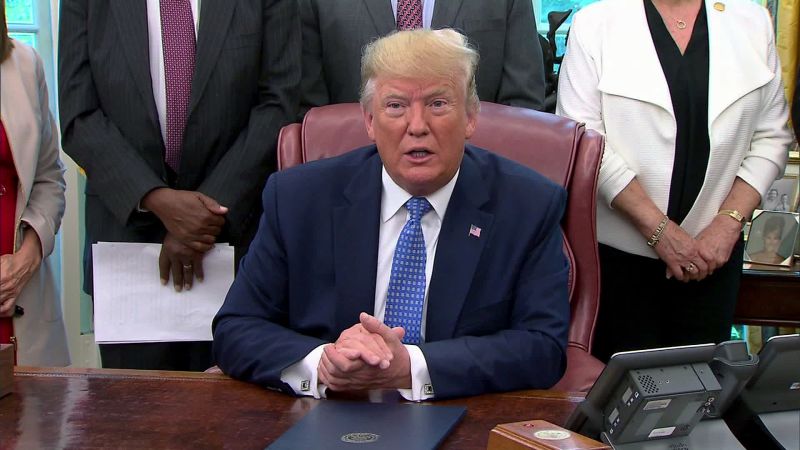
Surrounding President Trump are several religious leaders who provide him with spiritual support, with some seen placing their hands on his shoulder in scenes that reflect the close relationship between politics and religion in the current administration. Prayers are also held in the White House, reflecting a shift in political discourse towards the use of religious symbols in foreign policy.
Details of the Campaign
The United States aims through this campaign to confront threats it perceives as stemming from the Iranian nuclear program, in addition to its development of ballistic missiles. American officials have indicated that these steps are intended to undermine Iran's influence in the region, which they consider a threat to U.S. national security and that of its allies.
The military campaign includes intensifying economic and military pressures on Tehran, with new sanctions imposed targeting vital sectors such as oil and gas. The U.S. military presence in the region has also been strengthened, increasing tensions between the United States and Iran.
Background & Context
Historically, U.S.-Iranian relations have experienced increasing tensions since the Islamic Revolution in 1979. Recent years have seen a rise in these tensions, especially following the U.S. withdrawal from the nuclear agreement in 2018. This withdrawal led to the re-imposition of severe sanctions on Iran, which affected its economy and led to internal protests.
In light of these circumstances, the Trump administration seeks to use religion as a means to justify its policies, reflecting a shift in American political discourse. This use of religion in foreign policy is not new, but it has notably increased under the current administration.
Impact & Consequences
The implications of this war extend beyond Iranian borders, as it could lead to an escalation of conflicts in the region. Iran, which considers itself a defender of the oppressed in the Islamic world, may respond to any attack by supporting armed groups in Iraq, Syria, and Lebanon.
Moreover, the use of religious rhetoric in politics may lead to greater polarization within Islamic communities, increasing divisions among nations. This could negatively impact regional stability and heighten the likelihood of new conflicts erupting.
Regional Significance
Under these conditions, Arab countries are monitoring the situation with concern, as any military escalation could affect their security and stability. Many Arab nations, especially those with close ties to the United States, find themselves in a sensitive position, having to balance support for their American allies while maintaining relations with Iran.
The military escalation could also affect oil prices and financial markets, impacting Arab economies that heavily rely on oil revenues. In this context, Arab countries must be prepared to deal with any potential repercussions.
In conclusion, the American war on Iran under the Trump administration is not merely a military conflict; it is also an ideological and religious struggle that may leave profound effects on the entire region.