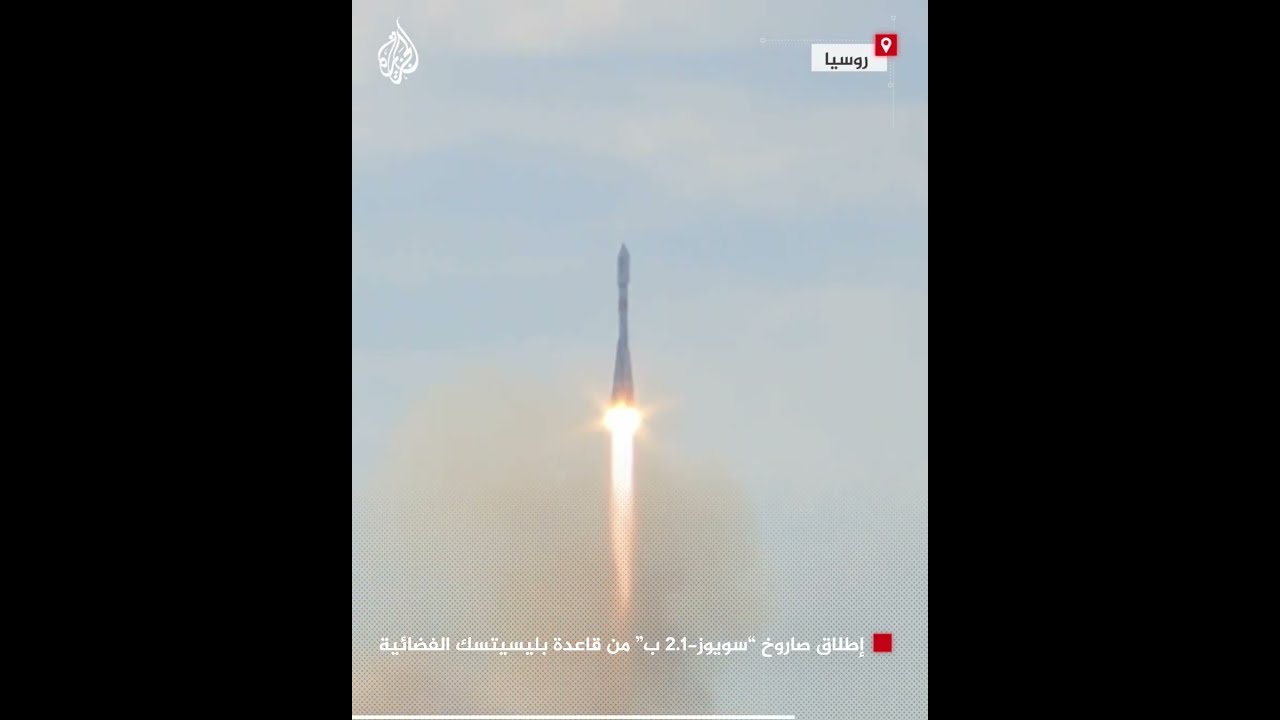
The Russian Ministry of Defense successfully launched the Soyuz-2.1a rocket from the Plesetsk spaceport, located in northwestern Russia. The rocket carries a new military satellite, enhancing Russia's strategic capabilities in space.
This launch is part of the Russian space program aimed at bolstering national security through the development of space technology. The launch occurred early today, with images circulated on Russian media showing the moment the rocket took off into the skies over Plesetsk.
Details of the Event
The Soyuz-2.1a rocket is one of the most reliable rockets in the world and has been developed to replace previous versions of the Soyuz rockets. This rocket is distinguished by its ability to carry a variety of payloads, including military and commercial satellites. This launch is in line with Russia's efforts to enhance its presence in space, especially amid current geopolitical tensions.
The Plesetsk spaceport is considered one of the most important rocket launch sites in Russia, having been in use since 1966. This base provides a strategic location that allows for launches on multiple trajectories, thereby enhancing Russia's capability to conduct diverse space operations.
Background & Context
For years, Russia has sought to enhance its space capabilities, particularly in light of increasing competition with the United States and other nations. Recent years have seen a rise in the number of Russian space launches, including the deployment of satellites for military and commercial purposes. There is also a growing interest from Russia in developing space technology, including the exploration of outer space.
This step is part of Russia's strategy to strengthen its defense capabilities, as satellites are considered an essential component of the national defense system. These satellites are used for monitoring military activities and providing intelligence information.
Impact & Consequences
This launch could have wide-ranging effects at both regional and international levels. It may escalate tensions between Russia and Western countries, especially given the current situation in Ukraine. Additionally, the enhancement of Russian military capabilities in space could prompt other nations to increase their investments in their own space programs.
On a military level, this launch could improve Russia's reconnaissance and surveillance capabilities, thereby enhancing its ability to make timely strategic decisions. Furthermore, this launch may encourage greater cooperation between Russia and other countries in the field of space.
Regional Significance
As Russia continues to bolster its space capabilities, Arab nations are closely monitoring these developments. With the increasing Arab interest in space, these events could foster collaboration between Arab countries and Russia in the fields of space and technology.
There is also a growing interest among Arab nations in developing their own space programs, which could open new avenues for cooperation in research and development. Thus, the successful launch of the Soyuz-2.1a rocket could have a positive impact on enhancing Arab-Russian cooperation in this field.
In conclusion, this launch represents an important step in strengthening Russia's military and technological capabilities, reflecting the strategic directions of the state in the field of space. As geopolitical tensions continue, the question remains open regarding how these developments will affect regional and international security.