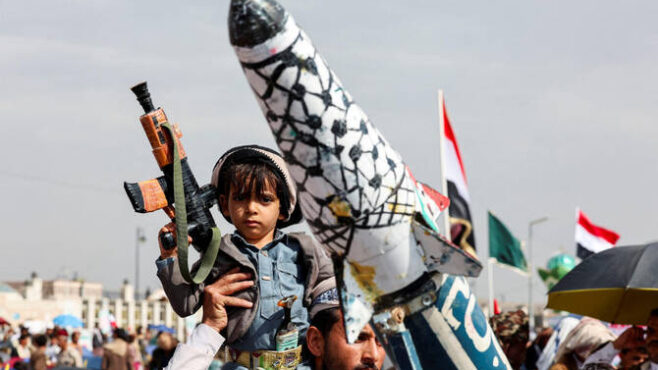
The region has witnessed an unprecedented escalation following the launch of a missile from Yemen towards Israel, the first of its kind since the onset of the war on Iran. This event reflects radical changes in the regional conflict and raises questions about its implications for security and stability in the Middle East.
The operation came at a sensitive time, as tensions between Iran and its allies on one side and Israel on the other are increasing. This launch was announced by the Houthi group, which confirmed that it targeted Israeli military sites, complicating the security landscape in the region.
Details of the Incident
According to local sources, the missile was launched late at night, where it was detected by Israeli defense systems that managed to intercept it before it reached its target. This operation is considered a historic precedent, as no missile launches from Yemen towards Israel have been recorded since the beginning of the Iranian-Israeli conflict.
Initial analysis suggests that this launch may be part of the Houthis' strategy to increase pressure on their adversaries, especially given the increasing Iranian support for them. Israel has expressed concern over this development, considering that any aggression against its territory will not go unpunished.
Background & Context
The roots of the conflict between Iran and Israel date back decades, with Iran viewing Israel as an existential threat, while Israel seeks to undermine Iran's influence in the region. Since the outbreak of the war in Yemen, the Houthis have become one of Iran's arms in the regional conflict, complicating relations among the involved parties.
In recent years, the region has witnessed an increase in missile attacks by the Houthis, but these have primarily targeted sites within Saudi Arabia. This shift towards targeting Israel indicates a change in Houthi strategy and reflects the increasing Iranian support for them.
Impact & Consequences
This launch could lead to military escalation in the region, with Israel expected to respond strongly to any threats. Additionally, this event may open the door for further military interventions by regional and international powers, complicating the security situation.
Moreover, this escalation may increase tensions between Arab states and Iran, as some countries may feel threatened by this development, potentially pushing them to adopt more hardline positions against Iran and its allies.
Regional Significance
This event serves as a wake-up call for Arab countries, demonstrating that the conflict in Yemen could extend beyond its borders and affect the stability of the entire region. The rising tensions may also impact peace efforts in the area, complicating any attempts to reach political solutions to ongoing conflicts.
In conclusion, this launch shows that regional conflicts continue to interact in complex ways, and any escalation could lead to unforeseen consequences for security and stability in the Middle East.