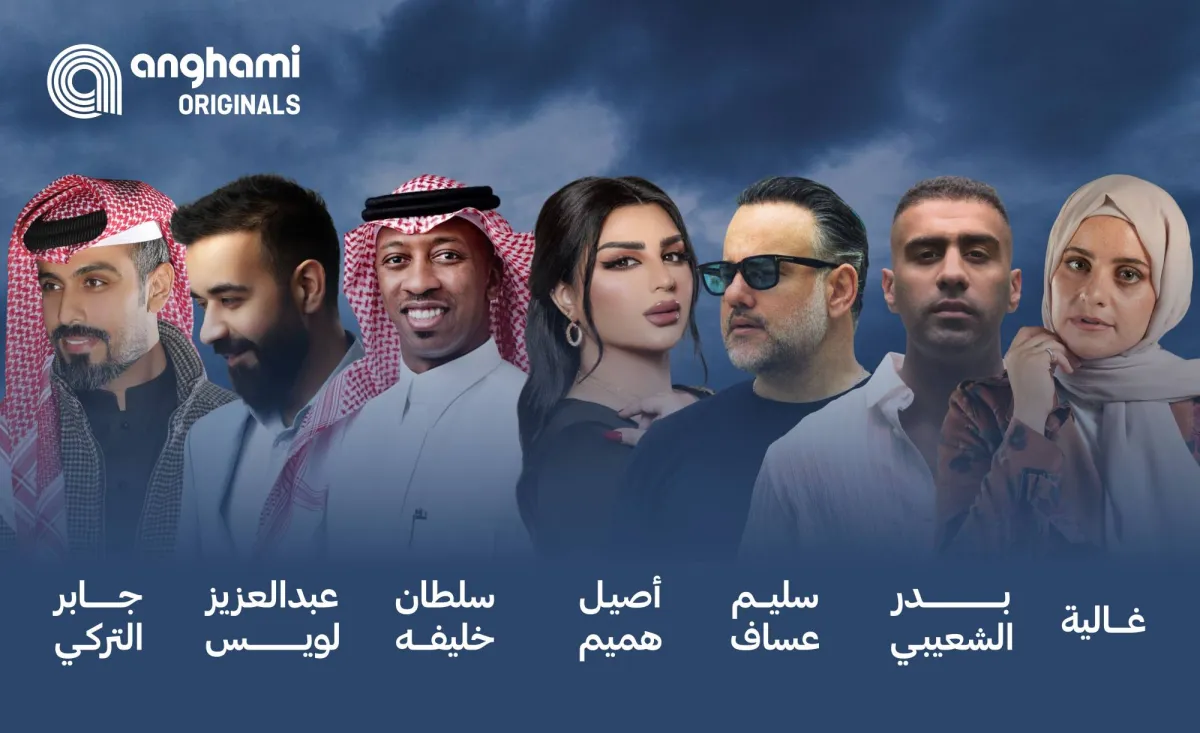
The music platform 'Anghami' has launched a new national song titled 'More Than Ever', bringing together seven artists from various Arab countries in a move aimed at enhancing cultural and artistic connections among Arab peoples. The song comes at a time when the Arab world is facing significant challenges, highlighting the importance of music as a means of communication and expression of hope.
The song features distinctive voices from artists in Lebanon, Iraq, Saudi Arabia, Kuwait, Bahrain, and Syria, including Slim Asaf, Asil Hamim, Badr Al-Shuaibi, Sultan Khalifa, Abdulaziz Louis, Jaber Al-Turki, and Ghalia. The song was written and composed by Slim Asaf, who emphasized that music at this historical moment should be seen as more than mere melodies; it is an expression of collective memory and the hope that unites Arab peoples.
Event Details
The song 'More Than Ever' is a cross-border production, recorded in multiple locations and initiated by the artists themselves, with support from the 'Anghami' platform, which facilitated collaboration among the artists. All participants expressed an immediate desire to join this project, reflecting the spirit of solidarity among Arab artists under the current circumstances.
The lyrics of the song convey meanings of resilience and connection, calling for unity and overcoming the gaps between peoples. The work was developed in a short timeframe, demonstrating the artists' commitment to delivering a positive message at a time when the Arab world needs hope and solidarity.
Background & Context
This song comes in a changing artistic context, where artists face significant challenges due to the political and social situations in the region. Through this song, 'Anghami' aims to revive the artistic spirit that unites Arabs and affirm the role of music in enhancing cultural identity.
Recent years have seen many artistic projects aimed at promoting cooperation among Arab artists, but 'More Than Ever' stands out as a new and innovative step that reflects the challenges faced by artists under current conditions. The song is not just an artistic work; it is a call for communication and solidarity among peoples.
Impact & Consequences
The song 'More Than Ever' is expected to have a positive impact on the Arab artistic scene, reflecting the artists' desire to work together and transcend political and cultural boundaries. This step may encourage more artists to collaborate on future projects, thereby strengthening cultural ties between Arab countries.
Additionally, the song may contribute to raising awareness of the importance of art as a source of hope and change, especially in light of the difficult circumstances many Arab countries are experiencing. Through music, artists can help spread positive messages that call for unity and solidarity.
Regional Significance
This song exemplifies how art can be used as a means of communication between peoples, reflecting the cultural ties that bind Arab countries. At a time when challenges are increasing, 'More Than Ever' reaffirms the importance of cooperation and solidarity among Arab artists.
This initiative is not merely an artistic endeavor; it is a call to think about how art can be used to promote human values and communication among peoples. Through music, artists can play a significant role in building bridges of communication between different cultures.