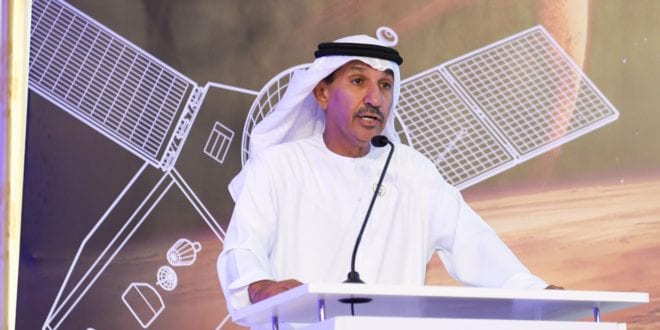
Ahmed Al-Falasi, the Minister of State for Space Affairs in the UAE, announced that the 'National Space Strategy' aims to enhance the UAE's position in the field of space and develop its technological and scientific capabilities. Al-Falasi emphasized that this strategy represents an important step towards achieving the UAE Vision 2071, which seeks to position the country among the best in the world.
The strategy includes a set of ambitious goals, including the development of new space projects, enhancing international cooperation in space fields, and training national cadres in this sector. It also aims to promote scientific research and innovation in space, contributing to the development of the national economy.
Event Details
The National Space Strategy encompasses several key axes, including the development of satellites, enhancing capabilities in space exploration, and launching new projects that bolster the UAE's status as a global space hub. Plans were also announced to expand cooperation with global space agencies, reflecting the UAE's commitment to innovation and progress in this field.
This strategy is expected to create new job opportunities and strengthen the national economy by developing new industries related to space. It will also attract foreign investments in this sector, enhancing the UAE's position as a global center for innovation in space.
Background & Context
This strategy comes at a time when the UAE is witnessing significant developments in the space sector, having launched the Hope Probe to Mars in 2020, making it the first Arab country to reach the Red Planet. This historic achievement reflects the UAE's commitment to investing in science and technology, enhancing its status as a leading country in the global space arena.
The UAE has previously launched several space projects, such as the KhalifaSat satellite, which is the first satellite to be fully developed in the UAE. These projects reflect the ongoing efforts of the state to enhance its capabilities in the field of space.
Impact & Consequences
The UAE expects the National Space Strategy to enhance its economic position and increase its competitiveness on a global scale. By developing new space projects, the UAE will be able to attract more foreign investments, which will bolster the growth of the national economy.
This strategy will also enhance international cooperation in space fields, contributing to the exchange of knowledge and expertise with other countries. This collaboration will have a positive impact on developing local capabilities in the space sector, strengthening the UAE's ability to compete in this vital area.
Regional Significance
The National Space Strategy serves as a model for other Arab countries, reflecting the UAE's commitment to investing in science and technology. This step can inspire other Arab nations to develop their own space programs, contributing to enhanced Arab cooperation in space fields.
Moreover, enhancing the capabilities of Arab countries in space will contribute to achieving sustainable development and strengthen these countries' ability to face future challenges. Through cooperation in space fields, Arab nations can achieve significant economic and social benefits.
In conclusion, the National Space Strategy represents an important step towards achieving the UAE Vision 2071 and enhancing its status as a leading country in the field of space. Through this strategy, the UAE aims to achieve new accomplishments in this vital sector, further solidifying its global standing.