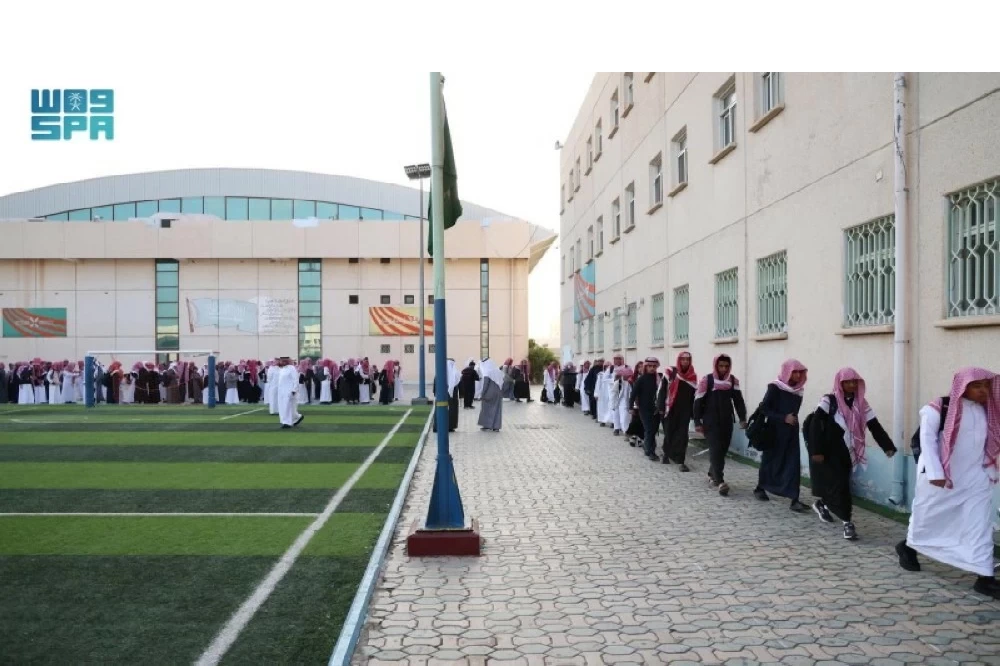
Tomorrow (Sunday), the national 'Nafes' tests will kick off in 28,000 primary, intermediate, and early childhood schools across various regions and governorates in Saudi Arabia. These tests aim to assess over 1.5 million students, covering mathematics and reading for third-grade primary and early childhood schools, as well as mathematics, reading, and science for sixth-grade primary and third-grade intermediate students.
These tests are part of the efforts by the Education and Training Evaluation Commission in collaboration with the Ministry of Education, aiming to measure educational performance indicators. Additionally, more than 3 million questionnaires will be executed directed at students, teachers, school principals, and parents, with the goal of collecting comprehensive data about the educational environment.
Details of the Event
The 'Nafes' tests aim to measure the quality of education in primary and intermediate stages, as well as early childhood schools. These tests are expected to provide accurate data for decision-makers and beneficiaries, enhancing efforts to improve the quality of public education outcomes.
Through this initiative, the commission seeks to promote excellence and positive competition among schools and educational offices and departments, supporting national efforts aimed at developing the educational process and enhancing its efficiency.
Background & Context
The 'Nafes' tests come as part of the Human Capacity Development Program, which aims to improve the quality of education in the Kingdom of Saudi Arabia. This program was launched under the Saudi Vision 2030, which seeks to enhance education and develop students' skills in line with labor market needs.
These tests are considered an important step towards achieving educational goals, allowing teachers and administrators to evaluate student levels and identify strengths and weaknesses in the educational process.
Impact & Consequences
The 'Nafes' tests are expected to contribute to improving the quality of education in the Kingdom, as they will provide accurate data that aids in educational decision-making. They will also foster a spirit of competition among schools, potentially leading to improved academic performance among students.
These tests also present an opportunity for teachers to evaluate the teaching methods used, enabling them to develop more effective educational strategies.
Regional Significance
The experience of the 'Nafes' tests serves as a model for other Arab countries, as it can contribute to the development of educational systems in the region. Through the exchange of experiences and data, Arab countries can enhance the quality of education and improve its outcomes.
In light of the challenges facing education in the region, these initiatives represent a positive step towards achieving better education for students, contributing to building a brighter future.