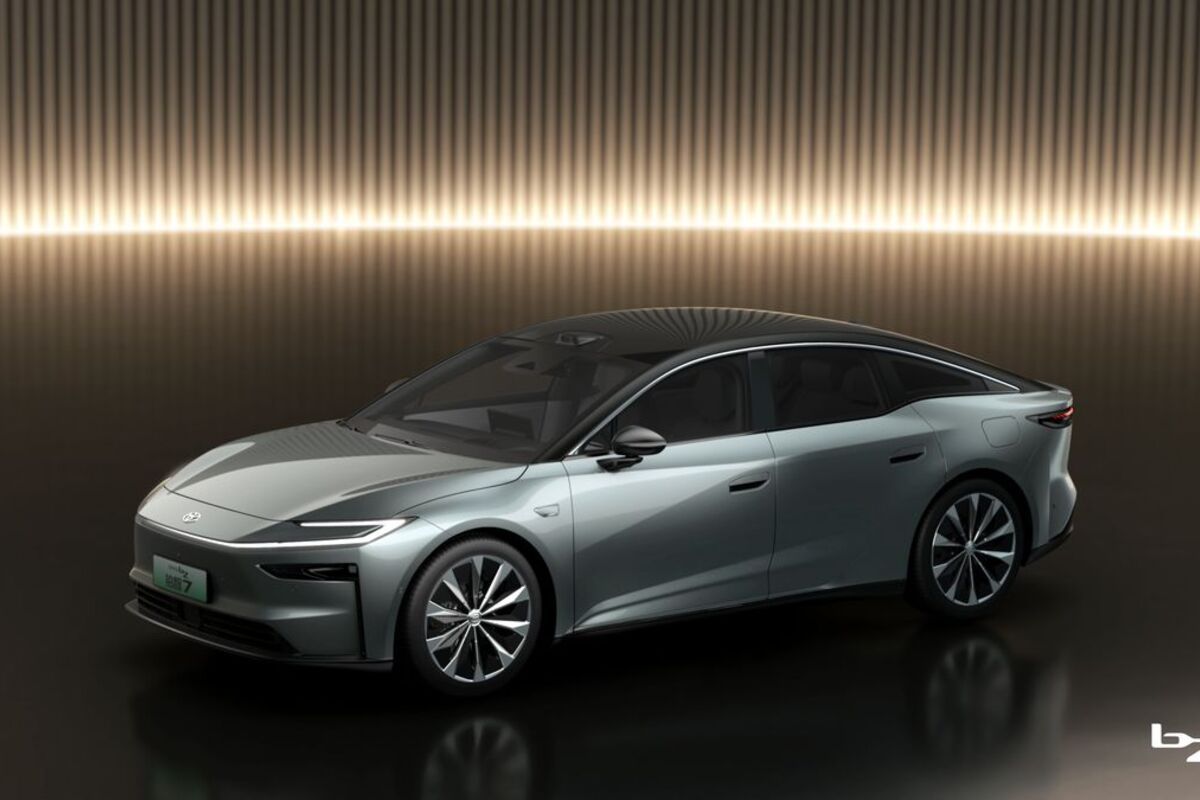
GAC Toyota has reported significant success for its new electric vehicle, the bZ7, which recorded over 3100 orders within just one hour of its official launch on March 29. This vehicle represents the culmination of collaboration between Toyota and Chinese company GAC, entering the market with prices starting from 147,800 yuan (approximately 363 million rupees) and reaching up to 199,800 yuan (about 491 million rupees).
The bZ7 is characterized by its large dimensions, measuring 5,130 mm in length, 1,965 mm in width, and 1,506 mm in height, with a wheelbase of 3,020 mm. The vehicle is available in five different models, with range options reaching 600 km, 700 km, and 710 km according to CLTC standards.
Event Details
The bZ7 comes equipped with the smart cockpit system from Huawei HarmonyOS 5.0, an advanced driver assistance system ADAS Momenta R6, and the electric drive system Huawei Drive ONE. The exterior design of the vehicle reflects the design language of the GAC-Toyota family, featuring a coupe fastback design that adds a sporty character to the car.
The vehicle also features integrated LED taillights and is available in seven exterior colors, while the standard version comes with 20-inch wheels. Inside, the car includes front and rear seats equipped with ventilation, heating, and massage technologies, enhancing passenger comfort.
Background & Context
This move comes at a time when the electric vehicle market is experiencing rapid growth, especially in China, which is the largest electric vehicle market in the world. Major companies like Toyota are seeking to strengthen their presence in this market by offering innovative vehicles that meet the increasing needs of consumers.
The bZ7 is part of Toyota's strategy to expand in the electric vehicle sector, aiming for significant sales in the coming years, particularly with the rising environmental awareness and demand for sustainable transportation.
Impact & Consequences
The success of the bZ7 in attracting such a large number of orders in a short period reflects consumer interest in modern technology and innovations in the electric vehicle sector. This success may also encourage other companies to invest in developing new electric vehicles, thereby enhancing competition in the market.
Moreover, this success could lead to increased investments in electric vehicle charging infrastructure, making it easier for consumers to adopt this technology more widely.
Regional Significance
In light of the global shift towards electric vehicles, the success of the bZ7 could have positive implications for the Arab market. These developments could encourage Arab companies to invest in electric vehicle technologies, contributing to a reduction in reliance on fossil fuels.
Additionally, the growing awareness of the importance of electric vehicles may prompt Arab governments to enhance supportive policies for this industry, contributing to the achievement of sustainable development goals.
The success of the bZ7 electric vehicle marks a milestone in the automotive industry, reflecting the increasing trend towards innovation and sustainability. As demand for electric vehicles continues to rise, the future appears to hold more opportunities and challenges in this sector.