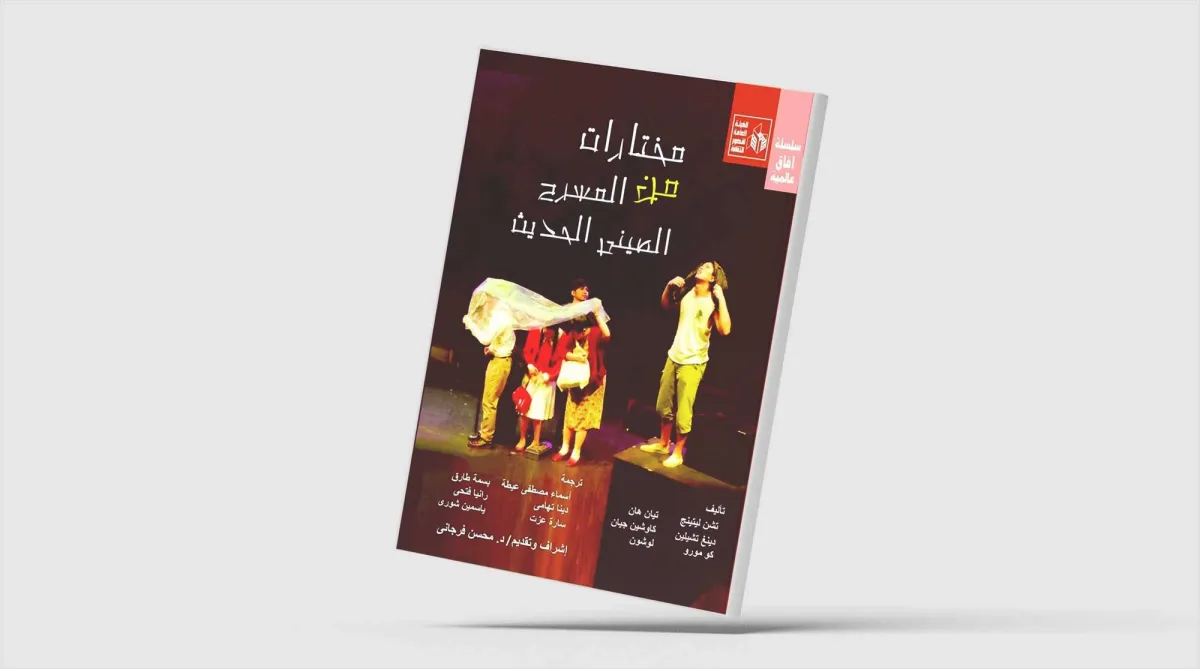
The book 'Selections from Modern Chinese Theatre' has been published in Cairo by the Egyptian General Organization for Cultural Palaces, highlighting the diversity of ideas and the differences in artistic methods in Chinese theatre during the 20th century. This book, part of the 'Global Horizons' series, was presented by critic and academic Mohsen Farghani, with contributions from a group of translators.
Farghani, an assistant professor at the Faculty of Al-Alsun at Ain Shams University, begins the book, which consists of 447 pages, with an extensive introduction. He emphasizes that translating modern Chinese theatre requires a deep awareness of classical opera, its techniques, and symbols. He also pointed out that political dominance over theatrical work in China has negatively impacted its artistic and aesthetic character during certain periods, particularly in the 19th century and the early 20th century.
Event Details
Modern Chinese theatre experienced a qualitative leap in performance and content during the 1960s and 1970s, focusing on adapting literary works for the stage. Although the winds of modernization swept through Chinese literature in general, this experience did not mature until the 1960s. In Hong Kong, the 1960s marked a period of actual revival, allowing for the emergence of advanced theatre troupes.
By the 1980s, a radical transformation began in Chinese theatre, where political and historical dominance was criticized, leading to a new era of creativity. This phase was enhanced by a broad movement of translating Western theatre, allowing Chinese playwrights to engage with contemporary global trends.
Background & Context
The selection of texts in the book aims to bridge the knowledge gap in the Arabic library, as direct translations of Chinese theatre ceased in the early 1970s. Additionally, classical Chinese theatre suffers from a lack of translations, with only rare attempts made. The writer Cao Yu is the most famous figure in the Arab world through his well-known works.
Among the prominent texts in the book is the play 'The Traveler' by writer Lu Xun, who is considered one of the most important writers of the 20th century. The selections also include the play 'Catching the Tiger' by writer Tian Han, who played a significant role in the emergence of modern Chinese theatre.
Impact & Consequences
The book not only highlights theatrical texts but also reflects the evolution of theatrical thought in China and its impact on global culture. By presenting previously untranslated texts, the book contributes to enhancing mutual understanding between cultures. It also opens new horizons for researchers and those interested in Chinese theatre.
The importance of this book lies in its contribution to enriching the Arabic library with valuable information about Chinese theatre, thereby enhancing cultural exchange between Arabs and Chinese. It also encourages further studies and research in this field.
Regional Significance
This book represents an important step towards enhancing cultural and artistic understanding between Arabs and Chinese, contributing to building bridges of cultural communication. It also reflects the importance of theatre as a means of expressing cultural and historical identity.
In conclusion, Farghani shows that Chinese theatre is not merely an art form but a reflection of a rich history and culture, making it an integral part of human heritage.