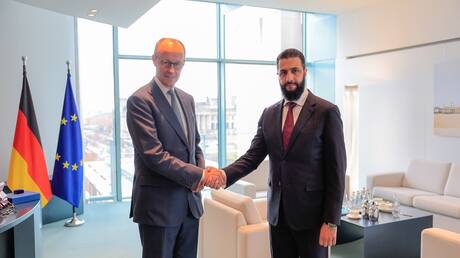
In a new initiative aimed at enhancing reconstruction efforts in Syria, Syrian President Ahmad al-Shara and German Chancellor Friedrich Merz announced the launch of the 'Circular Migration' program. This program enables Syrian professionals to contribute to rebuilding their homeland without having to relinquish their residency in Germany.
This announcement comes at a time when Syria is suffering from the effects of a conflict that has persisted for over a decade, with reconstruction costs estimated in the hundreds of billions of dollars. The program aims to attract Syrian professionals residing abroad, allowing them to return for specified periods to contribute to reconstruction projects, thereby enhancing job opportunities and reducing brain drain.
Event Details
During a joint press conference, al-Shara emphasized that the program aims to leverage the expertise of Syrians in various fields such as engineering, medicine, and education to rebuild the devastated infrastructure. Merz noted that this partnership reflects Germany's commitment to supporting the Syrian people during this critical phase.
A series of joint projects were also announced, set to begin in several sectors, including housing, health, and education. These projects are expected to be implemented in collaboration with international and local organizations to ensure that the desired goals are achieved.
Background & Context
Syria is considered one of the most affected countries by armed conflicts, with the war leading to widespread destruction of infrastructure and the loss of many skilled professionals. As the number of Syrian refugees abroad increases, it has become essential to seek innovative solutions for rebuilding the country.
In recent years, the Syrian government has taken multiple steps to attract expatriates, including offering financial incentives and legal facilitation. However, challenges remain, as political and security stability is required to attract investments and international aid.
Impact & Consequences
The 'Circular Migration' program is expected to contribute to strengthening the Syrian economy by introducing new expertise and potential investments. It may also improve relations between Syria and Germany, opening new avenues for cooperation in other areas.
However, questions remain about the effectiveness of this program in achieving its goals under current circumstances. Security and political challenges may hinder the full return of skilled professionals, necessitating additional strategies to ensure the success of this initiative.
Regional Significance
This program represents a model that could be emulated in other Arab countries suffering from conflicts or economic crises. Such initiatives can contribute to enhancing stability and development, positively impacting the region as a whole.
In conclusion, hope remains pinned on the success of the 'Circular Migration' program in achieving its objectives, which may contribute to rebuilding Syria and enhancing the role of Syrian professionals abroad.