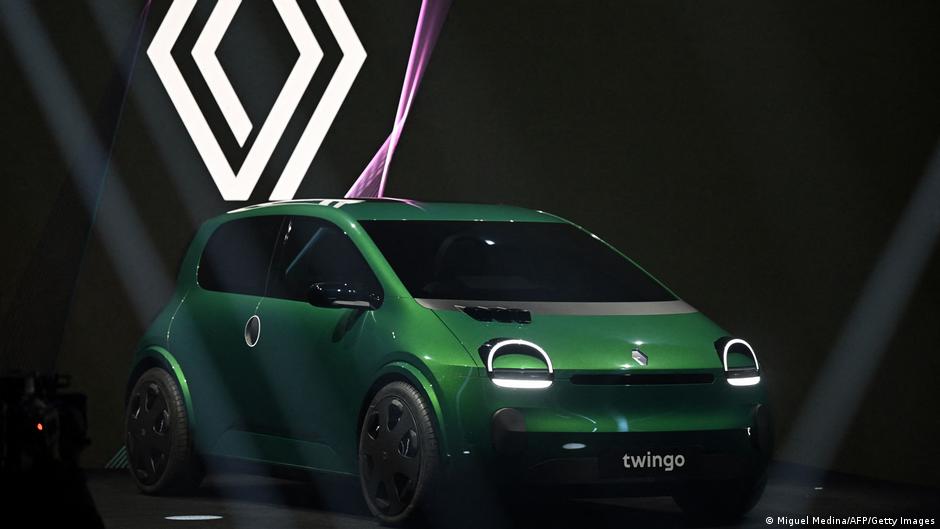
Renault has announced the launch of its new electric vehicle, the Twingo, developed in China, reflecting significant shifts in the global automotive industry. The new Twingo is designed to meet the needs of urban drivers in Europe, having been developed in a record time of 21 months in Shanghai.
The starting price of the new car is less than €20,000 (approximately $23,000), reflecting the growing trend towards electric vehicles in European markets. The Twingo is currently being produced in Slovenia and is expected to reach dealers soon.
Details of the Twingo Electric
The new Twingo exemplifies the fierce competition in the automotive industry, where major companies are striving to develop new models focusing on speed, cost, and technology. Analyst Bill Russo noted that the real competition is not between China and the West, but between fast and slow systems.
Western and Japanese companies such as Tesla, Volkswagen, and General Motors are seeking to expand their presence in China, not only through manufacturing but also by designing and developing new models within the country. Renault and Mercedes have opened new research and development centers in Shanghai, reflecting the importance of the Chinese market in the future of the automotive industry.
Background & Context
Historically, Renault has been one of the pioneers in the automotive industry, launching the original Twingo in 1992 at the Paris Motor Show. However, economic challenges and changes in the global market have prompted the company to reassess its strategies. In 2020, Renault stopped selling its cars in the Chinese market, but the visit to the Shanghai Auto Show in 2023 rekindled the company's interest in developing products within China.
China is now a global hub for the automotive industry, where new models are developed in much less time than traditional companies. Chinese companies rely on automation and better coordination with suppliers, allowing them to reduce product development cycles to about two years.
Impact & Consequences
Traditional automakers face increasing pressure to cut costs and accelerate product development across all markets, including local markets. Renault has demonstrated that utilizing its center in China has helped it save 40% in costs compared to traditional development operations.
Renault plans to produce two more models in the coming months, reflecting its commitment to accelerating the development process. Additionally, the use of Chinese parts in the Twingo reflects the trend towards leveraging local suppliers to reduce costs.
Regional Significance
The launch of the Twingo Electric is a significant step in enhancing competition in the electric vehicle market and reflects the global trend towards sustainability. This move may influence consumer preferences in the Arab world as the region increasingly embraces electric vehicles.
In conclusion, Renault's strategic pivot towards China and the electric vehicle segment signifies a broader shift in the automotive landscape, emphasizing the need for innovation and adaptation in a rapidly changing market.