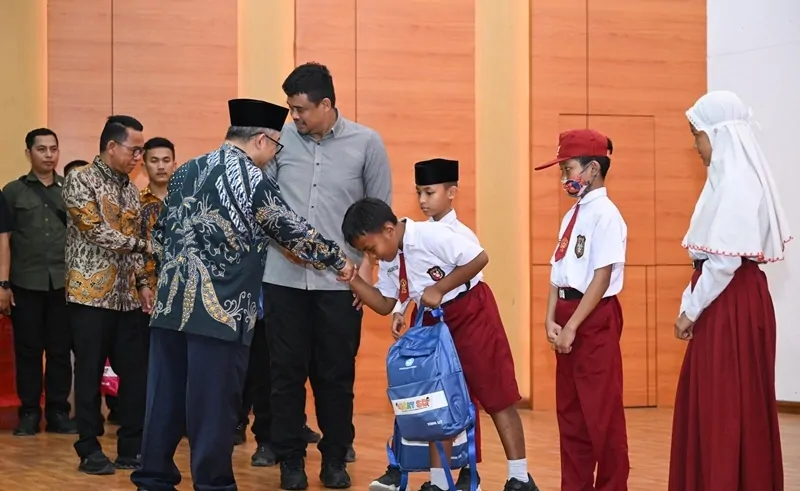
The Indonesian Ministry of Education and Culture (Kemendikdasmen) has announced the completion of the revitalization project for 19 schools in the Karangasem region, located in Bali Province. This project is part of the government's efforts to enhance the quality of education in the country, emphasizing the importance of continuing this program in the coming years.
During a press conference, the Deputy Minister of Education and Culture, Fajri Riza Ul Haq, confirmed that the revitalization is part of the government's comprehensive plan to improve national education. He noted that the Indonesian president has allocated an additional budget for up to 60,000 schools by 2026, bringing the total number to approximately 71,000 schools.
Details of the Event
The revitalization plan focuses on schools that are severely deteriorated, those affected by disasters, and schools in remote areas. Fajri pointed out that the program aims to reach the educational institutions in greatest need, reflecting the government's commitment to improving educational conditions.
Fajri also expressed the importance of maintaining the facilities created, as schools benefiting from the program must take care of these facilities to ensure long-term benefits. He emphasized that all educational policies primarily aim to serve the students.
Background & Context
Historically, Indonesia has faced significant challenges in the education sector, including a lack of educational facilities in remote areas. These challenges have led to poor education quality in some regions, prompting the government to take serious steps to improve the situation. The revitalization program is part of a broader vision aimed at achieving inclusive and high-quality education for all students.
The Karangasem region is one of the areas suffering from a lack of educational facilities, making this program particularly significant. By rehabilitating schools, the government seeks to create a conducive learning environment that encourages learning and skill development.
Impact & Consequences
The revitalization program is expected to have a positive impact on the quality of education in Karangasem. The rehabilitation of schools will contribute to improving the learning environment, which may lead to better educational outcomes for students. Additionally, this program could help create local job opportunities, as approximately 238,000 people have been employed in revitalization projects.
This initiative is also part of the government's efforts to promote sustainable development in the country, focusing on improving education as a means to achieve economic and social development. By investing in education, the government hopes to build a generation capable of facing future challenges.
Regional Significance
Indonesia's experience in school revitalization serves as a model that Arab countries facing similar challenges in the education sector can benefit from. Improving educational facilities can contribute to raising education standards and enhancing development opportunities in local communities.
In many Arab countries, there is still an urgent need to improve educational infrastructure, making it essential to adopt strategies similar to those followed by Indonesia. Investing in education is an investment in the future and should be a top priority for Arab governments.