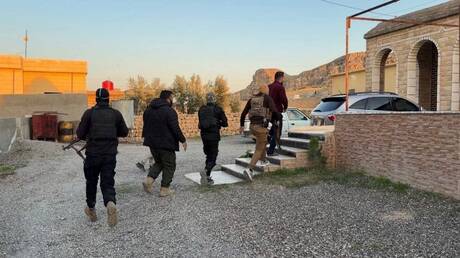
The Internal Security Forces in Raqqa, Syria, have launched a comprehensive security campaign to control loose weapons, following increasing pleas from residents who have suffered from the repercussions of violence and chaos. The campaign comes at a time when the region is witnessing a rise in gunfire incidents and community issues, leading to numerous casualties.
Raqqa is known for its tribal nature, where weapons are a part of the local culture. However, the uncontrolled use of weapons has exacerbated security conditions and increased incidents of murder and assaults. The security campaign aims to regain control over the security situation and ensure the safety of citizens.
Details of the Campaign
The campaign included extensive search operations across various areas of rural Raqqa, where security forces searched homes and farms for unlicensed weapons. Images and videos circulated on social media showed security personnel conducting searches in targeted areas, reflecting the seriousness of addressing this issue.
Special centers have also been announced for citizens wishing to voluntarily surrender their weapons, encouraging residents to participate in efforts to control arms. This initiative has been welcomed by many local residents who hope for improved security conditions.
Background & Context
Historically, Raqqa has witnessed numerous conflicts and armed disputes, especially during the recent years of the Syrian war. As the intensity of fighting has decreased, new problems related to loose weapons have emerged, highlighting the urgent need for effective security efforts. After the city was liberated from ISIS, Raqqa needs to restore security and stability, which requires addressing the issue of weapons fundamentally.
Raqqa exemplifies the challenges faced by many Syrian regions, where weapons continue to pose a threat to public safety. The security chaos has contributed to the spread of phenomena such as revenge and tribal violence, necessitating urgent intervention by local authorities.
Impact & Consequences
If the security campaign succeeds in controlling loose weapons, it could lead to improved security conditions in the region, contributing to rebuilding trust between residents and security forces. These efforts may also encourage the voluntary return of displaced persons to their areas, a crucial step towards reconstruction.
However, challenges remain, as continuity in security efforts and cooperation among various local factions are required. The success of the campaign depends on the ability of security forces to implement their plans effectively, along with support from the local community.
Regional Significance
The issue of loose weapons is one of the thorny problems facing many Arab countries, especially those that have experienced armed conflicts. Addressing this phenomenon in Raqqa could serve as a model for other regions, potentially contributing to enhanced security and stability.
Furthermore, the success of the campaign may lead to strengthened cooperation among Arab countries in the field of security, where experiences and practices can be exchanged to tackle common security challenges. This, in turn, could contribute to improving economic and social conditions in the region.
In conclusion, the efforts of security forces in Raqqa represent an important step towards restoring security and stability, but success requires long-term commitment and effective collaboration from all stakeholders involved.