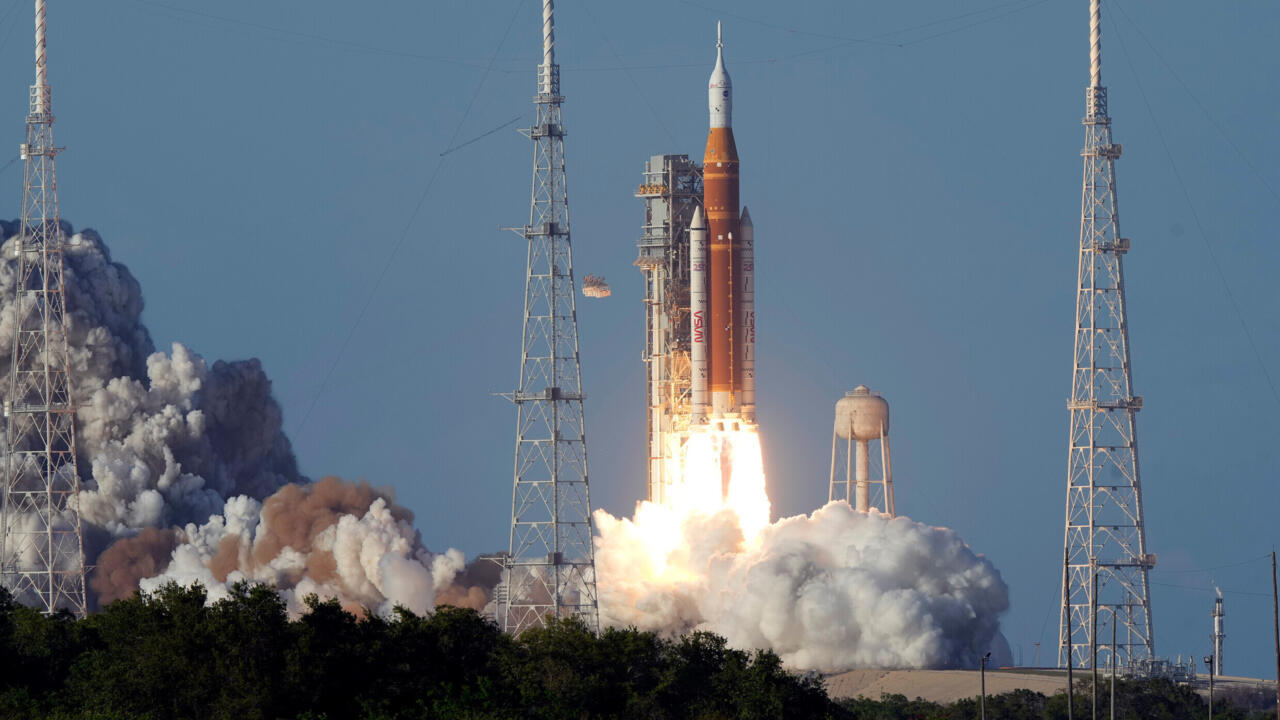
On Wednesday, the "Artemis 2" mission successfully launched, carrying four astronauts—three Americans and one Canadian—on a historic journey to the moon. The crew reached Earth’s orbit as the first step towards their lunar goal.
This mission marks the first of its kind in over 50 years, with the last crewed moon landing occurring in 1972. This event reflects the significant technological advancements made by the American space agency, NASA, and bolsters its ambitions for exploring outer space.
Event Details
The spacecraft launched from the Kennedy Space Center in Florida, with the launch taking place at 7:00 AM Eastern Time. The crew consists of three American astronauts: Jeremy Hansen, Michelle Lopez, and Christina Koch, along with Canadian astronaut Jeremy Hansen. Following the successful launch, NASA confirmed that the crew had entered Earth’s orbit, paving the way for their journey to the moon.
The mission is scheduled to last for 10 days, during which the crew will conduct scientific experiments and explorations. The mission will also include a landing on the moon’s surface, which is a crucial step towards sustainable human return to the moon.
Background & Context
This mission is part of the Artemis program launched by NASA with the goal of returning humans to the moon by 2024. The program aims to establish a permanent base on the moon, enabling advanced scientific research and supporting future exploration of Mars. Historically, moon missions represented the pinnacle of scientific achievements in the 20th century, with the United States sending the first human to the moon in 1969.
It is noteworthy that the Artemis program is not merely an American project; it involves international collaboration with other space agencies, reflecting the importance of international cooperation in space exploration.
Impact & Consequences
The "Artemis 2" mission is a strategic step in the field of space exploration, enhancing the United States' status as a leading power in this domain. It also opens new avenues for international collaboration in scientific research and technology. This mission is expected to lead to the development of new technologies that can be utilized in other fields, such as communications and renewable energy.
Furthermore, this mission may influence global space policies, as other countries will seek to enhance their space programs amid increasing competition in this field. It could also inspire future generations of scientists and engineers.
Regional Significance
Although the "Artemis 2" mission focuses on outer space, it has potential implications for the Arab region. This mission may encourage Arab countries to boost their investments in space, as some countries have already begun developing their own space programs. It could also enhance Arab cooperation in the fields of science and technology.
In conclusion, the "Artemis 2" mission represents a milestone in the history of space exploration, opening new horizons for humanity in its quest to understand the universe.