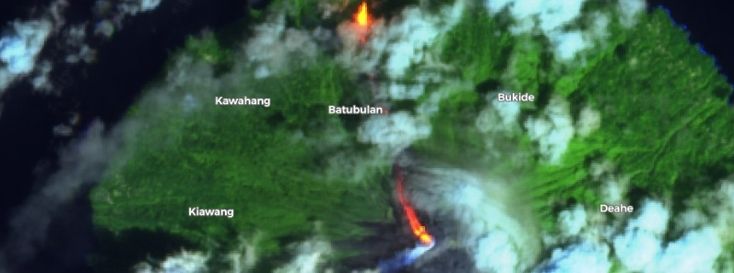
The head of Indonesia's Volcanology Monitoring Center, Yudia P. Tatibangun, reported that lava flows from the summit of Mount Karangetang are colliding with the main crater walls. This volcanic activity comes at a critical time, classified at alert level two, prompting caution among local residents.
Volcanic activities continue at Mount Karangetang, located on Siau Island in Kepulauan Sitaro Regency, where lava flows have been observed moving towards the main crater. Tatibangun noted that these flows are generating plumes of white smoke, indicating increased volcanic activity in the area.
Details of the Event
Recently, several earthquakes have been recorded in the area, with five earthquakes detected at varying depths, in addition to 103 volcanic tremors. The intensity of these earthquakes ranges from 2 to 50 millimeters, indicating increased seismic activity in the region. Additionally, 15 non-harmonic tremors have been recorded, reflecting the instability of the volcanic situation.
Volcanic activities at Mount Karangetang continue, with loud rumbling sounds reported in the area, raising concerns among local residents. Authorities have warned residents to stay away from the surrounding area of the mountain, as volcanic activity could cause significant damage.
Background & Context
Mount Karangetang is one of the active volcanoes in Indonesia, known for being one of the most volcanically active regions in the world. Historically, Indonesia has experienced several major volcanic eruptions that have led to significant geographical and environmental changes. For instance, the eruption of Mount Krakatoa in 1883 had global impacts, resulting in temperature drops worldwide.
Indonesia is part of the Pacific Ring of Fire, where tectonic plates meet, making it susceptible to seismic and volcanic activity. Therefore, monitoring volcanic activity in this region is vital for ensuring the safety of the population.
Impact & Consequences
The increasing volcanic activities at Mount Karangetang require a swift response from local authorities, as they may lead to the evacuation of residents from surrounding areas. Additionally, volcanic activity could impact agriculture and tourism in the region, necessitating strategies to mitigate potential damages.
Concerns are rising that volcanic activity could lead to lava flows, which may cause severe damage to infrastructure and property. Thus, preparedness and emergency planning are crucial to ensure the safety of the population.
Regional Significance
Although volcanic activity in Indonesia may seem distant from the Arab region, the impacts of climate change and volcanic activity can affect the entire world. Changes in climate may lead to shifts in weather patterns, impacting agriculture and food security in Arab countries.
It is essential for Arab nations to remain aware of global developments, including volcanic activity, as these events can influence global markets and local economies.
The volcanic activity at Mount Karangetang serves as a reminder of the importance of continuous monitoring and emergency preparedness in the face of natural disasters. Local communities must be ready to face any challenges that may arise from this activity, adhering to guidelines issued by the relevant authorities.