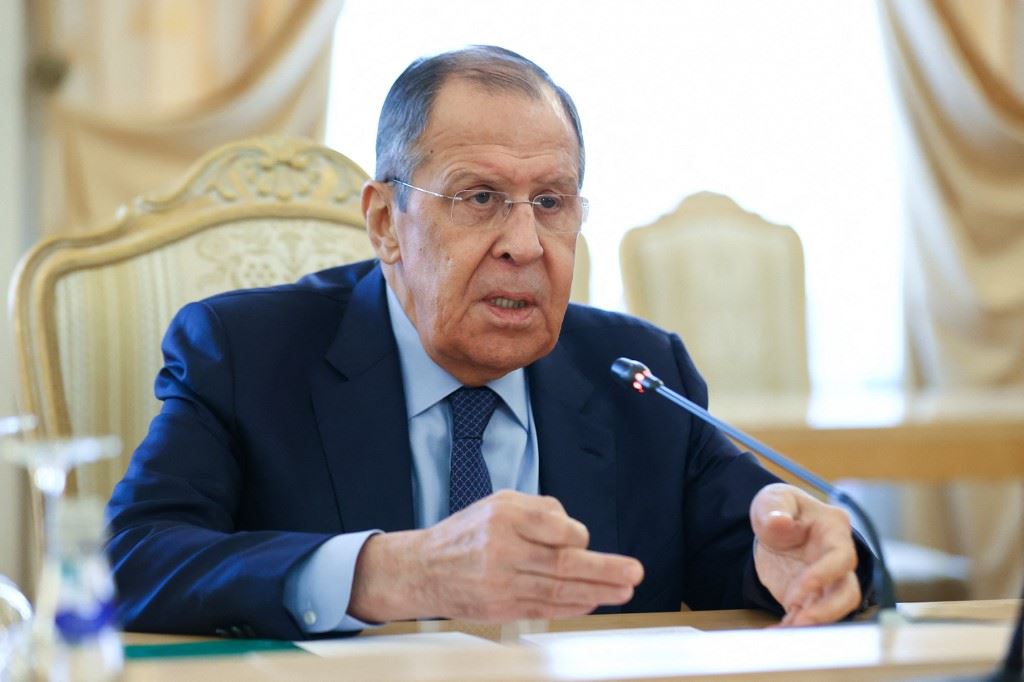
Russian Foreign Minister Sergey Lavrov confirmed that the United States and Israel are working to incite Arab nations in the Gulf against Iran, noting that these actions are part of a larger struggle for influence and leadership positions in the world. Lavrov explained that some countries have recently 'lost their compass', as they declared rights over foreign territories, reflecting a state of chaos and instability in international relations.
In his remarks, Lavrov pointed out that the struggle for leadership positions in the new global order is a 'life or death struggle', reflecting the increasing tensions between major powers. These statements come at a time when the region is witnessing significant political and economic transformations, complicating the regional and international landscape.
Details of the Situation
Tensions are rising between Iran and Arab nations in the Gulf, with some of these countries accusing Tehran of interfering in their internal affairs and supporting armed groups. In this context, the United States and Israel are seeking to strengthen new alliances in the region to counter Iran's growing influence. Lavrov indicated that these moves could exacerbate the situation in the Gulf, threatening regional stability.
Lavrov also affirmed that Russia is closely monitoring these developments and will continue to support its allies in the region. These statements come at a sensitive time, as Russia seeks to enhance its relationships with Arab nations in the Gulf, especially amid tensions with the West.
Background & Context
Historically, relations between Iran and Arab nations in the Gulf have been marked by ongoing tensions, with Arab countries accusing Iran of seeking to dominate the region. Recent events, such as the escalation of conflicts in Iraq and Syria, have deepened these tensions. Additionally, the competition for natural resources, particularly oil and gas, intensifies the rivalry among these nations.
In recent years, the United States has attempted to bolster its alliances in the Gulf by supporting allied regimes and providing military assistance. In contrast, Iran seeks to expand its influence by supporting armed groups in the region, further complicating the security situation.
Impact & Consequences
Lavrov's statements underscore the significance of geopolitical shifts in the region, where these tensions could lead to new conflicts that may affect security and stability in the Gulf. Inciting Arab nations against Iran could escalate disputes, negatively impacting the regional economy.
Moreover, these developments may increase divisions among Arab nations, with some countries potentially aligning with Iran while others prefer to ally with the United States and Israel. This division could weaken the ability of Arab nations to confront common challenges, such as terrorism and climate change.
Regional Significance
Under these circumstances, Arabs face significant challenges that require unity and coordinated efforts to address external threats. Inciting Arab nations against each other will only exacerbate current crises, highlighting the necessity for dialogue and understanding among all parties.
In conclusion, the situation in the Gulf remains under scrutiny, as the current state of affairs necessitates careful analysis and effective strategies to tackle the growing challenges. Cooperation among Arab nations is the only way to achieve security and stability in the region.