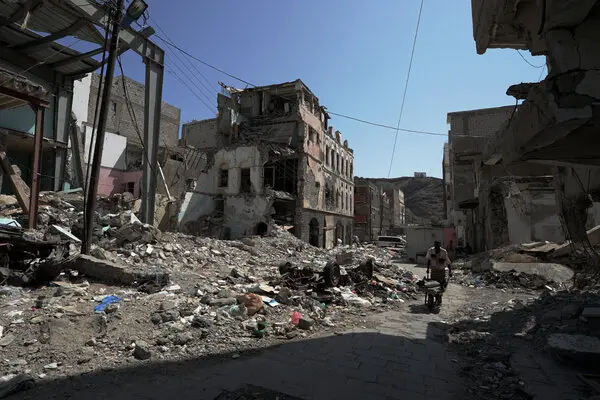
A Yemeni parliament member, Ansaf Mayo, has filed a lawsuit against three American security contractors in a U.S. federal court, accusing them of executing targeted assassinations of political enemies in Yemen, allegedly with support from the United Arab Emirates. Mayo survived an assassination attempt in 2015 in the city of Adan, where it is claimed that the security contractors were operating under a secret program established under the direction of the Emirati government.
The lawsuit includes the names of the security contractors Isaac Gilmore and Dale Comstock, both veterans of the U.S. military, along with Ibrahim Golan, a dual Israeli-Hungarian citizen. The contractors have previously admitted in media interviews to attempting to assassinate Mayo, highlighting the nature of covert operations that may be linked to foreign interventions in Yemeni affairs.
Details of the Lawsuit
The lawsuit contains clear accusations against the contractors for carrying out what is known as "targeted assassinations" of political opponents in Yemen, a practice that contradicts international laws and human rights. The Emirati government has denied funding any assassination operations but has acknowledged its support for what it describes as "counter-terrorism operations" in Yemen.
These events occur within the context of the Yemeni civil war that began in 2014, where Iran-backed Houthi rebels seized control of most of northern Yemen, leading to military intervention by the Saudi-Emirati coalition to support the internationally recognized Yemeni government. This intervention has raised numerous questions regarding the ethical and legal dimensions of foreign military interventions in internal conflicts.
Background & Context
Historically, Yemen has experienced ongoing conflicts for decades, but the current civil war has significantly escalated since its outbreak in 2014. Saudi Arabia and the UAE intervened in the conflict to support the Yemeni government against the Houthis, exacerbating the humanitarian situation in the country. The UAE has been accused of adopting unconventional strategies, including the use of security contractors to carry out assassination operations.
This lawsuit is part of a series of events that highlight the role of security contractors in modern conflicts, as they are used as a means to evade direct legal responsibility for military actions. Furthermore, this case may open the door for further investigations into private military activities in conflict zones.
Impact & Consequences
This case points to serious implications for international relations, particularly between the United States and Gulf countries. If the accusations are proven true, it could lead to increased pressure on the U.S. government to clarify its stance on the use of security contractors in foreign conflicts. This case may also impact the UAE's reputation in the international community, especially amid growing criticism regarding its interventions in the internal affairs of other nations.
Moreover, this case could be a turning point in how countries deal with security contractors, potentially requiring greater transparency and accountability in private military operations. It may also raise questions about human rights in conflict contexts, necessitating a comprehensive review of military policies.
Regional Significance
This case exemplifies how regional conflicts can influence international politics. Amid rising tensions in the Middle East, these events could lead to a reassessment of regional and international alliances. The use of political assassinations as a means to eliminate opponents reflects a shift in conflict strategies in the region, threatening stability in other countries that may be susceptible to such operations.
In conclusion, this case serves as a wake-up call regarding the risks associated with foreign military interventions and the use of security contractors. Developments in this lawsuit could significantly affect the future of conflicts in the region, necessitating greater international attention to ensure respect for human rights and international laws.