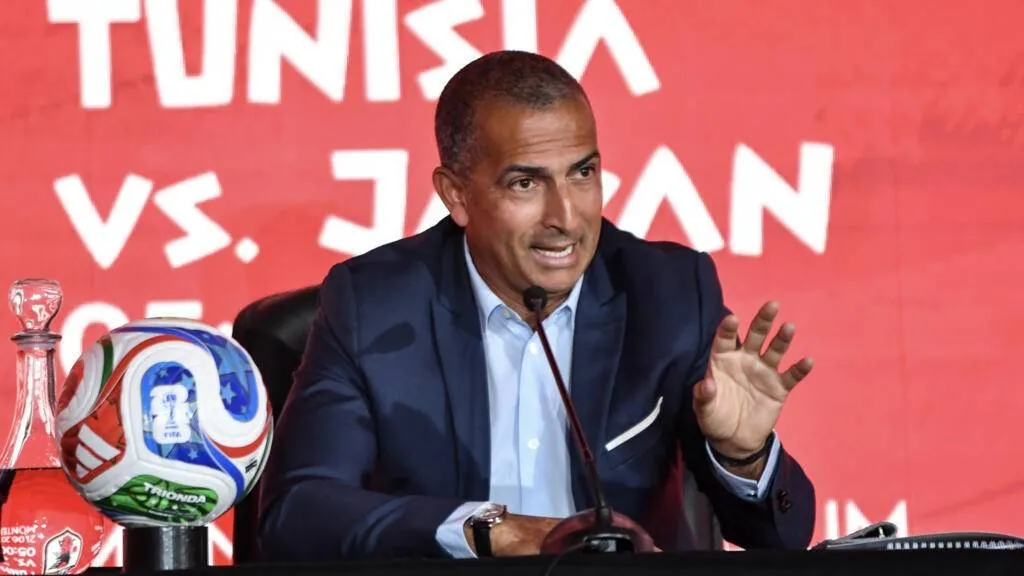
Tunisian coach Sabri Lamouchi, of French-Tunisian descent, is gearing up to lead the Tunisian national team in the 2026 World Cup, relying on his extensive experience in European football and his deep understanding of the realities of football in Tunisia. Since taking over the national team in January, Lamouchi is determined to achieve a historic milestone by advancing past the group stage for the first time in Tunisia's history.
Lamouchi, aged 54, was appointed as the coach of the Tunisian national team as part of a new direction aimed at blending high performance with maintaining the team's identity. This appointment comes amidst an increasing reliance on dual-nationality players or Tunisians active in European leagues, at a time when the local league suffers from a lack of pace.
Event Details
In the squad of 26 players, only six are active in the local league, reflecting a significant reliance on professionals abroad. Lamouchi states, "I do not like to use the terms dual-nationality or locals, because we are all Tunisians first and foremost." This vision reflects his commitment to representing national identity on international stages.
Lamouchi previously shone as a player in clubs such as Monaco and Marseille in France, as well as Inter and Parma in Italy, and he has represented France in 12 international matches. Although he has not played any official matches with the Tunisian national team, his coaching experience includes leading the Ivory Coast national team to the World Cup in 2014, which enhances his chances of success with the Carthage Eagles.
Background & Context
Historically, the Tunisian national team has struggled to advance past the group stage in the World Cup, facing significant challenges against strong teams. However, Lamouchi believes that the Tunisian team possesses the necessary potential to achieve positive results, stating, "I hope to be the person who tells you we will qualify." This optimism comes after an improved performance from the team in recent friendly matches.
Tunisia's group in the World Cup includes Japan, Sweden, and the Netherlands, making the task even more challenging. Nevertheless, Lamouchi is focusing on physical, tactical, and mental aspects during the preparation period to ensure the team is fully ready.
Impact & Consequences
Lamouchi's appointment is seen as a strategic move by the Tunisian Football Federation, aiming to enhance the team's performance in international competitions. Analysts believe that Lamouchi's European background enables him to communicate effectively with professional players abroad, which could contribute to achieving positive results.
It is worth noting that the Tunisian national team faces significant challenges due to its reliance on professional players, as the local league suffers from a lack of pace. This situation requires Lamouchi to work on developing local players and improving their levels.
Regional Significance
The success of the Tunisian national team in the World Cup represents a source of pride for Arab countries, reflecting the ability of Arab teams to compete on the global stage. Advancing past the group stage would be a significant achievement that enhances the status of Arab football internationally.
In conclusion, hope remains pinned on Lamouchi and the Carthage Eagles to achieve a historic accomplishment in the 2026 World Cup, which could open new horizons for football in Tunisia and boost national spirit.