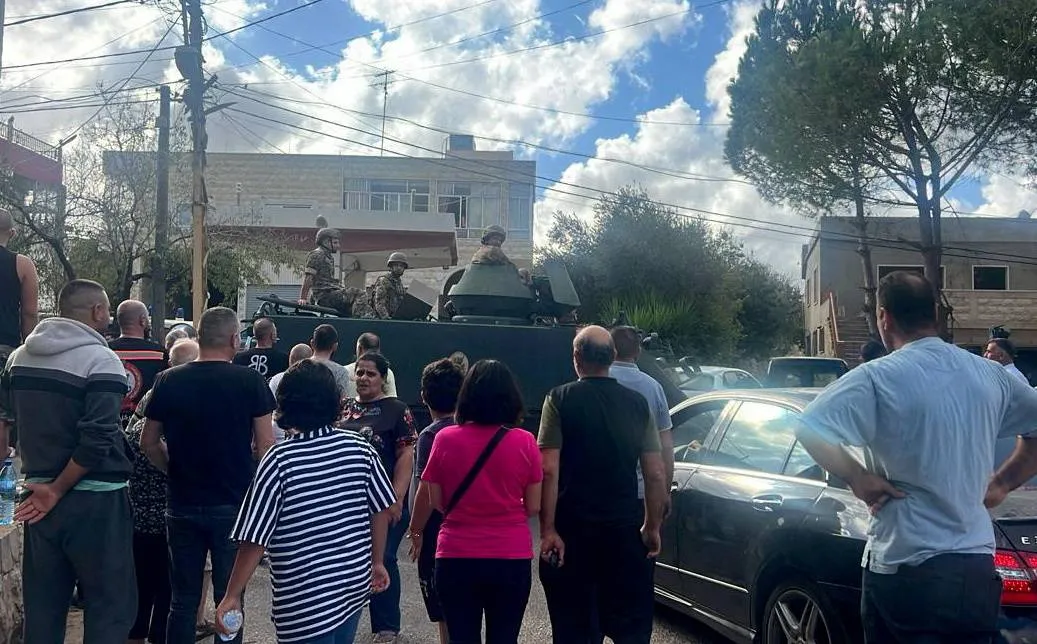
Amid escalating Israeli aggression in southern Lebanon, the Lebanese Army announced its decision for "repositioning" and its withdrawal from several predominantly Christian villages, including Rmeish, Dibb, and Ain Ebel. This step is part of an effort to avoid direct confrontation with Israeli forces, as the Lebanese Army seeks to reduce its presence in the rear lines.
Despite this move, the withdrawal decision has been met with outright rejection from the residents who insist on remaining on their lands, considering that the absence of security forces threatens their existence in this sensitive border area. The three villages are located in the far south of Lebanon, near the Blue Line border, making them a military focal point.
Details of the Event
Residents gathered in the village squares, demanding that the Lebanese Army remain in its positions. The priest of Rmeish, Father Najib Al-Ameel, expressed their stance, saying: "We want to remain under the state's wing... the presence of security forces provides us protection... we are ready to endure and stay on our land." He also referred to the region's history, stating: "In 1976, we left here and remained for 25 years refusing to be subdued; we are Lebanese and want to preserve Lebanon."
In Ain Ebel, the sentiment was echoed, as residents rejected the army's departure from its center in the town. The mayor of Ain Ebel, Ayoub Khreish, confirmed that they understand the army's reasons, but their decision is to stay in the town. The residents issued a statement affirming their categorical rejection of any withdrawal of security forces, emphasizing the importance of the state's presence to protect civilians.
Background & Context
These developments come amid rising tensions in the region, where the Lebanese Army has faced repeated Israeli assaults. A soldier was martyred and five others were injured in a direct attack on an army checkpoint in the town of Al-Amariyeh, reflecting the dangers faced by Lebanese forces amid the deteriorating security situation.
Moreover, recent Israeli statements regarding the establishment of a security zone within southern Lebanon raise concerns. Israeli Defense Minister Israel Katz indicated that the Israeli Army would maintain control over a vast area of southern Lebanon even after the current war against Hezbollah ends, escalating tensions in the region.
Impact & Consequences
Residents assert that the absence of security forces will lead to a dangerous security vacuum, endangering their lives and livelihoods. Their statement highlighted that the presence of the Lebanese Army played a crucial role in securing the delivery of supplies and fuel, reflecting the importance of the state's presence in these areas.
Fears are increasing of a repeat of scenarios similar to those that occurred in other areas, such as Rafah and Beit Hanoun in the Gaza Strip, where those areas witnessed widespread destruction and displacement of residents. The residents believe that any withdrawal today means jeopardizing their efforts and leaving them to face an extremely sensitive security reality.
Regional Significance
The repercussions of this event extend beyond Lebanese borders, as the situation in southern Lebanon reflects rising regional tensions. With the ongoing Israeli escalation, concerns are growing about its impact on stability across the entire region. Additionally, Israeli statements regarding control over new areas reflect intentions that could exacerbate conditions in Lebanon and Palestine.
In conclusion, the situation in southern Lebanon remains of significant interest, as residents look to protect their state in the face of increasing security challenges. Their attachment to their land reflects a strong will to endure against difficult circumstances, underscoring the importance of the state's presence in these sensitive areas.