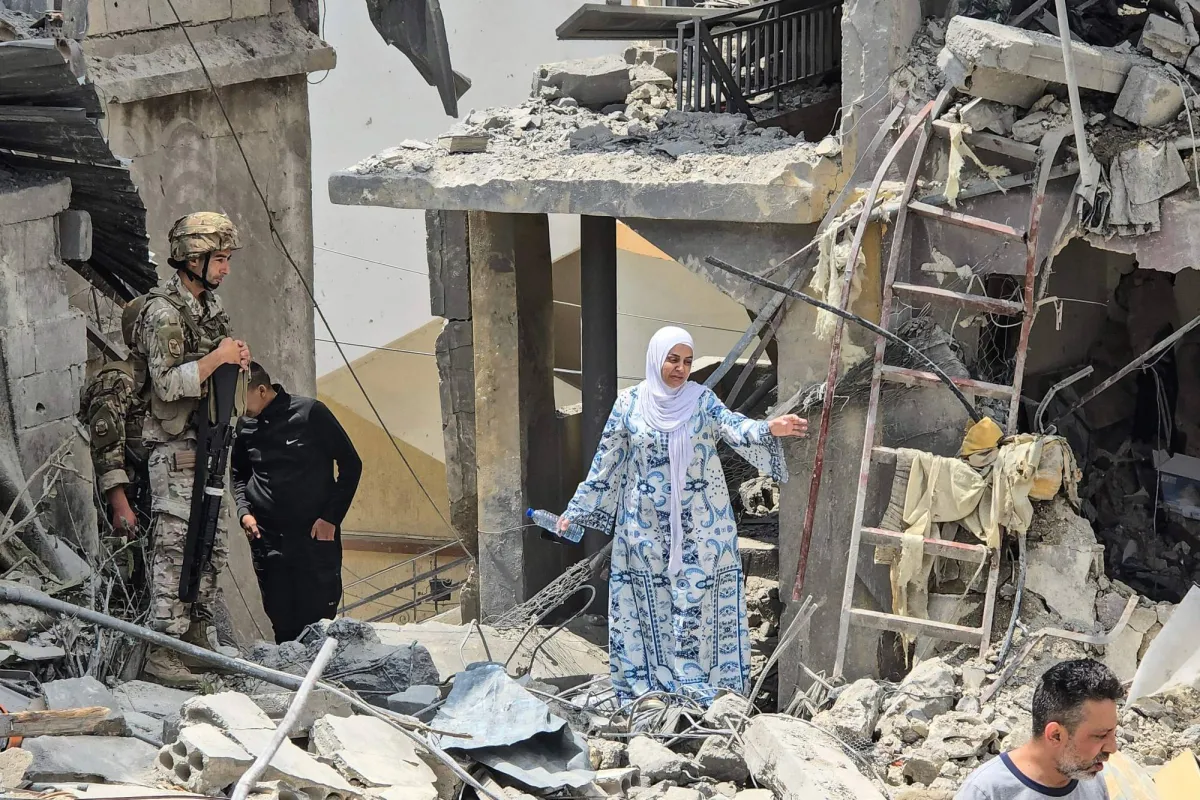
Israeli strikes targeting the cities of Nabatieh and Tyre continue, marking the most intense and widespread attacks in weeks. These developments are at the top of the agenda for the first military meeting between Lebanon and Israel, scheduled to take place in the coming hours in Washington. The meeting, which will involve officers from U.S. Central Command, comes at a critical moment as Israel has intervened with Washington to persuade it to postpone the meeting, but has faced insistence on holding it as planned.
The U.S. pressure on Israel is part of Lebanese President General Joseph Aoun's attempts to communicate with senior officials in the U.S. administration, calling for intervention to halt the Israeli escalation and stabilize the ceasefire. Aoun hopes that the Israeli strikes will not extend to the southern suburbs and Beirut, as he believes that a deteriorating situation serves only those harmed by direct negotiations between the two countries.
Details of the Event
The Lebanese-Israeli military meeting comes after a series of Israeli pressures targeting civilian areas, leading to the displacement of residents and destruction of homes. The expansion of Israeli strikes has been discussed in Aoun's communications with U.S. officials, where he expressed concern over the escalation of airstrikes that not only target Hezbollah positions but also residential areas.
Attempts to reach a ceasefire before the meeting have faced challenges from both Hezbollah and Israel, with both sides questioning who will commit to a ceasefire first. In this context, it is expected that a ceasefire stabilization clause will be included on the agenda of the military meeting, where the Lebanese delegation hopes for U.S. intervention to pressure the Israeli side.
Background & Context
The military meeting occurs amid ongoing Israeli military escalation, as Israel has expanded its targeting from the south to the vicinity of the southern suburbs of Beirut. Widespread evacuation orders have been issued, reflecting the level of military tension in the region. Israeli Prime Minister Benjamin Netanyahu announced the expansion of military operations in the south, complicating the situation and reflecting Israel's desire to pressure Lebanon ahead of negotiations.
The Israeli military escalation coincides with aggressive stances from Israeli officials, as the Israeli finance minister called for the demolition of buildings in the southern suburbs as a means of responding to attacks carried out by Hezbollah. This escalation reflects an Israeli strategy aimed at imposing psychological and military pressures on Lebanon before negotiations begin.
Impact & Consequences
The Israeli military escalation could significantly affect the course of negotiations between Lebanon and Israel. If military pressures continue, the Lebanese government may find itself in a difficult position, impacting its ability to negotiate effectively. Moreover, the ongoing military pressures could exacerbate the humanitarian situation in Lebanon, where residents are suffering from the ongoing conflict's repercussions.
The military meeting could be an opportunity to ease tensions, but under the current circumstances, it remains uncertain whether it will lead to positive outcomes. Military pressures may push the parties to adopt more hardline stances, further complicating the situation in the region.
Regional Significance
The situation in Lebanon reflects broader regional tensions, where Israeli interests intersect with conditions in Syria and Iraq. The Israeli military escalation could impact the stability of the entire region, potentially provoking reactions from armed factions in Iraq and Syria, complicating security conditions further.
Ultimately, the situation in Lebanon remains under international scrutiny, as concerned parties hope to reach a peaceful resolution that ensures stability in the region. However, the continuation of military escalation may undermine these efforts, making it difficult to achieve lasting peace.