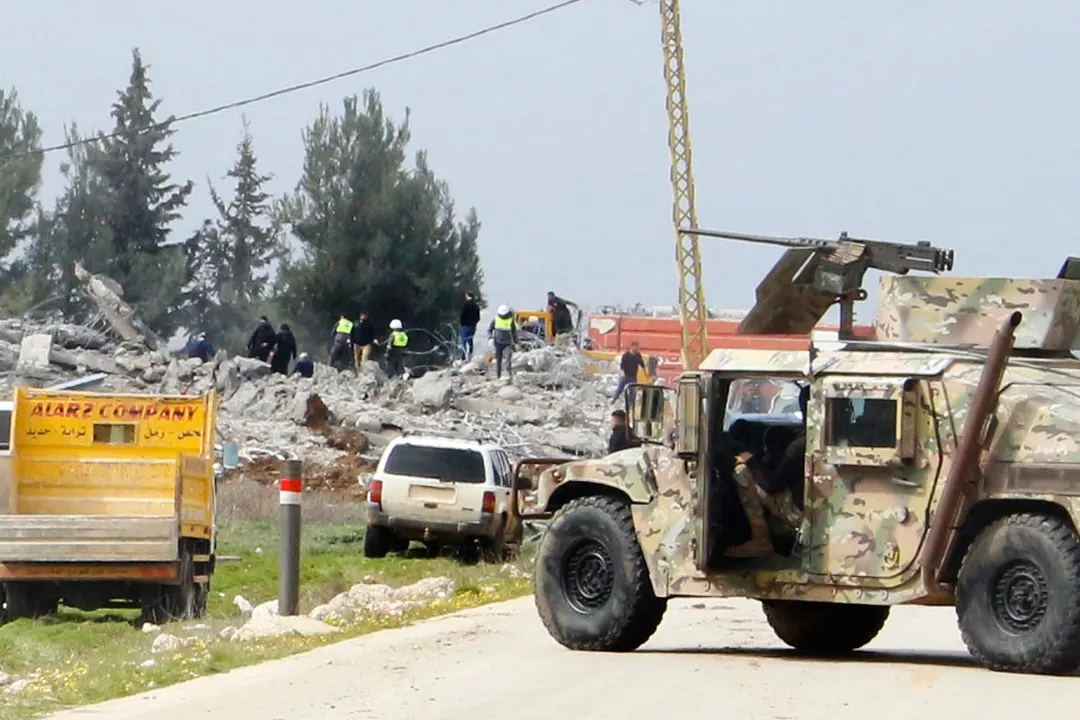
A Lebanese soldier was killed and several of his comrades were injured on Monday following an Israeli airstrike that targeted a Lebanese army checkpoint in the southern region. The Lebanese army stated in an official statement that the attack occurred at a military checkpoint located on the Qlayla - Tyre road, resulting in the death of one soldier and injuries to others.
Meanwhile, the Lebanese National News Agency confirmed that the airstrike targeted the checkpoint in the Al-Amariyah area, escalating tensions in the region. This incident comes at a sensitive time, as tensions between Lebanon and Israel are rising, raising fears of a potential military escalation.
Details of the Incident
According to reports, the Israeli airstrike targeted the checkpoint early on Monday morning while Lebanese soldiers were on alert. The injured were transported to the hospital for treatment, while the Lebanese army issued warnings against any future attacks. This incident occurs amid an increase in Israeli military operations in the region, which raises significant concerns among political and public circles in Lebanon.
The Lebanese army, already under economic and political pressures, faces significant challenges in maintaining security and stability in the country. Many Lebanese officials condemned this attack, emphasizing the need to protect national sovereignty.
Background & Context
Historically, the Lebanese-Israeli border has witnessed repeated tensions, especially following the conflict that erupted in 2006. Since then, there have been numerous incidents that have resulted in the deaths and injuries of Lebanese soldiers due to Israeli attacks. These incidents reflect the ongoing conflict between the two sides, influenced by various regional and international factors.
In recent years, tensions have escalated due to Israeli military activities in border areas, along with disputes over water and oil resources. Additionally, the political situation in Lebanon, which is suffering from multiple crises, complicates matters and makes achieving stability difficult.
Impact & Consequences
This incident serves as a stark reminder of the fragility of the security situation in Lebanon, where any new attacks could lead to greater escalation in the conflict. The death of the Lebanese soldier may provoke strong reactions from the Lebanese government, potentially increasing tensions in the region.
Furthermore, this incident could affect relations between Lebanon and other countries, particularly those that support the Lebanese army. These events may prompt the international community to reconsider its strategies towards the region, potentially leading to new interventions or diplomatic pressures.
Regional Significance
Events in Lebanon directly impact regional stability, as Lebanon is a pivotal point in the Arab-Israeli conflict. Any escalation in this context could have repercussions for neighboring countries and may provoke reactions from Palestinian factions and other armed groups.
Moreover, the situation in Lebanon reflects on conditions in Syria and Iraq, where interests and crises overlap. Therefore, any escalation in Lebanon could lead to increased tensions throughout the entire region, threatening security and stability.
In conclusion, events in Lebanon remain under scrutiny as everyone watches how the situation evolves under these sensitive circumstances. The death of the Lebanese soldier is a reminder of the complexity of the situation in the region, and the international community must act cautiously to avoid further escalation.