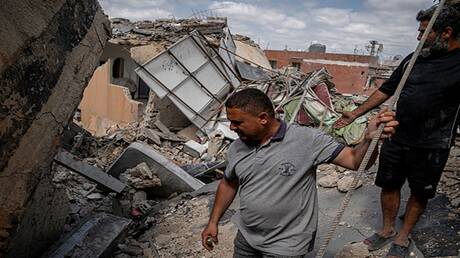
The Lebanese Army announced today, Wednesday, the martyrdom of one of its personnel following an Israeli airstrike that targeted the 'Kfar Rumman - Khardali' road in the Nabatieh region of southern Lebanon. This incident comes at a time when the Lebanese-Israeli borders are experiencing heightened tensions, with both sides exchanging accusations of sovereignty violations.
The Israeli airstrike, which occurred early this morning, resulted in the death of the Lebanese soldier, provoking angry reactions from Lebanese authorities. The Lebanese Army confirmed in its statement that the airstrike represents a blatant violation of national sovereignty, and the international community must intervene to stop these aggressions.
Details of the Incident
This airstrike is part of a series of Israeli attacks on Lebanese territory, as Israel seeks to bolster its security along the border. Local sources reported that Israeli warplanes executed the strike after detecting suspicious movements in the area. The strike targeted a region considered strategic, as it contains major roads connecting various southern areas.
The Lebanese Army, which is under economic and political pressure, finds itself in a difficult position, needing to protect its territory under the current circumstances. Many analysts have pointed out that such incidents could lead to greater escalation in the conflict between Lebanon and Israel, threatening stability in the region.
Background & Context
The roots of the conflict between Lebanon and Israel date back decades, with the region witnessing numerous wars and disputes. The most recent was in 2006, when the July War broke out, resulting in widespread destruction in Lebanon. Since then, the borders between the two countries have remained fragile, with ongoing violations by Israeli forces.
In recent years, tensions have escalated due to disputes over natural resources, including water and gas. This has led to heightened positions between the two sides, with Lebanon accusing Israel of seizing its rights in territorial waters.
Impact & Consequences
This airstrike serves as a wake-up call for the international community, highlighting the urgent need for lasting solutions to the conflict in the region. This incident may lead to increased military and political support for the Lebanese Army from its allies, including Iran and Hezbollah, complicating the situation further.
The martyrdom of the Lebanese soldier may also provoke strong public reactions in Lebanon, potentially escalating protests against the Lebanese government, which is already facing significant economic and social challenges. These events are expected to impact the security situation in the region, increasing the likelihood of new conflicts erupting.
Regional Significance
Developments in Lebanon are of great importance to the Arab region as a whole, reflecting ongoing conflicts between nations. This incident may lead to a reevaluation of Arab countries' strategies towards Israel, especially amid increasing tensions in relations between Arab states and Israel.
Moreover, the situation in Lebanon could affect relations between Arab countries and Iran, as Iran is one of the main supporters of Hezbollah. Should events escalate, Arab nations may find themselves compelled to adopt harsher stances towards Israel, potentially leading to changes in regional alliances.
In conclusion, events in Lebanon remain under scrutiny as everyone watches how the situation unfolds amid rising tensions. The martyrdom of the Lebanese soldier represents a turning point that could lead to radical changes in the ongoing conflict.