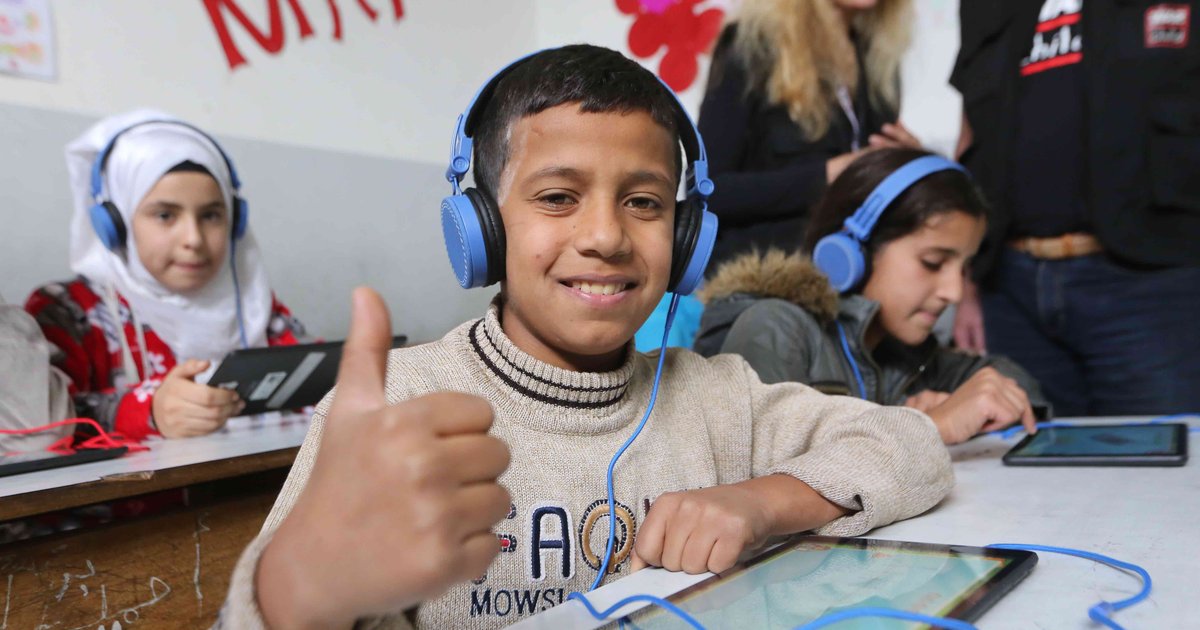
Lebanese students are living a harsh reality as the bombing continues and internet outages hinder their ability to pursue remote learning. In this context, the experience of university student Zainab Suleiman is highlighted, as she struggles to attend her lectures in a precise scientific field while the echoes of explosions disrupt her focus.
Zainab sits in a small room that has been transformed into a study hall, desperately trying to catch a sporadic internet signal on her computer screen. She says, "In in-person education, interacting with professors facilitated understanding, but today, lessons have turned into a silent screen, making education an incomplete experience."
Details of the Situation
Zainab describes her experience as a "double disruption," facing difficulty concentrating due to her surrounding circumstances. She adds, "Scientific subjects require a precise mental sequence, but the rhythm of war imposes itself on the details of the day and undermines any attempt at cognitive stability."
In another corner of the house, blind student Lynn Al-Rumh relies on hearing to receive her lessons. Lynn states, "With the outbreak of war, we were forced into remote education; we try to maintain the same focus, but sometimes reality is stronger than us." Lynn experiences the details of war through sounds, making education a complex challenge that tests her patience.
Background & Context
The education crisis in Lebanon is exacerbated by the closure of many schools, either due to their proximity to targeted areas or their conversion into shelters for displaced persons. This situation has made remote education the only available option, despite the significant challenges faced by both students and teachers.
Teacher Mariam Aqeel, who teaches kindergarten students, discusses the challenges she faces, using her mobile phone for teaching after having to abandon her computer. She emphasizes that "the war has imposed remote education on us despite the unpreparedness of the circumstances, and the main challenges are weak internet and its outages."
Impact & Consequences
Lebanese families are significantly affected by this reality, as parents find themselves balancing daily life necessities with supporting their children's education. Lama Al-Tawil, president of the Parents and Teachers Association, states that the priority in unstable areas lies in maintaining the educational and psychological connection for students away from the pressures of school assignments.
Naama Mahfouz, head of the private school teachers' union, asserts that continuing education is no longer just an educational choice but a national stance in facing the consequences of war. He stresses the need to prevent security conditions from killing educational life, pointing out that education is a fundamental right for every child.
Regional Significance
The education crisis in Lebanon extends beyond its borders, as students in other regions, such as Gaza, face similar struggles, learning in tents. Leaving students without education means losing their future, which Mahfouz emphasizes, pointing to the importance of providing infrastructure capable of supporting digital education.
In conclusion, education in Lebanon remains under significant pressure, requiring concerted efforts from the government and society to ensure the continuity of education and meet the needs of students in these exceptional circumstances. Maintaining education is akin to preserving hope for a better future.