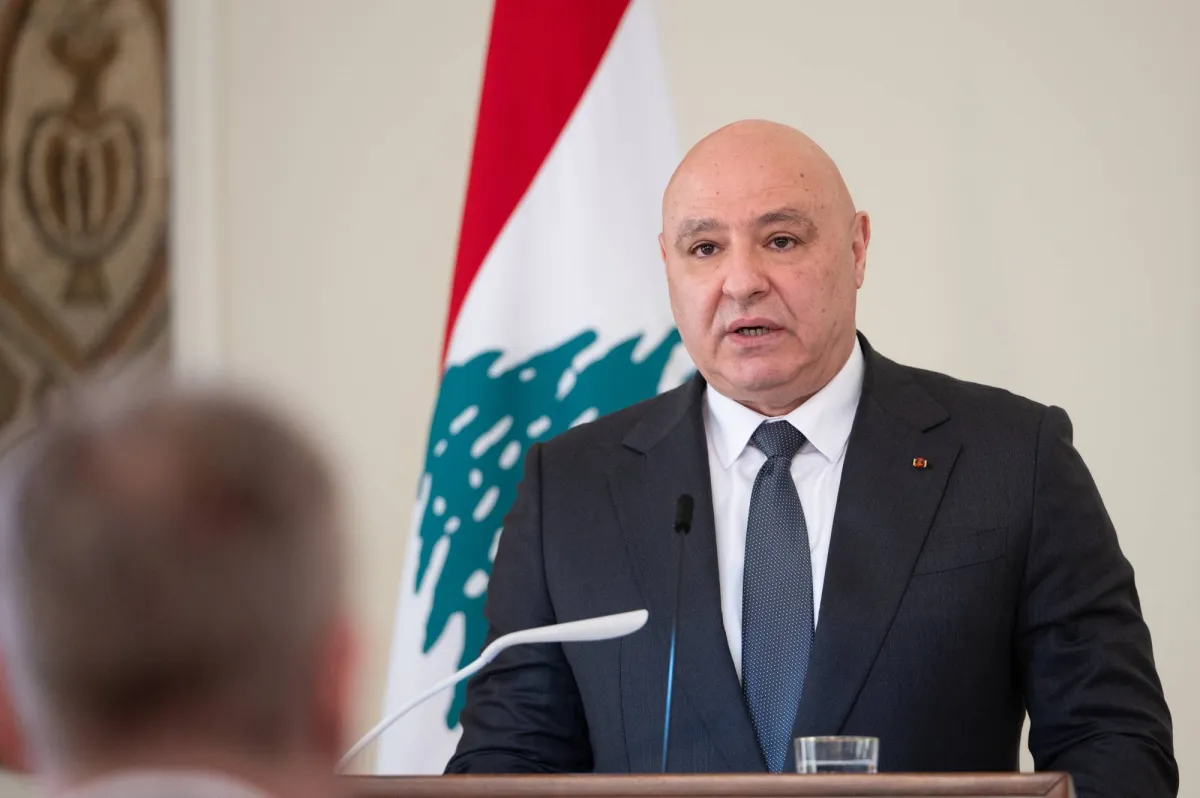
Lebanese President Joseph Aoun affirmed today (Thursday) the country's determination to implement decisions made to maintain Lebanon's sovereignty, independence, and territorial integrity.
During a phone call with Dutch Prime Minister Mark Rutte, Aoun highlighted the importance of enhancing and developing Lebanese-Dutch relations across all fields.
Details of the Event
In the context of their discussion, the Dutch Prime Minister confirmed his country's support for the negotiation initiative announced by President Aoun, which aims to halt escalation and extend the authority of the Lebanese state over its entire territory. He also expressed the Netherlands' readiness to support the Lebanese Army to enable it to fulfill its national responsibilities.
For his part, the Dutch Prime Minister expressed his country's solidarity with Lebanon and its people during these difficult circumstances, indicating the Netherlands' willingness to provide assistance to help Lebanese citizens who have been forced to leave their towns and villages.
Background & Context
It is noteworthy that the Lebanese Cabinet decided, in an emergency session held on March 2, to impose an immediate ban on all military and security activities of Hezbollah, deeming them illegal, and to restrict its operations to the political sphere. This decision comes amid rising security tensions in the country.
In the same context, the Lebanese Ministry of Health announced today the death of four individuals and the injury of three others in an Israeli airstrike in southern Lebanon. The Ministry reported that the strike targeted the town of Al-Ramadiyah, resulting in civilian casualties and injuries.
Impact & Consequences
Israeli airstrikes continue in areas of southern Lebanon, reflecting the daily pace of clashes along the border front. Casualties have been recorded as a result of these strikes, alongside ongoing rocket and drone launches from southern Lebanon towards northern Israel, further escalating tensions in the region.
Hezbollah announced that it launched drones and missiles at northern Israel, while sirens were activated across the border, according to the Israeli army's Home Front Command. The border areas have witnessed a noticeable escalation in military operations, raising concerns about the possibility of expanding operations towards northern Litani.
Regional Significance
These developments coincide with statements from Israeli Defense Minister Israel Katz, who announced that the Israeli army would establish a security zone within Lebanon after the operations conclude, increasing fears of a new escalation in the Lebanese-Israeli conflict.
At the same time, over one million people have been displaced from their homes, according to Lebanese authorities, compounding the suffering of the Lebanese populace amid the challenging economic and social conditions they face.
In conclusion, the situation in Lebanon remains tense, with increasing security and political challenges, necessitating both international and local efforts to resolve disputes and achieve stability in the country.