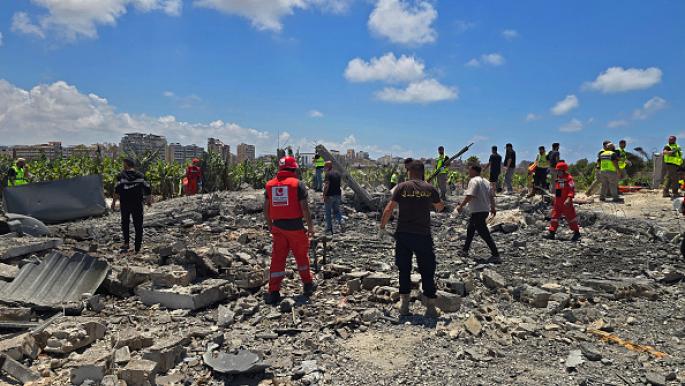
In the context of rising security tensions, the Lebanese and Israeli delegations are preparing to meet tomorrow in the U.S. capital, Washington. This meeting comes at a time when the Israeli occupation army has intensified its targeting, complicating the situation in the region. Despite these challenges, Lebanon remains committed to the principle of negotiation, emphasizing the need for clear guidelines governing this process.
This meeting is considered an important step in the framework of international efforts to ease tensions between the two sides. Lebanese sources have confirmed that the delegation will present a set of demands related to security and borders, in addition to other issues concerning regional stability.
Details of the Meeting
The meeting, which will bring together representatives from the Lebanese government and their Israeli counterparts, occurs at a highly sensitive time. Recently, the Lebanese-Israeli border has witnessed an escalation in military operations, raising concerns about a larger escalation that could impact regional security. Lebanon hopes that this meeting will contribute to achieving tangible progress towards calming the situation.
It is expected that the meeting will address issues related to maritime and land borders, as well as the exchange of security information. Lebanon seeks to assert its sovereign rights in its territorial waters, especially in light of recent gas discoveries in the region.
Background & Context
Historically, relations between Lebanon and Israel have been tense, having witnessed numerous armed conflicts. Since the end of the 2006 war, the parties involved have attempted to find mechanisms for negotiation, but without achieving tangible results. This meeting is part of international efforts, particularly from the United States, to bridge the views of both sides.
Lebanon, which is suffering from economic and political crises, sees this meeting as an opportunity to strengthen its position in international forums. Additionally, Israel, facing internal and external challenges, may seek to improve its image through dialogue.
Impact & Consequences
If the meeting yields positive results, it could lead to a reduction in tensions in the region, positively reflecting on the economic and social conditions in Lebanon. It may also contribute to enhancing stability along the borders, thereby reducing the likelihood of military escalation.
On the other hand, if the meeting fails to achieve any progress, it could exacerbate the situation and increase tensions between the two sides, potentially threatening regional security even further.
Regional Significance
This meeting's impact extends beyond Lebanon and Israel, encompassing the entire Arab region. Successful negotiations could encourage other countries in the region to engage in similar dialogues, enhancing the prospects for peace and stability.
Conversely, any failure could worsen crises in neighboring countries and complicate the security landscape in the Middle East. Therefore, all eyes are on Washington, where many hope these negotiations will yield positive outcomes.