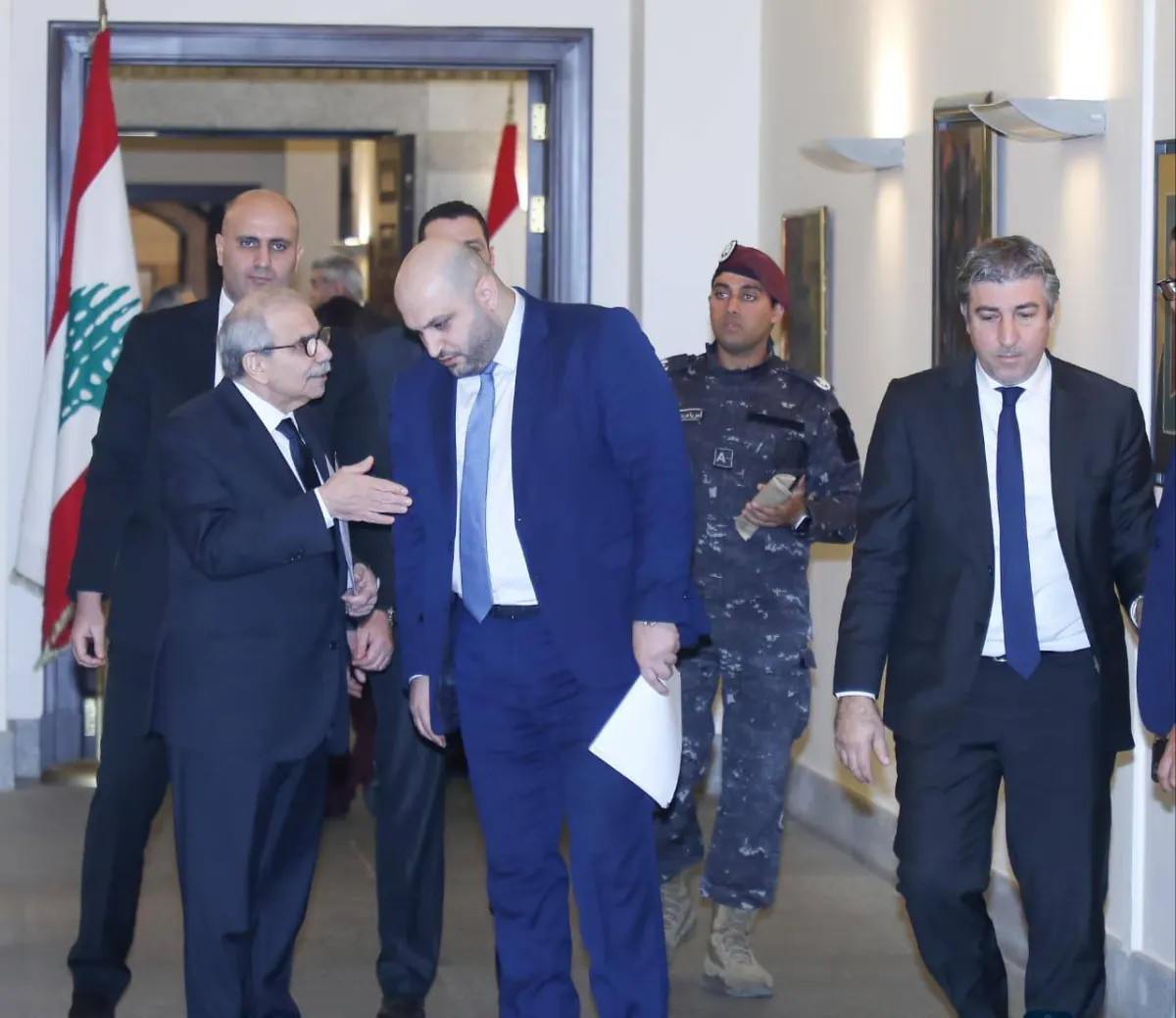
On Thursday, Lebanese ministers from the Shiite duo resumed their participation in government sessions after resolving the crisis caused by the expulsion of Iranian Ambassador Mohammad Reza Shibani from Beirut. The handling of the repercussions of this decision was left to communication between President Joseph Aoun and Speaker of Parliament Nabih Berri, indicating that this crisis has been sidelined for resolution outside the Cabinet.
Prime Minister Nawaf Salam chaired a Cabinet session attended by ministers from Hezbollah and Amal Movement, who had boycotted the previous session following the Foreign Ministry's decision that deemed the Iranian ambassador a "persona non grata." Political communications last week resulted in what resembles a "settlement"; the Foreign Ministry did not retract its decision, while the Iranian ambassador remains in Lebanon.
Details of the Event
Ministerial sources who participated in the Cabinet session stated that the Foreign Ministry's decision regarding the Iranian ambassador "was left for resolution through political communication between Lebanese President Joseph Aoun and Speaker Nabih Berri." This means that the crisis was avoided through dialogue, allowing for the resumption of participation in government sessions. This exit came after communications between political forces and the Presidents of the Republic and the Government to find a solution.
During the ministerial session, routine items were discussed, such as approving two loans for the Ministry of Finance and the Ministry of Health. The issue of sending a letter from the Foreign Ministry to the Security Council and the UN Secretary-General was also raised, accompanied by the text of the government decision issued on March 2, which prohibits military activities by Hezbollah. Foreign Minister Youssef Raji and the Prime Minister clarified that this letter is routine and carries no legal implications, as it is related to Security Council Resolution 1701 issued after the July 2006 war.
Background & Context
These developments come at a sensitive time for Lebanon, where political and economic tensions prevail. The country has recently witnessed increasing tensions among political forces, especially following the escalation of military activities by Hezbollah in the region. With the expulsion of the Iranian ambassador, tensions between the Shiite duo and the other components of the government were expected to escalate; however, political dialogue helped contain the crisis.
It is noteworthy that the Foreign Ministry had sent a letter to the UN and the Security Council following the Cabinet session on March 2, informing them of the government's decision regarding the prohibition of military and security activities by Hezbollah and its obligation to disarm. This decision sparked widespread controversy among political forces in Lebanon, with some viewing it as a step towards enhancing state sovereignty, while others considered it a threat to their interests.
Impact & Consequences
These events underscore the importance of political dialogue in Lebanon, which can have a significant impact on the country's stability. Continued communication between political forces may help avoid future crises, especially in light of the tense regional circumstances. However, the question remains about how these developments will affect relations between Lebanon and Iran, particularly amid increasing international pressure on Hezbollah.
Additionally, the decision that differentiates between the "political" and "military" wings of Hezbollah is contentious and is understood as a crisis postponed until after the war, considering that Hezbollah rejects this decision. This indicates that tensions may persist in the future, necessitating further dialogue and understanding among political forces.
Regional Significance
The repercussions of this crisis extend beyond Lebanon's borders, affecting regional relations in the area. The stability of Lebanon is vital for regional security, especially amid ongoing tensions in the Middle East. Any escalation in Lebanon could have negative repercussions on neighboring countries, prompting the international community to closely monitor the situation.
In conclusion, there is hope that these developments will contribute to enhancing political dialogue and achieving stability in Lebanon, which could positively reflect on the situation in the region as a whole.