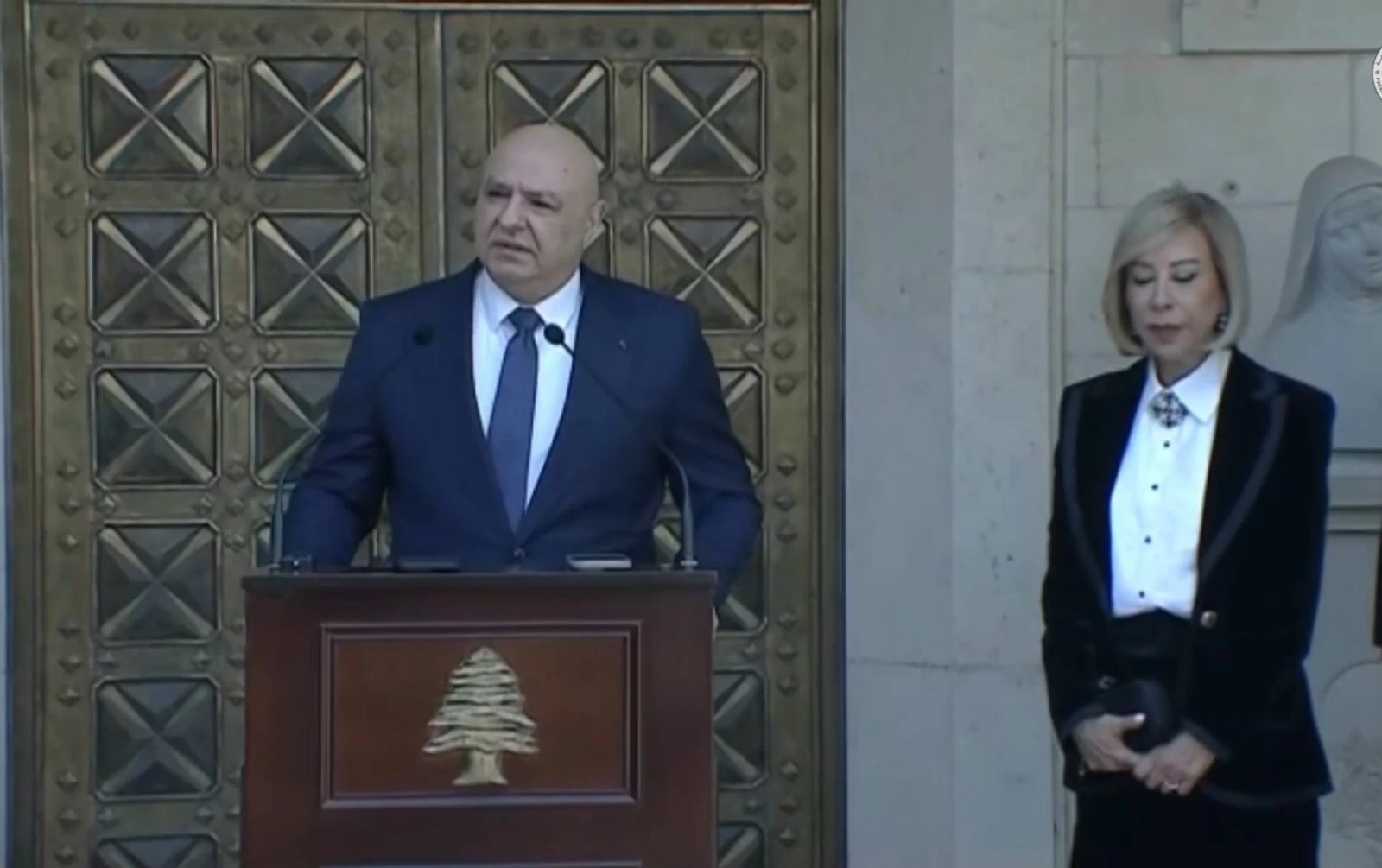
Lebanon's presidency announced today (Sunday) the revocation of the diplomatic status of Mohammad Reza Shibani, transforming him into an Iranian citizen without any diplomatic privileges. This decision reflects Lebanon's restoration of procedural sovereignty and places Shibani in a legal predicament.
This decisive announcement was made by President Joseph Aoun, who confirmed that Shibani did not submit his credentials properly, and therefore cannot be considered an ambassador. Aoun pointed out that Shibani's presence at the Iranian embassy in Beirut does not carry any official capacity.
Details of the Announcement
In statements made following the Christmas mass in Bkerke, Aoun dismissed attempts by Tehran to portray the issue as a minor dispute. He clarified that Shibani is not an ambassador at all, as he did not present his credentials, and is present at the embassy without any official role. This statement was not merely a correction of protocol but served as a declaration of the restoration of procedural sovereignty.
According to the Vienna Convention on Diplomatic Relations, an envoy only acquires his official status after the acceptance of his credentials. In the absence of this requirement, all layers of immunity that Shibani attempted to operate under fall away. Thus, his presence in Lebanon has become illegal, as he is on Lebanese soil without an official document justifying his stay.
Context and Background
This step comes at a sensitive time for Lebanon, which is grappling with severe political and economic crises. Shibani's presence as an Iranian envoy has sparked widespread controversy in Lebanese political circles, with some viewing it as interference in the country’s internal affairs. Questions have arisen regarding the potential impact of this decision on Lebanese-Iranian relations.
In related developments, diplomatic sources reveal a legal predicament surrounding Shibani's presence in Beirut. With the presidency's announcement of the revocation of his status, he automatically loses the immunity granted by a diplomatic visa. Under the recent sovereign decision requiring Iranian nationals to obtain prior entry visas, Shibani's continued presence within the embassy has become unlawful.
Reactions and Political Implications
On the other hand, negative repercussions quickly emerged within the Shiite duo's circles, as the political machinery of Hezbollah and Amal rushed to politicize the legal reality. The political aide to President Nabih Berri, MP Ali Hassan Khalil, argued that the media's resolution of Shibani's status lacks proper protocol, in a clear attempt to sidestep the core of the crisis.
In the same vein, Hezbollah MP Mohammad Raad stated that he views this matter as an external influence and a settling of protocol scores with allies. These statements reflect the level of confusion experienced by the Shiite duo amid these developments.
Impact on the Arab Region
This decision represents a turning point in Lebanese-Iranian relations and may affect the balance of power in the region. Lebanon, which is suffering from internal crises, seeks to reclaim its sovereignty and independence in the face of external pressures.
In conclusion, the revocation of Shibani's ambassadorial status reflects Lebanon's desire to regain control over its internal affairs and raises questions about the future of relations with Iran in light of these changing circumstances.