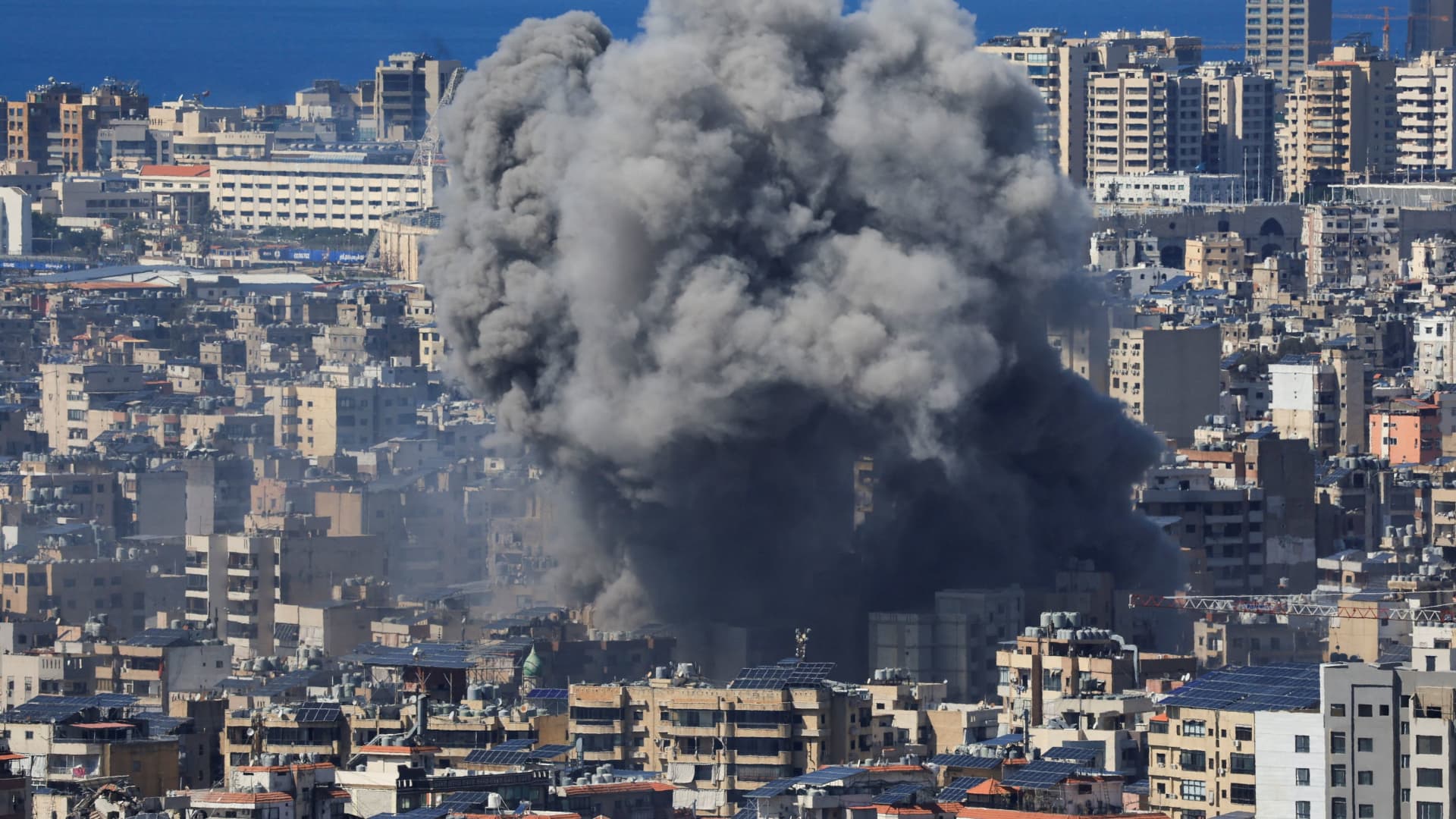
Lebanon is urgently seeking clarifications regarding its position on the recently announced ceasefire in the context of the war with Iran. Lebanese Minister of Economy, Aamer Baytar, stated that the country is receiving "mixed signals" on this matter.
While Pakistan confirmed that Lebanon is included in the agreement, Israel asserted that the two-week truce does not cover Lebanon, increasing the ambiguity surrounding the situation in the country. Israel has issued an evacuation order for residents of the southern city of Tyre in anticipation of potential bombing operations.
Details of the Situation
In a statement to CNBC, Minister Baytar noted, "Some reports indicate that Lebanon is part of the ceasefire, while other reports, including those from Israel, suggest otherwise. We need to confirm this in the coming hours." Baytar emphasized that the hope is to end hostilities as soon as possible.
These remarks follow an announcement by Pakistani Prime Minister Shahbaz Sharif regarding a ceasefire agreement via social media, indicating that the United States, Iran, and their regional allies had agreed to an immediate ceasefire across all areas, including Lebanon. However, the response from Israeli Prime Minister Benjamin Netanyahu's office confirmed that the truce does not include Lebanon.
Background & Context
Lebanon, particularly the capital Beirut, has witnessed intense Israeli attacks against targets affiliated with Hezbollah, which is backed by Iran, over the past five weeks. Israeli forces have conducted ground operations in southern Lebanon as part of a campaign against Tehran. Reports indicate that Hezbollah has ceased fire against northern Israel and Israeli forces in Lebanon, with the party expected to issue an official statement regarding the ceasefire in due course.
Simultaneously, French President Emmanuel Macron has called for Lebanon to be included in the ceasefire agreement. The United Nations has reported that over 1.1 million people have been displaced in Lebanon due to Israeli attacks, which have resulted in the deaths of more than 1200 individuals in the country.
Impact & Consequences
Minister Baytar indicated that Lebanon feels "forced into this war by external parties," expressing that the end of the war would be positive, but the hope is for Lebanon to be part of this truce. He confirmed that the conflict has been a "huge setback" for the already struggling Lebanese economy, with the country incurring a "devastating cost" as a result of this war.
Baytar estimated that the war over five weeks has cost Lebanon "about 5-7% of its GDP" in a short period, noting that all recovery indicators witnessed in the country last year have vanished in less than a month.
Regional Significance
The repercussions of this conflict extend beyond Lebanon, impacting regional stability as a whole. The continuation of military escalation could exacerbate humanitarian conditions in the region, increasing the number of displaced and refugee populations, posing a significant challenge to neighboring countries.
In conclusion, the question remains about the possibility of maintaining the ceasefire, especially with reports of missiles and drones heading towards Israel from several Gulf countries. The situation in Lebanon requires close monitoring, as any new escalation could lead to serious consequences for regional security.