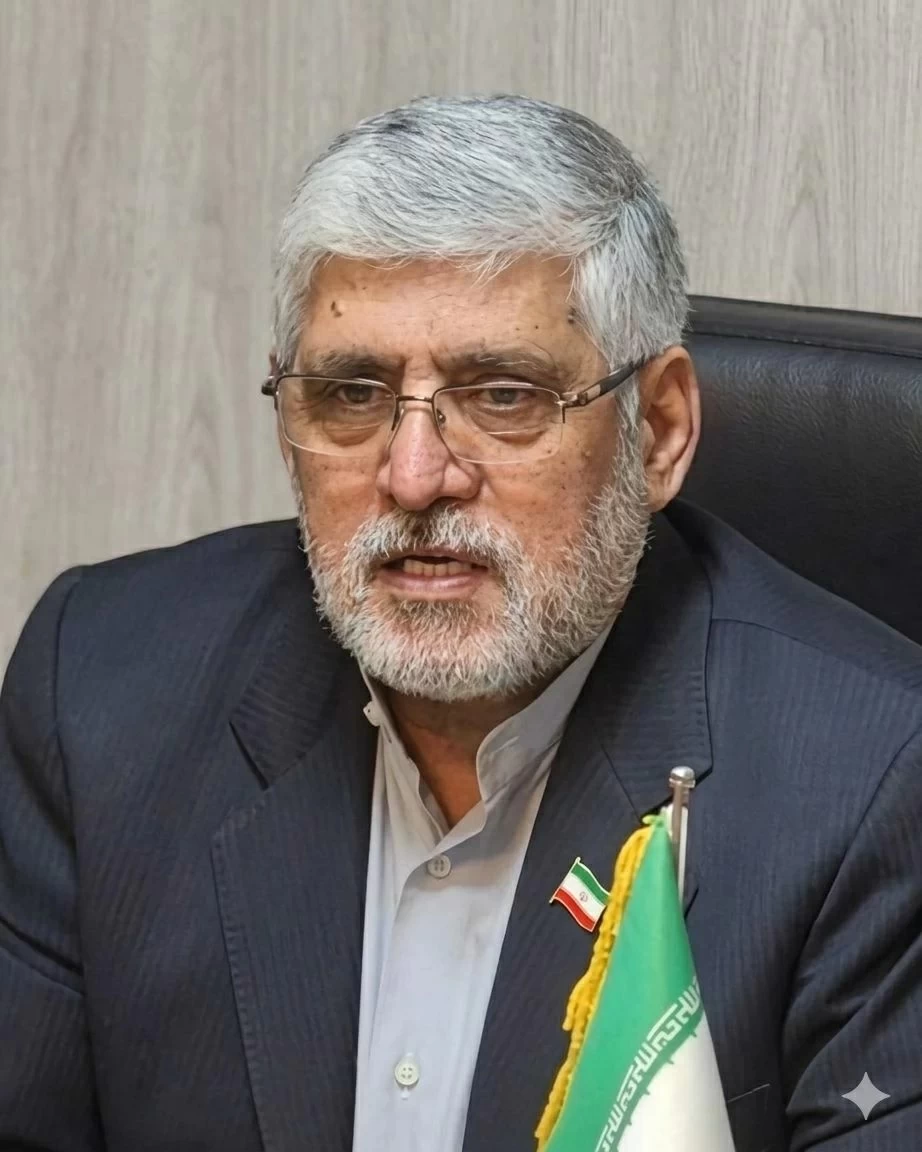
Iranian Ambassador Mohammad Reza Shibani has refused to leave Lebanon despite the government's decision to expel him, reflecting the complex power dynamics in the country. The Lebanese government has not enforced the decision, resulting in a political stalemate.
The decision issued by the Lebanese Foreign Ministry, after direct coordination with the Prime Minister's office, was clear: to withdraw the ambassador's accreditation and consider him "persona non grata," with a deadline that expired on March 29, 2026. In any other country, the story would end here, but in Lebanon, the story begins here.
Details of the Incident
Shibani has not left Lebanon, not due to logistical or technical obstacles, but as a result of a clear internal political decision. The "Shiite duo," specifically the Amal Movement led by Speaker of Parliament Nabih Berri, along with Hezbollah, rejected the decision. This objection was not merely a detail; it was a decisive factor in keeping the ambassador in Beirut, reflecting the balance of power within the authority.
Conversely, the Lebanese Prime Minister's office did not retract its position, but it also did not move to enforce the expulsion. We have not witnessed coercive measures or attempts to forcibly remove the ambassador. Instead, the state chose a third path: to formalize the decision while practically suspending it. Any official relationship with Shibani has been severed, stripping him of his diplomatic status, leaving him in Beirut as an "Iranian citizen" within the embassy.
Context and Background
This gives rise to the unique Lebanese situation: an ambassador without status, and a decision without enforcement. There is no open confrontation with Hezbollah, nor is there a retraction of the decision. This "silent settlement" is well understood internally, but may seem incomprehensible externally.
Notably, this settlement did not arise solely from internal balances but also from what has been described as "unusual" circumstances. Information circulated before the deadline indicated fears that forcibly removing the ambassador could lead to security tensions or chaos internally, prompting concerned parties to prefer keeping him temporarily while awaiting a political exit.
Political Implications and Consequences
Politically, the governmental situation has not exploded. Hezbollah ministers have not withdrawn from the government definitively, and Speaker Nabih Berri has chosen public silence while expressing discomfort behind the scenes. Once again, the dispute is contained within a certain ceiling, without breaking the existing balance.
However, outside Lebanon, the scene appears entirely different. Israeli Foreign Minister Gideon Sa'ar considered the Iranian ambassador's continued presence in Beirut despite the expulsion order as evidence of the weakness of the Lebanese state, even going further to describe it as an indicator of direct Iranian influence. His statements, including mockery that the ambassador "is still sipping his coffee in Beirut," were not merely comments but an attempt to establish a complete political narrative about Lebanon.
Impact on the Arab Region
Between the internal and external perspectives, a paradox forms: what is managed in Beirut as a "delicate balance" is read externally as "clear incapacity." What is considered internally as avoidance of confrontation is interpreted externally as a concession.
Ultimately, there is no departure of the ambassador, no retraction of the decision, and no governmental collapse. Three "no's" shape the scene. More importantly, Lebanon has presented a different model as usual; instead of resolving crises, they are managed, and instead of enforcing decisions, they are circumvented. Here, the story is no longer just about an ambassador but about a state managing its contradictions with its own tools.