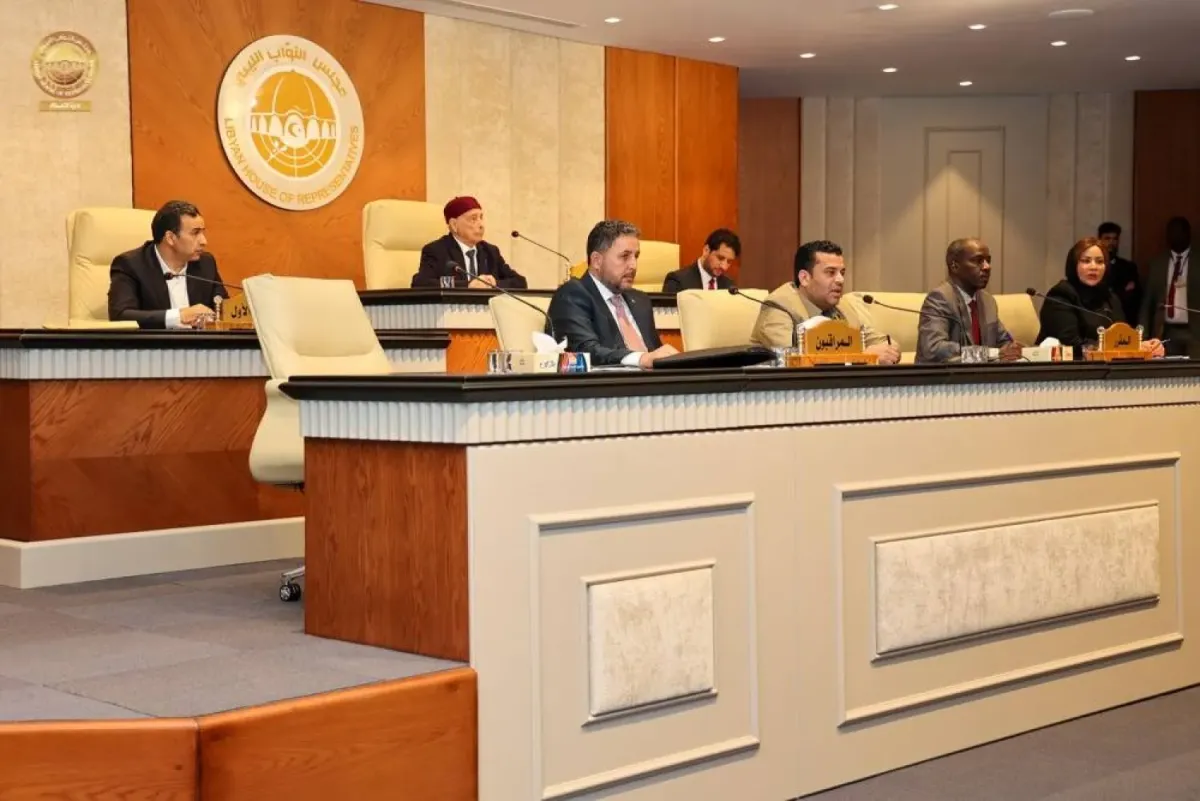
Several members of the Libyan Parliament are insisting on a reform plan for the House of Representatives, indicating that this step aims to develop institutional performance and increase the council's efficiency in handling political and legislative files.
This direction comes amid public disagreements between the Speaker of the House, Agila Saleh, and his first and second deputies, Fawzi Al-Nuwairi and Misbah Doma, respectively. The deputies have accused Saleh of monopolizing decisions related to positions and taxes, leading to a division within the council between supporters and opponents.
Details of the Event
A number of deputies held a consultative session in the city of Benghazi, which was attended by neither Saleh nor the council's presidency. They emphasized the necessity of moving forward with the implementation of the reform plan that was approved in a previous meeting on March 11 of this year. The deputies agreed to make substantial amendments to a law issued in 2014, including organizing the parliamentary session, with the aim of effecting real change and injecting new blood into the presidency of the council and its committees after 12 years since its election.
During the meeting, the deputies considered the reform plan as the unifying framework for addressing existing imbalances and restoring the effectiveness of the legislative institution, stressing the importance of implementing the provisions of the reform plan.
Background & Context
Agila Saleh has been the Speaker of the House of Representatives since 2014, after being elected in a session held on August 5 of the same year in the city of Tobruk, eastern Libya. Since then, the parliament has been a key player in the political events that the country has witnessed.
In the previous session, the members of the House of Representatives voted on what they called a roadmap for reforming the council's work, which includes amending the internal regulations to re-elect the presidency and the permanent committees, a move that did not receive support from Saleh's loyal front. The relationship between Saleh and his deputies has seen increasing tension since the end of last year, as they exchanged accusations regarding the monopolization of decisions.
Impact & Consequences
Concerns are growing that these tensions may affect the stability of the council and its ability to make decisive decisions amid the political and economic crises facing the country. Some deputies have indicated that the continuation of these disagreements could exacerbate the situation within the council and hinder reform efforts.
Moreover, the failure to reach a consensus among members may obstruct the decision-making process regarding taxes and positions, which could negatively impact the economic situation in the country and increase the suffering of citizens.
Regional Significance
The situation in Libya is part of a broader regional landscape, reflecting the political and economic tensions in the country as larger challenges faced by the states in the region. The stability of Libya has a direct impact on security and stability in North Africa, influencing relations between neighboring countries.
In conclusion, the future of the Libyan House of Representatives hangs in the balance, dependent on its members' ability to overcome their internal disputes and achieve the necessary reforms, which may contribute to restoring confidence in the legislative institution and enhancing the stability of the country.