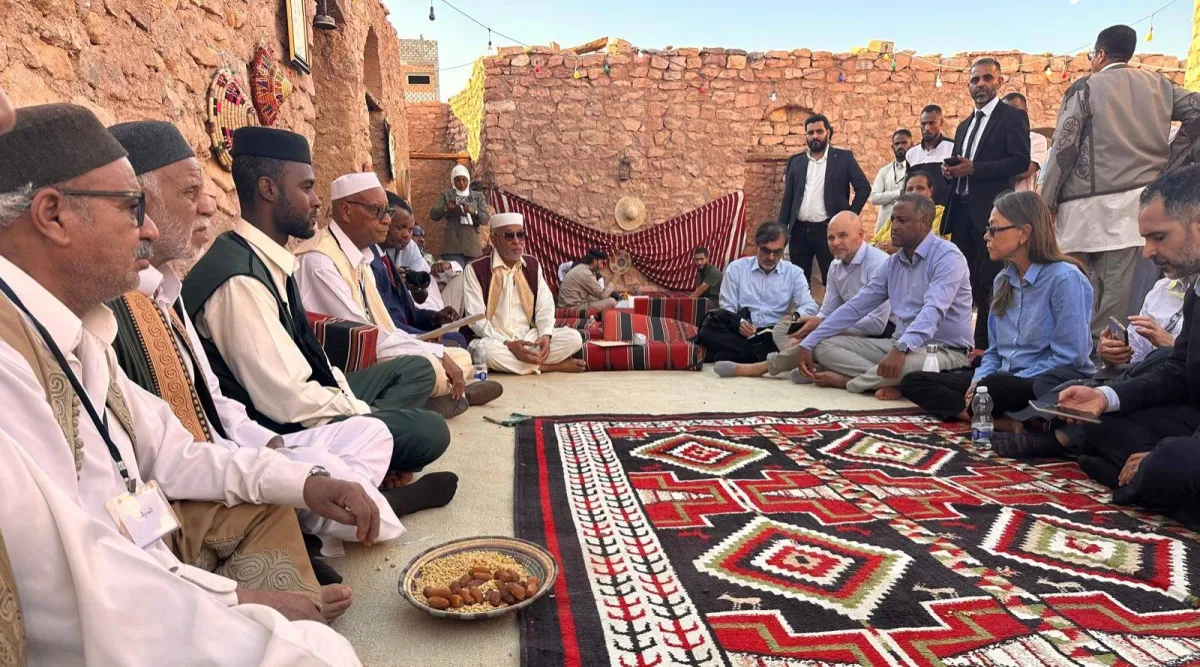
The southern region of Libya has returned to the international spotlight after a series of visits conducted by the United Nations mission, where local officials called for increased international support to confront the chronic marginalization that has plagued the south for decades. The visit by the Deputy UN Envoy, Ulrikka Richardson, included meetings with local and governmental leaders, reflecting a growing international interest in the region's issues.
This visit comes at a time when the south is grappling with multiple crises, including living conditions, border issues, and tribal conflicts. Hawa Zayed, a member of the UN-sponsored structured dialogue, emphasized that these movements reflect the increasing international attention to the conditions in the south, which suffers from security, economic, and social crises.
Details of the Event
During the visit, Richardson met with the Deputy Prime Minister of the unity government, Salem Al-Zadma, and mayors of southern municipalities, focusing on vital issues such as water, deteriorating health services, and climate change risks. The discussions also addressed border security and challenges related to smuggling and human trafficking, which significantly impact the region's stability.
Cities like Sebha, Murzuq, and Ghat have become key hubs in these discussions, as the accumulated crises in the south present substantial challenges that require effective international responses. Local officials expressed their desire to leverage the UN momentum to reintroduce their demands regarding resource distribution and service improvements.
Background & Context
The southern region of Libya has a long history of marginalization, with the residents of Fezzan feeling excluded from the considerations of successive governments. The area has witnessed tribal conflicts and armed disputes, leading to widespread displacement and service deterioration. In recent years, some tribal reconciliations have been achieved, but economic and social challenges remain prevalent.
The recent visit reflects the UN's attempt to revive national dialogue, as the international community seeks to link the south's problems to the political settlement process. However, hope remains that these visits will translate into genuine developmental programs on the ground.
Impact & Consequences
The discussions between local officials and the UN highlight the necessity of enhancing international cooperation to tackle developmental challenges. The importance of improving essential services such as health, education, and water, along with supporting vulnerable groups, was emphasized. These steps could contribute to improving living conditions and enhancing stability in the region.
Nevertheless, the biggest challenge remains how to translate these promises into tangible results on the ground, especially given the complexities of the security and political situation in Libya. Continued marginalization could exacerbate humanitarian crises, necessitating an urgent response from the international community.
Regional Significance
The conditions in southern Libya serve as an indicator of the challenges faced by many Arab countries amid political and economic crises. Strengthening international support for the south could be a model that can be emulated in other marginalized regions.
In conclusion, there is hope that this visit marks the beginning of a new phase of international cooperation, contributing to improving conditions in southern Libya and providing the necessary support for sustainable development.