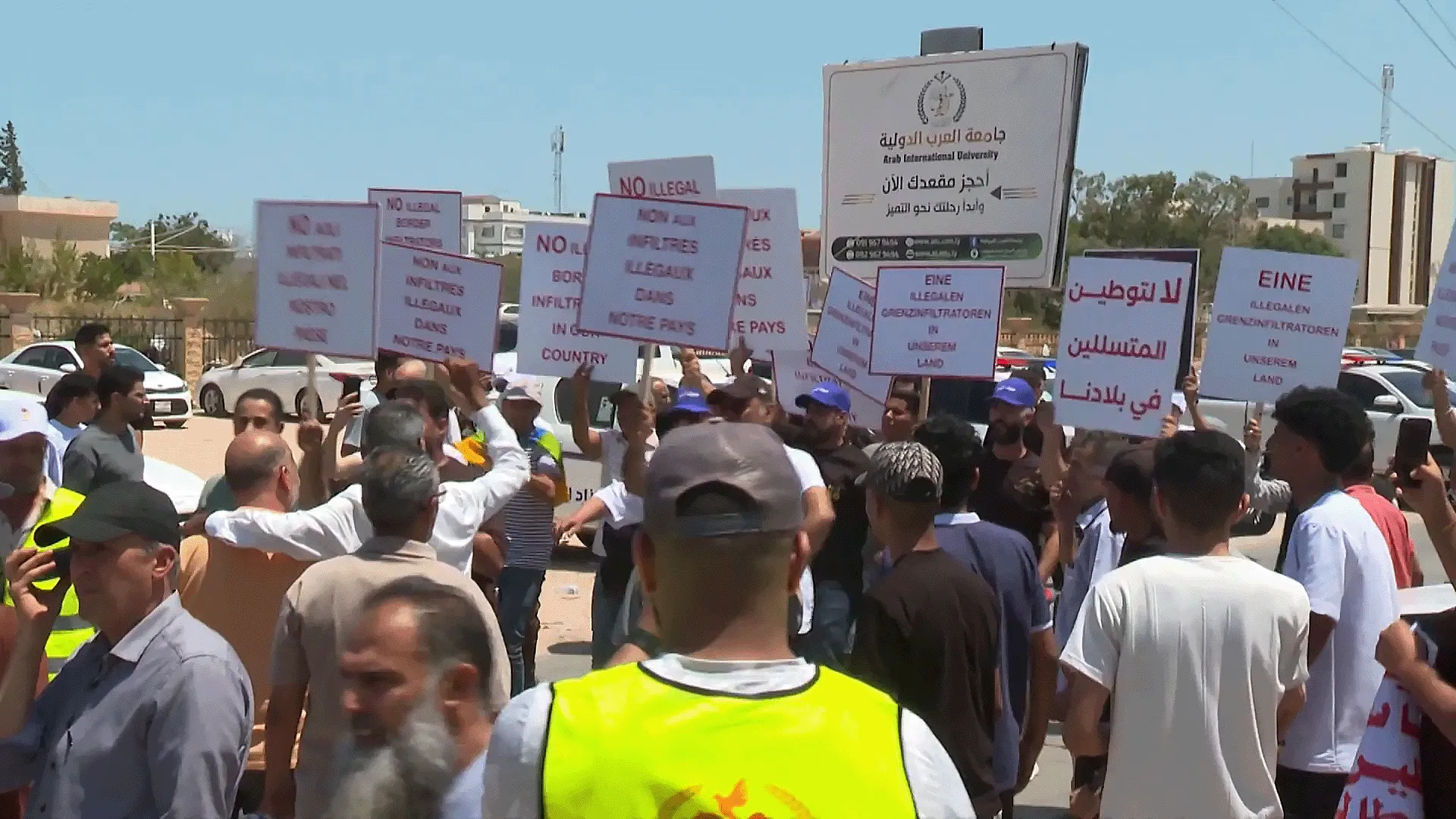
Libyan protesters have shut down the UN Refugee Agency's office in the Serraj area west of the capital, Tripoli, reflecting a new escalation in public rejection of irregular migration. The demonstrators expressed their concerns over the rising influx of migrants into Libyan territory, emphasizing their opposition to the idea of resettling them within the country.
These protests coincided with the Libyan Government of National Unity's Foreign Ministry reaffirming Libya's steadfast position against migrant resettlement in any form. The ministry warned against media campaigns aimed at stirring public opinion or distorting facts regarding this issue.
Details of the Protest
The protesters gathered in front of the agency's office, raising slogans condemning the increasing number of migrants in the country. Some demonstrators pointed out that the security and economic situation in Libya does not allow for the resettlement of more migrants, given the multiple crises the country is facing. They also stressed the need to address the root causes of migration rather than dealing with its repercussions.
At the same time, the Foreign Ministry issued an official statement confirming the government's stance against the idea of resettlement, indicating that Libya is not a safe country for migrants. The ministry clarified that there are attempts by some international organizations to change this reality, which contradicts the interests of the Libyan people.
Background & Context
Libya is a major transit point for migrants coming from sub-Saharan African countries seeking to reach Europe. In recent years, the country has witnessed a significant increase in the number of migrants, exacerbating humanitarian crises. This phenomenon is attributed to various factors, including armed conflicts and poverty in the countries of origin.
Historically, Libya has received migrants as part of its economic system, but current conditions have made it difficult for the Libyan government to manage these flows. Political and economic crises have worsened the situation, making it challenging to provide the necessary support for migrants.
Impact & Consequences
There are growing concerns that these protests could exacerbate the security situation in the country, potentially increasing tensions between migrants and local residents. Furthermore, the continuation of these conditions may negatively impact Libya's image in the international community and increase pressure on the government to address this issue.
On the other hand, these protests could lead to a reconsideration of migration policies by international organizations, which may change the approach to handling migration issues in the region. This is significant given the increasing challenges faced by European countries in managing migrant flows.
Regional Significance
The issue of irregular migration is a sensitive topic in the Arab region, where many countries are affected by migrant flows. The situation in Libya could increase pressure on neighboring countries, necessitating greater coordination among Arab governments to address these challenges.
In conclusion, these protests reflect the growing anxiety among the Libyan people regarding migration issues and highlight the need for comprehensive solutions that address the root causes of migration while ensuring the rights of migrants.