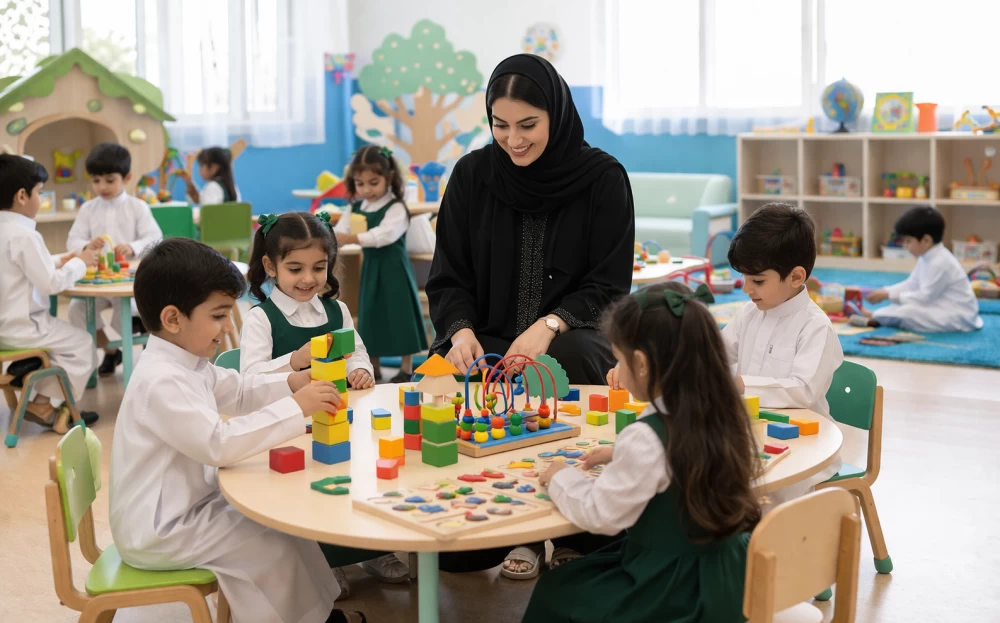
The Ministry of Education has introduced new criteria for student enrollment in kindergartens and Quran memorization schools, limiting acceptance to citizens and the children of female citizens. This initiative is part of a comprehensive organization aimed at improving the precision of admissions and directing educational seats according to clear determinants.
The new criteria include a preference based on the proximity of the school or kindergarten to the national address, as well as the presence of a first-degree relative within the educational institution, which grants applicants additional points in the admission ranking. These standards aim to enhance acceptance opportunities for students belonging to citizen families.
Details of the Announcement
According to the guide used on the education portal, the basic conditions for admission include reaching the eligible age, undergoing a medical fitness examination, verifying the accuracy of the national address, completing required vaccinations, and possessing a valid national ID.
At the primary level, the children of female citizens have been included among the categories eligible for preference in public education schools, alongside citizens and non-Saudis. This step reflects the ministry's commitment to enhancing the presence of this group within the registration regulations.
Background & Context
These criteria come as part of the Ministry of Education's efforts to improve the quality of education and allocate educational resources more effectively. Historically, there have been challenges in the student registration process, necessitating the establishment of new regulations to ensure fairness in the distribution of educational seats.
Moreover, these measures reflect the general trend towards promoting early education, as kindergarten education is considered a fundamental step in building a strong educational foundation for students.
Impact & Consequences
These criteria are expected to increase acceptance opportunities for citizen students, reflecting the government's interest in enhancing local education. Additionally, this step may contribute to improving the quality of education by focusing on students from citizen families.
However, some families may face challenges during the registration process, especially if there are no schools close to their residences. Therefore, it is important to have clear mechanisms in place to support families in this context.
Regional Significance
This initiative is part of broader efforts in the region to enhance education and improve its quality. Many Arab countries face similar challenges in their education systems, necessitating the consideration of effective strategies to improve educational quality and distribute resources fairly.
In conclusion, this direction represents a positive step towards improving the education system and reflects the government's commitment to enhancing educational opportunities for citizen students and the children of female citizens.