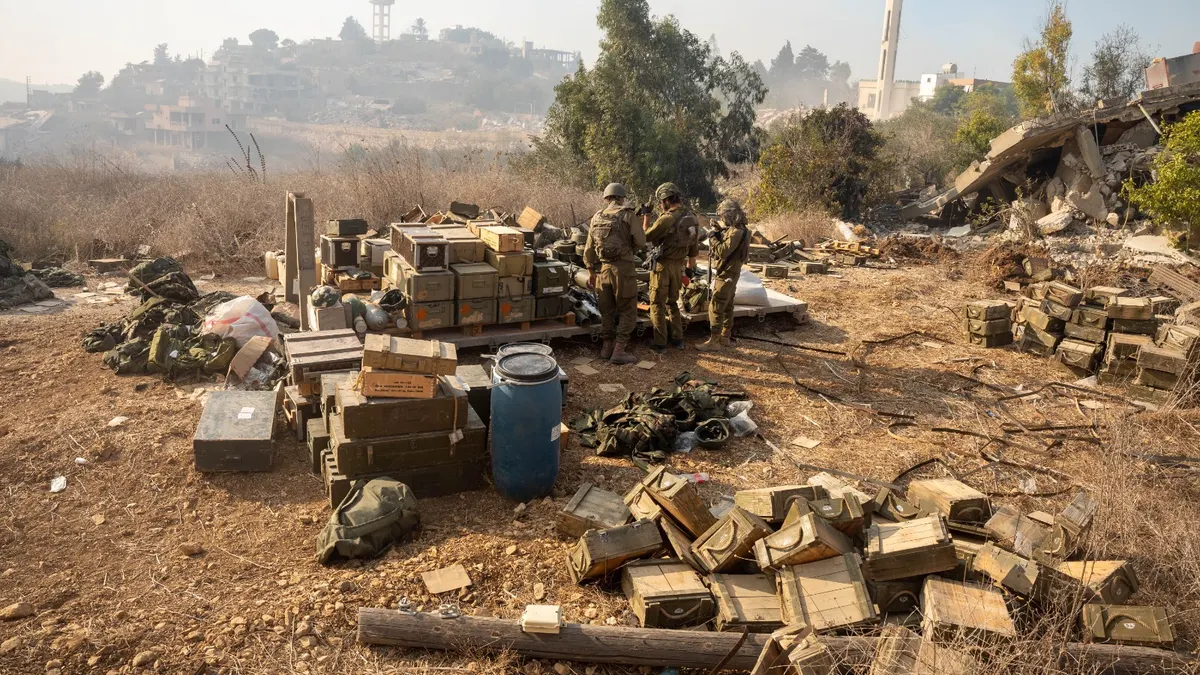
Local council heads in northern Israel have voiced their deep dissatisfaction with the Israeli army's statements, which confirmed its inability to disarm Hezbollah. These statements have sparked strong reactions among local officials, who believe that the army should have the capacity to confront security threats from Hezbollah, especially given the tense situation in the region.
In their statements, the council heads emphasized that the inability to deal with Hezbollah raises concerns among local residents, who feel a constant threat from the armed group. They pointed out that the Israeli army must take more effective steps to protect citizens in the north, where rocket attacks from Lebanon have increased in recent years.
Details of the Incident
This criticism came after Israeli army officials stated that they could not guarantee the disarmament of Hezbollah, which many local leaders viewed as a failure in defense strategies. One council head confirmed that these statements reflect a weakness in responding to threats, which heightens the fears of the population.
These remarks come amid escalating tensions between Israel and Hezbollah, with numerous military incidents reported along the border between the two countries. Some observers have noted that the situation could deteriorate if effective measures are not taken by the Israeli army.
Background & Context
Historically, Hezbollah is considered one of the most prominent armed groups in Lebanon, having emerged in the 1980s in response to the Israeli occupation. Since then, the party has evolved into a significant military and political force in Lebanon, making it a major adversary of Israel. The two sides have fought several wars, the most notable being the 2006 war, which resulted in widespread destruction in Lebanon and significant damage in northern Israel.
Over the years, Israel has attempted to undermine Hezbollah's power through military operations and targeting its leadership, but the party still maintains a large arsenal of weapons, including rockets that threaten Israeli cities. This situation raises significant concerns among Israeli officials, who feel they are in a race against time to mitigate the party's threats.
Impact & Consequences
The inability to disarm Hezbollah could lead to serious repercussions for Israeli national security. With increasing threats, the Israeli army may resort to more aggressive actions, potentially escalating the conflict in the region. Additionally, these statements could affect the morale of both soldiers and civilians, as they feel inadequately protected.
Furthermore, these conditions could impact relations between Israel and neighboring countries, as some parties may exploit the situation to bolster their position in the region. Military escalation could also lead to a flow of refugees into neighboring countries, increasing pressure on governments in the area.
Regional Significance
The situations in Lebanon and Israel are part of the larger picture of conflict in the Middle East. Tensions between Israel and Hezbollah affect stability in the region and may contribute to increasing tensions between Arab states and Israel. Any escalation in the conflict could impact peace efforts in the area and heighten the challenges faced by Arab countries in addressing security and economic issues.
In conclusion, the situations in northern Israel and Lebanon remain under scrutiny, as the current circumstances require an effective response from all concerned parties. Security challenges necessitate international and regional cooperation to ensure stability in the area.