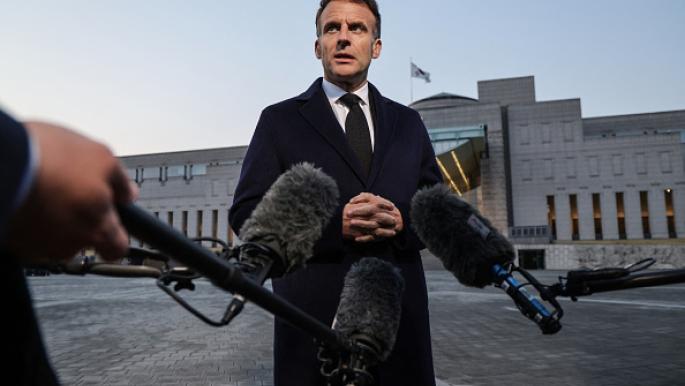
French President Emmanuel Macron accused U.S. President Donald Trump on Thursday of undermining the North Atlantic Treaty Organization (NATO) by sowing doubts about it on a daily basis. This statement was made during a press conference where Macron pointed out that such actions negatively affect the unity of the alliance and its ability to face global challenges.
Macron also addressed the issue of the Strait of Hormuz, describing the idea of forcibly opening it as unrealistic, stressing the necessity of seeking diplomatic solutions to crises rather than resorting to military force. These remarks come at a sensitive time when international relations are experiencing increasing tensions, particularly in the Middle East.
Details of the Event
During the press conference, Macron clarified that the doubts sown by Trump regarding NATO weaken the alliance, which is one of the most important military coalitions in the world. He noted that NATO needs to strengthen trust among its members, especially in light of the growing security challenges facing member states.
Macron also criticized certain U.S. policies that he deemed inconsistent with the principles of the alliance, emphasizing the importance of international cooperation to address common threats, including terrorism and climate change.
Background & Context
NATO was established in 1949 as a military alliance aimed at enhancing collective security among member states. Over time, the alliance has faced numerous challenges, from the Cold War to 21st-century terrorist threats. Under Trump's presidency, tensions within NATO have escalated, as Trump has criticized some member countries for failing to meet specified financial targets.
Macron's statements come amid France's attempts to bolster its leadership role in Europe, particularly as U.S. influence wanes on certain international issues. Additionally, Macron seeks to enhance European cooperation in defense and security, which requires greater unity among NATO member states.
Impact & Consequences
Macron's remarks may increase pressure on Trump to reassess his policies towards NATO, especially with the upcoming U.S. presidential elections. Furthermore, these statements could reflect a deeper division within the alliance, potentially affecting joint defense strategies.
Moreover, the growing doubts surrounding NATO may prompt some member states to seek alternative alliances, which could alter the balance of power on the international stage. Simultaneously, these comments may encourage enhanced defense cooperation among European countries, contributing to regional security.
Regional Significance
The Middle East is one of the regions most affected by international tensions, where major powers play a significant role in determining its fate. Macron's comments regarding the Strait of Hormuz highlight the importance of diplomatic solutions in addressing regional crises, especially amid tensions between Iran and Western nations.
Furthermore, strengthening NATO's unity could contribute to regional stability, as it may lead to better coordination among member states in facing common threats, including terrorism and foreign interventions.
In conclusion, Macron's remarks reflect the challenges NATO faces under the current U.S. leadership and underscore the importance of enhancing international cooperation to tackle global security challenges.