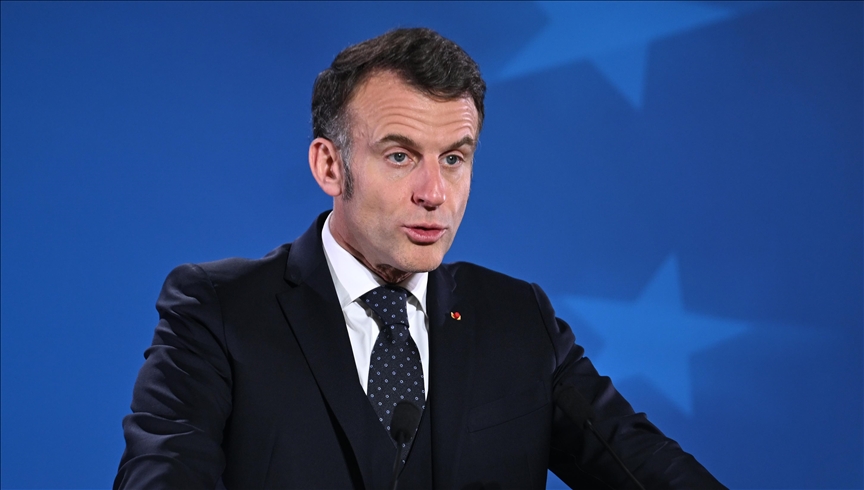
French President Emmanuel Macron condemned the Israeli police's decision to prevent the Latin Patriarch from entering the Church of the Holy Sepulchre in Jerusalem, emphasizing the necessity of ensuring freedom of worship for all religions. This statement came during the Palm Sunday celebrations, where Macron called for respecting the rights of all believers in the holy city.
This decision sparked widespread reactions, with many considering it a violation of freedom of worship and the rights of Christians in Jerusalem. Macron stressed the importance of preserving the city's diverse character, asserting that freedom of worship should be guaranteed for everyone without discrimination.
Details of the Incident
During the Palm Sunday celebrations, which is regarded as a significant occasion in the Christian calendar, the announcement was made regarding the prohibition of the Latin Patriarch from entering the Church of the Holy Sepulchre. This decision came at a sensitive time, as tensions in the holy city are escalating due to ongoing conflicts between Palestinians and Israelis. This decision has caused considerable discontent among Christian communities, who view it as a restriction on their rights.
Macron, speaking at a special celebration, reiterated the necessity of respecting the rights of all religions in Jerusalem, pointing out that the city should remain a symbol of peaceful coexistence among religions. He also called on the international community to intervene to ensure freedom of worship in the holy city.
Background & Context
Historically, Jerusalem is considered a holy city for the three Abrahamic religions: Islam, Christianity, and Judaism. The city has witnessed religious and political conflicts throughout the ages, leading to restrictions on freedom of worship at times. In recent years, tensions between Palestinians and Israelis have escalated, negatively impacting freedom of worship, especially in holy sites.
The Latin Patriarchate, representing the Catholic community in the Holy Land, plays a vital role in safeguarding the rights of Christians in the region. However, political decisions and Israeli security measures often affect the freedom of movement and worship for Christians.
Impact & Consequences
The decision to bar the Latin Patriarch from entering the Church of the Holy Sepulchre may have significant repercussions on relations between religious communities in Jerusalem. It could lead to heightened tensions between Muslims and Christians, especially under the current circumstances in the city. This decision may also impact religious tourism, which is considered an important source of income for the city.
On the other hand, this decision could increase international pressure on Israel, as it is viewed as a violation of human rights and freedom of worship. This might prompt some countries to adopt a firmer stance towards Israeli policies in Jerusalem.
Regional Significance
This event is significant in the Arab context, reflecting the ongoing tensions in the region. Freedom of worship in Jerusalem is a central issue for many Arab countries, which see it as part of Palestinian rights. Additionally, events in Jerusalem affect the relationships between Arab countries and Israel, complicating the conflict in the region.
In conclusion, the decision to bar the Latin Patriarch from entering the Church of the Holy Sepulchre highlights the urgent need to ensure freedom of worship for all religions in Jerusalem. Preserving the city's diverse character is essential for achieving peace and stability in the region.