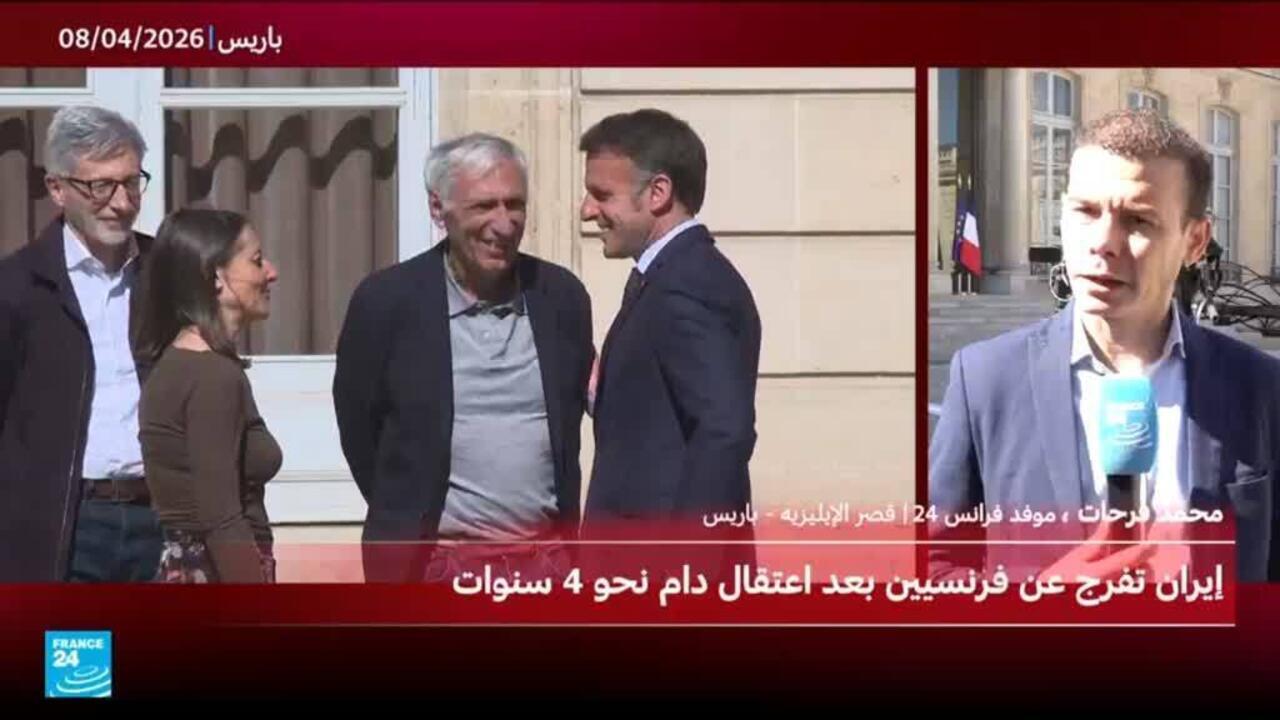
French President Emmanuel Macron welcomed Cécile Kohler and Jacques Paris on Wednesday morning after their release from Iran, where they had been detained for nearly four years on espionage charges. The former detainees arrived at Charles de Gaulle Airport before 9 AM on a commercial flight, where they were greeted by a team from the French Ministry of Foreign Affairs.
Upon their arrival, a meeting was arranged for them with their families before heading to the Élysée Palace to meet President Macron. This visit comes after a long period of tensions between France and Iran, which has seen the detention of several French citizens in Iran in recent years.
Event Details
Cécile Kohler and Jacques Paris were arrested in Iran in 2019 on charges related to espionage, and they were later placed under house arrest. Their detention raised concerns within the French government, which made extensive efforts for their release. This release comes at a sensitive time, as international pressure on Iran regarding human rights and its regional behavior is increasing.
The visit by Kohler and Paris to the Élysée reflects the significance of this event for the French government, as the release of French citizens from Iran is seen as a diplomatic achievement. Macron noted that this event underscores France's commitment to protecting its citizens abroad.
Background & Context
Over the past few years, relations between France and Iran have experienced increasing tensions, with many French citizens detained on charges related to espionage or political activities. These arrests have elicited strong reactions from the French government, which views these actions as violations of human rights.
Historically, relations between the two countries have been volatile, experiencing periods of cooperation and others of tension. In recent years, concerns have grown regarding Iran's nuclear activities and its support for armed groups in the region, further complicating bilateral relations.
Impact & Consequences
This release could have significant implications for French-Iranian relations, potentially opening the door for further dialogue and cooperation between the two countries. It may also help ease tensions and bolster the French government's position domestically, where citizens are demanding protection of their rights abroad.
Moreover, this event may influence European policy toward Iran, as European nations seek diplomatic solutions to the multiple crises in the region. The release of Kohler and Paris could enhance European efforts to find common ground with Iran on human rights issues and the nuclear program.
Regional Significance
This event carries important implications at the regional level, reflecting ongoing tensions between Iran and Western countries. It also highlights the challenges faced by Arab nations in dealing with Iran, especially amid rising Iranian activities in the region.
Additionally, this release may affect relations between Iran and Arab countries, as it could be seen as a step toward improving relations or may be used to bolster Iranian influence in the region. In any case, the situation in the region remains complex and requires further monitoring.