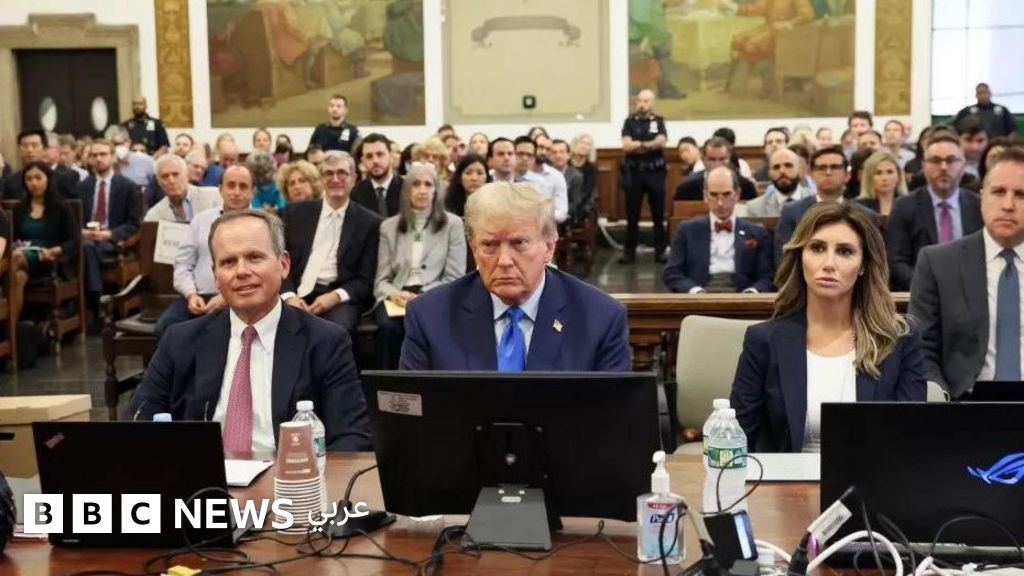
Former Venezuelan President Nicolás Maduro appears today, Thursday, in a court in New York, marking his second appearance since his arrest in a surprise U.S. military operation in Caracas. Maduro (63 years old) and his wife Cilia Flores have been held in a Brooklyn jail for nearly three months, following their capture by U.S. special forces from their residential complex in the Venezuelan capital in early January.
The jail where Maduro is held is known to be "notorious," typically housing defendants awaiting trial before the Southern District Court of New York, which is the court handling Maduro's case. The former Venezuelan president faces a range of charges, most notably "conspiring against the United States by engaging in terrorist acts related to drug trafficking," in addition to "supplying drug cartels with weapons."
Details of the Court Appearance
Today’s trial session is expected to see heightened security measures as Maduro seeks to dismiss the charges against him. His attorney, Barry Pollack, indicated that the sanctions imposed by Washington hinder Maduro's ability to obtain adequate legal representation, calling for the case to be dismissed on procedural grounds. Maduro is currently in solitary confinement, where he is not allowed access to the internet or newspapers, and his communication with family and his lawyer is limited to 15 minutes per call.
In his first court appearance in January, Maduro adopted a defiant tone, introducing himself as the president of Venezuela despite his arrest. Reports have indicated that Maduro reads the Bible in his cell, and some inmates refer to him as "the president."
Background & Context
Maduro has been in power in Venezuela since 2013 and took the oath for a third term in January 2025, following elections that international observers and the opposition deemed fraudulent. The Venezuelan government has declared Maduro a "prisoner of war," defending his innocence against the charges leveled against him.
In January, the U.S. Department of Defense announced that approximately 200 members of the U.S. special forces entered Caracas and arrested Maduro and his wife, resulting in the deaths of at least 83 people and injuries to over 112 others, according to Venezuelan officials. Meanwhile, Washington confirmed that no U.S. personnel were killed during the operation.
Impact & Consequences
All eyes are on how this trial will affect the political situation in Venezuela, where Delsy Rodríguez is leading the country after serving as vice president since 2018. Rodríguez has denied allegations that the United States is managing Venezuela's affairs, emphasizing that Maduro remains the legitimate president of the republic.
At the same time, the U.S. State Department announced this month that it is in the process of restoring diplomatic relations with Venezuela, indicating an improvement in relations between the two countries. Former U.S. President Donald Trump has also suggested that major American companies will head to Venezuela to invest in infrastructure rehabilitation, particularly in the oil sector.
Regional Significance
The Maduro case is pivotal in international relations, reflecting geopolitical conflicts in Latin America and their impact on relations between nations. It also highlights the importance of international cooperation in combating terrorism and drug trafficking, issues that concern many Arab countries facing similar challenges.
In conclusion, the Maduro case remains a focal point for the world, intertwining legal and political dimensions, making it one of the most prominent issues on the international stage.