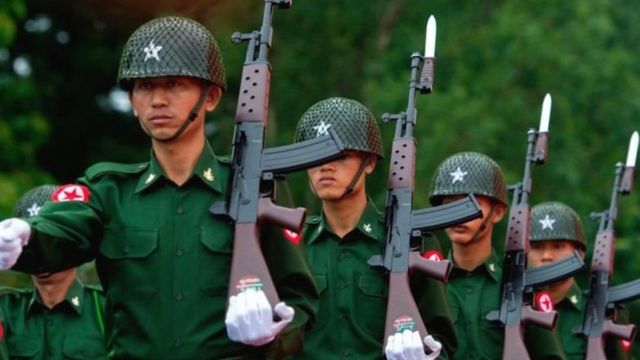
Reports indicate that the military in Myanmar is gearing up for a leadership change following an annual display of the armed forces, suggesting a rare shift in this entity that has dominated the country for decades. This change comes just days before the new parliament is set to convene to begin the process of selecting a new president, a position currently sought by the military leader Min Aung Hlaing.
During a meeting held on Thursday with retired officers from the army, known as Tatmadaw, Deputy Army Chief Soe Win confirmed that 'leadership changes' would occur following the Armed Forces Day celebration, which typically features a grand military parade in the capital Naypyidaw.
Details of the Event
This move comes at a sensitive time, as the country grapples with ongoing internal conflicts since the military coup in 2021, which ousted the democratically elected government led by Aung San Suu Kyi, a Nobel Peace Prize laureate. The recent elections held in December and January were widely criticized as fraudulent, resulting in a victory for a military-backed party, paving the way for Min Aung Hlaing to assume the presidency.
In this context, independent analyst Htin Kyaw Aye noted that the army's announcement of a leadership change before it happens is unusual, which may indicate internal concerns regarding the leadership transition process and the redistribution of top positions.
Background & Context
Historically, the armed forces in Myanmar have dominated political life since the country gained independence in 1948. The nation has witnessed several military coups, the most recent occurring in 2021, which led to the outbreak of an ongoing civil war. The current conflict has resulted in thousands of deaths and the displacement of millions, further complicating the humanitarian situation in the country.
It is noteworthy that Min Aung Hlaing, who was appointed as army chief in 2011, has yet to announce his successor, adding to the uncertainty surrounding the future of military leadership in the country. This leadership change comes at a critical time as the army seeks to consolidate its power amid fluctuating political conditions.
Impact & Consequences
This leadership change is expected to have significant implications for Myanmar's political future. If Min Aung Hlaing assumes the presidency, he may seek to strengthen his military authority, potentially exacerbating the conflict with other armed groups. Additionally, this change could impact the country's international relations, particularly with Western nations that have imposed sanctions on the military regime due to human rights violations.
Given the current circumstances, it appears that the army is striving to maintain its internal stability through leadership changes. However, political and economic instability may continue to affect the country, hindering any efforts toward peace and development.
Regional Significance
The events in Myanmar hold particular significance for the Arab region, reflecting the challenges faced by countries undergoing transitional phases. Internal conflicts and military coups are not unfamiliar to many Arab nations, raising questions about how to manage political transformations. Furthermore, the humanitarian crises resulting from conflicts in Myanmar may remind Arab countries of the importance of supporting stability and development in conflict areas.
In conclusion, it remains to be seen how these changes in military leadership will affect Myanmar's future and whether they will lead to improvements in the political situation or exacerbate existing crises.