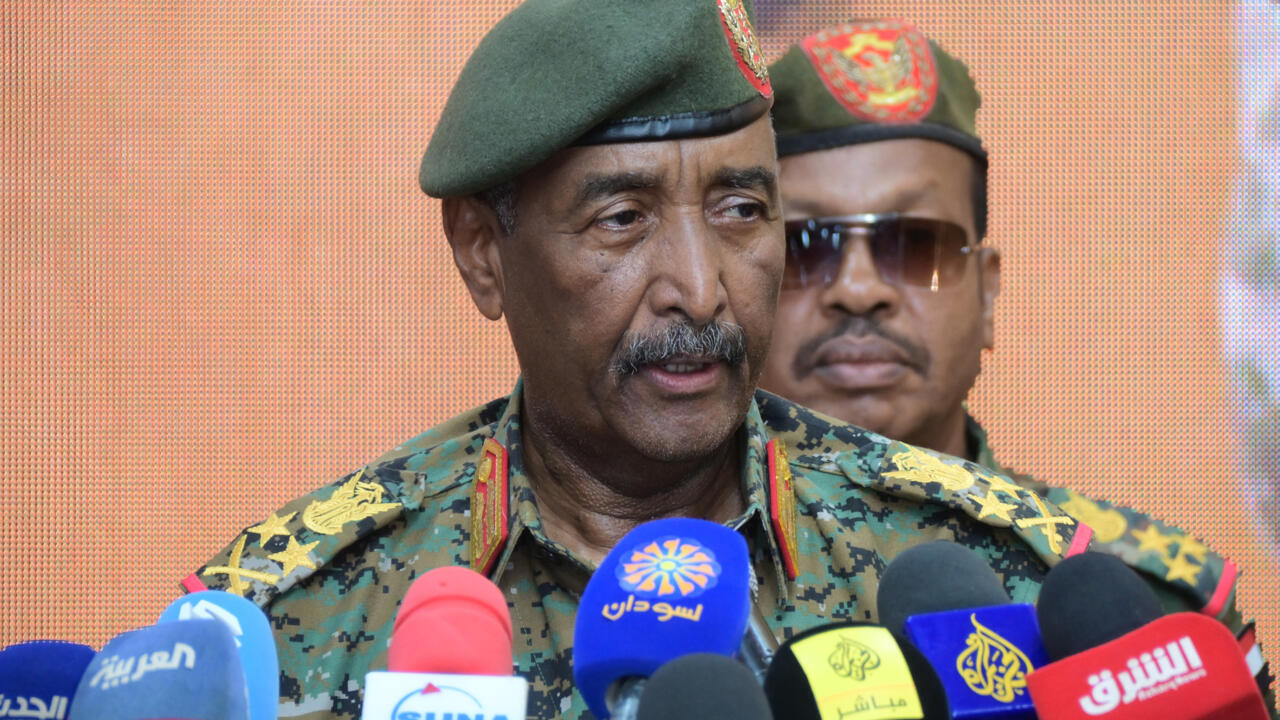
Sudanese Army Chief Abdel Fattah Burhan made significant changes to the military leadership hierarchy on Monday, abolishing the position of Deputy Commander and appointing Shams al-Din Kabashi as his assistant. This move follows the recent appointment of Yasir al-Atta as Chief of Staff, reflecting strategic changes amid the ongoing war with the Rapid Support Forces.
These adjustments are the most extensive since the conflict between the army and the Rapid Support Forces began nearly three years ago. Burhan stated in an official announcement that the previous decision regarding the appointment of a Deputy Commander and assistants has been revoked, while retaining the current holders of these positions as members of the Armed Forces Leadership Council.
Details of the Changes
The changes also included the appointment of Kabashi as Assistant for Construction and Strategic Planning, and Mirghani Idris as Assistant for Military Industries. Additionally, Ibrahim Jaber Ibrahim Karima has been tasked with the role of Assistant for International Relations and Military Cooperation. These adjustments come at a time when the country is witnessing an escalation in conflict, with increasing drone attacks significantly impacting daily life in many Sudanese cities.
In a prior move, Burhan appointed Lieutenant General Yasir al-Atta as the new Chief of Staff, placing him protocol-wise above Kabashi according to the recent decisions. Al-Atta is a seasoned officer, having served in the army for nearly four decades, and is known for his public criticisms of the UAE, accusing it of supporting the Rapid Support Forces, a claim that Abu Dhabi denies.
Background & Context
It is noteworthy that the conflict in Sudan began in April 2023, resulting in the deaths of tens of thousands and the displacement of over 11 million people. This crisis is considered one of the largest humanitarian crises in the world, as the country faces significant challenges in providing humanitarian aid to those in need.
Events on the battlefield are accelerating, with the fighting expanding to new fronts, including the South Kordofan region, which is now one of the fiercest battlefronts, as well as Blue Nile State where confrontations are intensifying. These developments come at a time when the country is suffering from a severe humanitarian crisis.
Impact & Consequences
These changes in military leadership illustrate the complexity of the situation in Sudan, as Burhan seeks to consolidate his power under difficult circumstances. The appointment of Kabashi, who is seen as one of the more open voices for negotiation, may indicate a desire to seek peaceful solutions to the ongoing conflict.
As drone attacks increase, fears are growing regarding the worsening humanitarian conditions in the country. These attacks result in dozens of casualties with each strike, complicating relief efforts and negatively impacting civilian lives.
Regional Significance
The developments in Sudan are of great importance to the Arab region, as they may affect regional stability. The ongoing conflict in Sudan could have repercussions for neighboring countries, especially in light of the influx of refugees and security threats.
In conclusion, the situation in Sudan remains a focal point of significant concern, necessitating urgent and effective solutions to end the conflict and improve humanitarian conditions. The recent military changes may be a step towards achieving this, but they require integrated efforts from all concerned parties.