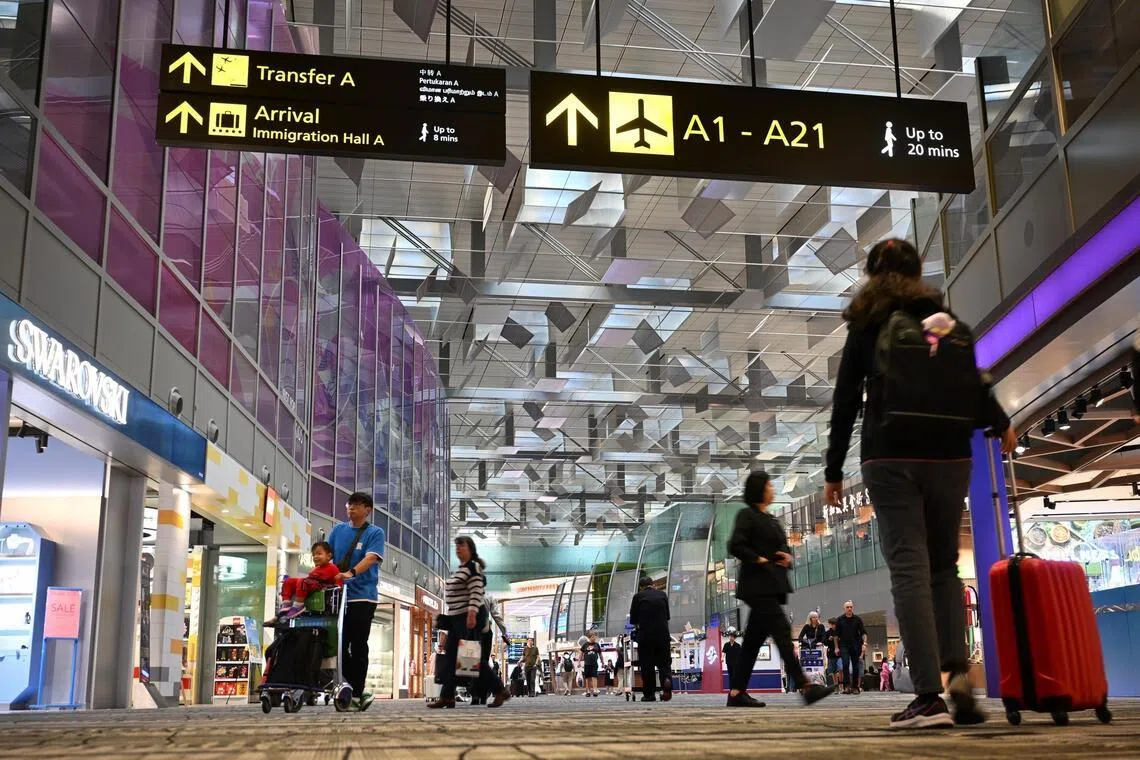
Changi Airport in Singapore has announced plans for a significant upgrade to Terminal 3, where more digital technologies and robots will be integrated. The tender for this project is expected to be launched in the second half of 2026. This upgrade is part of the airport's efforts to enhance its efficiency and improve the travel experience for passengers.
Jeffrey Seah, the General Manager of Changi Airport, confirms that this upgrade will enhance the airport's capacity to handle the continuous increase in passenger numbers. The airport will rely on modern technology to provide smoother and more effective services, reflecting the global trend towards digitizing services.
Details of the Upgrade
The proposed updates for Terminal 3 include the introduction of advanced digital systems, as well as the use of robots in various operations. These updates are expected to expedite check-in and security procedures, thereby reducing wait times for travelers.
Additionally, the airport's infrastructure will be improved to better meet the needs of passengers, including waiting areas and public facilities. This update is part of a larger plan to develop Changi Airport to remain at the forefront of global airports.
Background & Context
Changi Airport is considered one of the best airports in the world, having received numerous awards in recognition of its service quality. With the increasing global air traffic, the airport seeks to enhance its competitive capabilities through infrastructure upgrades.
Historically, Changi Airport has undergone several updates and expansions since its opening in 1981, making it a preferred destination for travelers. These updates reflect the airport's commitment to innovation and providing an exceptional travel experience.
Impact & Consequences
This upgrade is expected to have a positive impact on the local economy, contributing to the creation of new job opportunities in technology and services. It will also help attract more tourists to Singapore, enhancing its status as a global hub for tourism and business.
This move is also a response to rapid changes in the aviation industry, where there is an increasing need to improve efficiency and reduce costs. The use of robots and digital technologies can help achieve these goals.
Regional Significance
The updates at Changi Airport serve as a model for airports in the Arab region, where Arab countries can benefit from implementing similar technologies to enhance their services. With the increasing travel movement between Arab countries and the world, investing in modern technology will have a significant impact on the travel experience.
Furthermore, the development of airports in the region can contribute to boosting tourism and increasing investments, positively reflecting on the local economy.
In conclusion, the upgrade of Changi Airport reflects the global trend towards innovation in the aviation industry and emphasizes the importance of investing in technology to improve the travel experience and enhance efficiency. As the implementation date for these updates approaches, everyone looks forward to seeing the positive results that will follow.