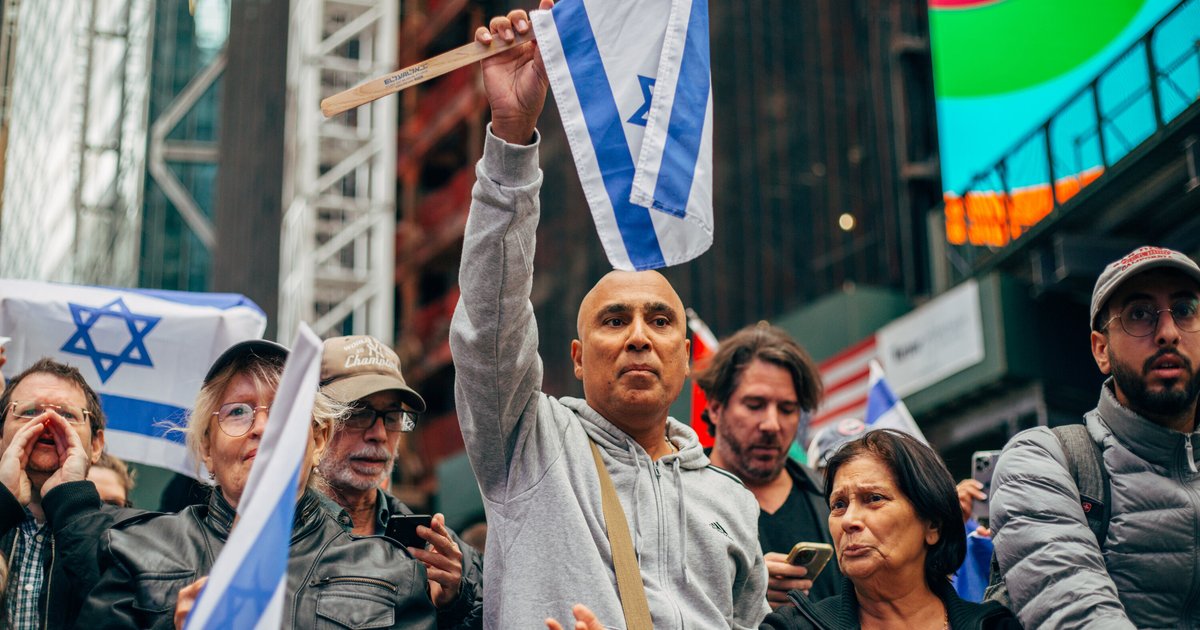
A recent survey has shown that the majority of American Jews oppose the idea of war against Iran, with the survey indicating that 62% of participants see no necessity for military intervention in Iran. Additionally, 70% of respondents expressed distrust in former President Donald Trump's clear plan to address this issue. This survey emerges at a time when fears are escalating regarding rising tensions between the United States and Iran, particularly in light of repeated statements from American officials concerning Iran's nuclear program.
These results are intriguing as they reflect a division in American public opinion, especially among the Jewish community, which has historically supported U.S. policies towards Israel. However, it appears that concerns about war and the potential human and economic costs have influenced their views.
Survey Details
The survey was conducted by an American Jewish research center, which included a sample of 1,000 American Jews. Questions were posed regarding their positions on the war against Iran, as well as their opinions on Trump's foreign policy management. The results showed that 55% of participants believe that war would have dire consequences for both the United States and Israel.
Moreover, 60% of respondents indicated a preference for diplomatic solutions over military ones, reflecting a shift in strategic thinking within this community. At the same time, 40% expressed concern that military escalation could worsen conditions in the Middle East.
Background & Context
Historically, relations between the United States and Iran have been tense since the Iranian Revolution in 1979. These relations have seen significant escalation in recent years, particularly following the U.S. withdrawal from the Iranian nuclear agreement in 2018. Since then, the United States has imposed stringent economic sanctions on Iran, exacerbating the country's economic situation.
In this context, American Jews are part of a community that is directly affected by U.S. foreign policies. Recent years have seen an increase in discussions about how to deal with Iran, especially amid mutual threats from both sides. As tensions escalate, it has become clear that there is an urgent need to seek diplomatic solutions rather than military escalation.
Impact & Consequences
The survey results indicate a shift in American public opinion, particularly among the Jewish community, regarding the idea of war against Iran. This shift could influence future U.S. policies towards Iran, as the incoming American administration may need to reassess its strategies.
Additionally, these results could impact U.S.-Israeli relations, as the Israeli government may find itself in a difficult position if pressures from the Jewish community in the United States against war continue. This could lead to a reconsideration of how to approach Iran, especially under the current circumstances.
Regional Significance
The relations between the United States and Iran are a sensitive issue that directly affects the Arab region. Any military escalation could have serious repercussions for neighboring countries, especially given the presence of Iranian allies in the region. Furthermore, war could exacerbate humanitarian conditions in affected countries such as Iraq and Syria.
In conclusion, this opinion poll reflects significant changes in attitudes towards war and underscores the necessity of seeking diplomatic solutions to avoid any escalation that could lead to dire consequences for the entire region.