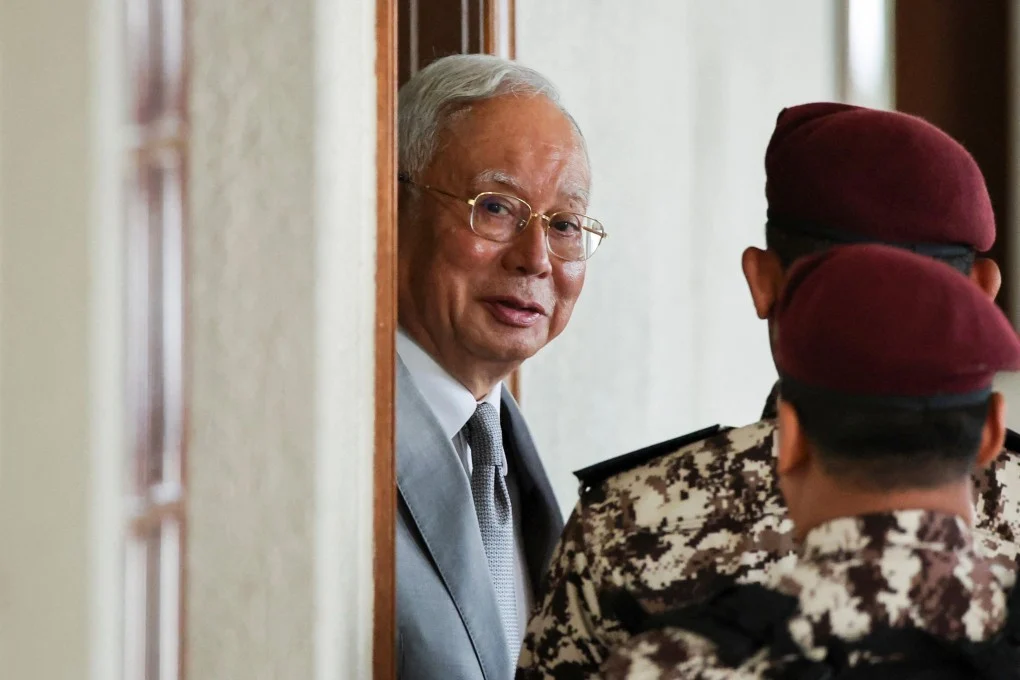
A Kuala Lumpur High Court issued a ruling on Tuesday requiring former Malaysian Prime Minister Najib Razak to pay $1.3 billion to a former unit of the 1Malaysia Development Berhad, commonly known as 1MDB. This ruling is part of a major corruption case that has shaken Malaysia and impacted the country's financial and political reputation.
The ruling, delivered by Judge Ahmad Fairuz Zainol Abidin, confirmed that Najib had violated his fiduciary duties and exploited his position for personal gain at the expense of public funds. SRC International, a subsidiary of the sovereign wealth fund, was deemed a victim of these actions.
Details of the Case
The roots of this case date back to 2015 when the 1MDB scandal was uncovered, in which Najib was accused of embezzling public funds amounting to billions of dollars. This scandal led to widespread protests in Malaysia, resulting in Najib's defeat in the 2018 general elections. Since then, he has been arrested and prosecuted on multiple corruption-related charges.
The latest ruling comes after a series of legal proceedings against Najib, who was previously sentenced to 12 years in prison for earlier corruption cases. This new ruling represents another blow to Najib's efforts to regain his political power.
Context and Background
The 1MDB fund was established in 2009 to promote economic development in Malaysia, but it quickly became a symbol of corruption and mismanagement. Najib has been accused of using fund money to finance personal projects, including the purchase of luxury properties and funding Hollywood films.
Over the years, Malaysia has faced the repercussions of this scandal, leading to a decline in trust in the government and the financial system. It has also affected trade relations with many countries, making it imperative for Malaysia to restore its international reputation.
Implications and Effects
The ruling against Najib is a significant step towards holding those responsible for corruption in Malaysia accountable. It may help to enhance trust in the Malaysian judicial system and encourage similar actions against corruption in other countries in the region.
This ruling could also impact foreign investments in Malaysia, as investors seek a stable and transparent legal environment. If the government continues to take strong measures against corruption, confidence in the Malaysian market may gradually return.
Impact on the Arab Region
The 1MDB case serves as an example of how corruption affects governments and economies, which could resonate in Arab countries facing similar issues. Corruption represents a major barrier to economic and social development and can lead to political instability.
In light of this, Arab countries can learn from Malaysia's experience in combating corruption and enhancing transparency, contributing to the establishment of strong and stable institutions.