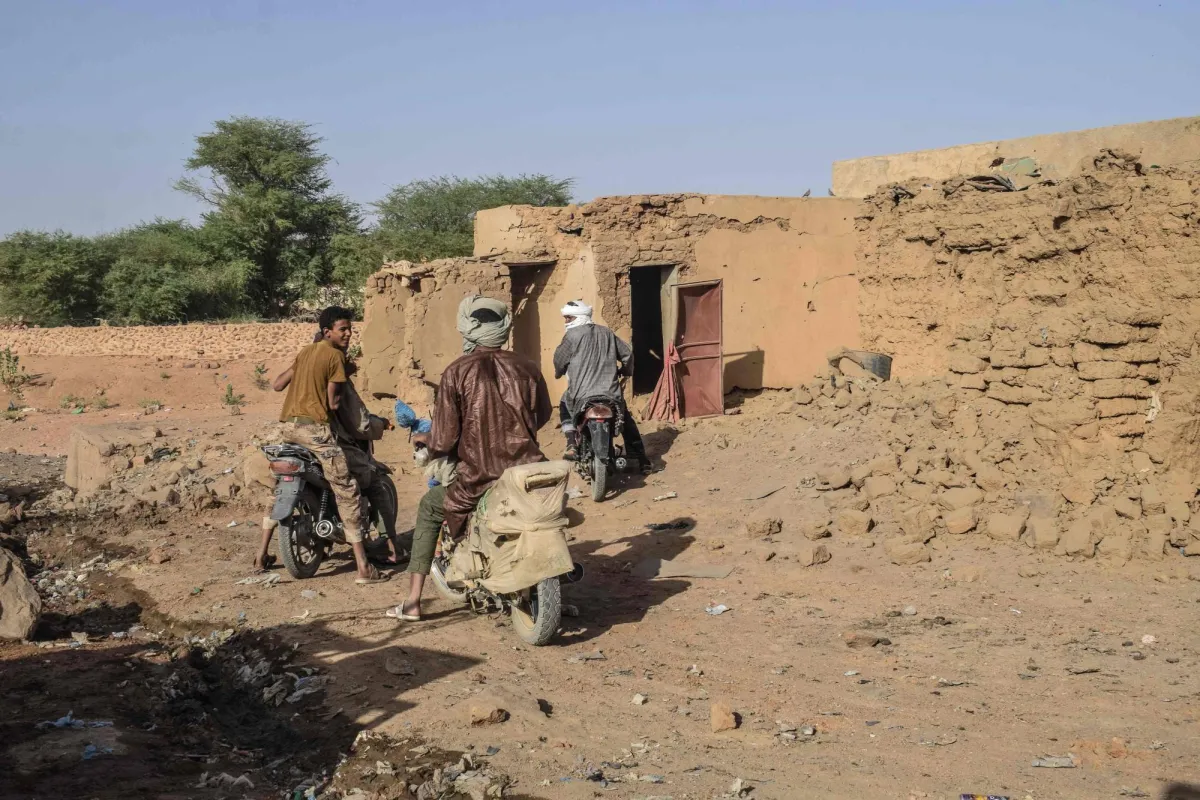
The Malian army announced the execution of a series of airstrikes that resulted in the destruction of a terrorist base housing several fighters, approximately 40 kilometers southwest of the capital Bamako. These operations are part of the army's efforts to combat armed groups that threaten security in the country.
In an official statement, the army clarified that the terrorist base was located at the southern exit of the Kenibawli forest, near the town of Sibi, which lies along the national road connecting Mali to Guinea. This area is considered a stronghold of the 'Macina Liberation Front,' which is part of the 'Support Group for Islam and Muslims' linked to Al-Qaeda.
Details of the Operation
The Malian army reported that a group of fighters, motorcycles, and equipment hidden under trees were detected, prompting the execution of precise airstrikes. After the strikes, survivors of the attack were tracked down and targeted again while gathering under a tree. Activists on social media circulated videos showing the airstrikes carried out by the army, which depicted militants moving between mud houses.
The army did not disclose an exact casualty count from the strikes but confirmed its commitment to pursuing armed groups until their last strongholds in the country are dismantled. This comes amid rising security threats in the region, especially following the violent attacks that struck Bamako on April 25, which resulted in the death of Defense Minister General Sadio Kamara.
Background & Context
Security challenges in Mali are escalating, as the country has witnessed a surge in armed group activities since 2012. Terrorist attacks have increased in recent years, leading to a deterioration of the security and humanitarian situation in the country. United Nations Secretary-General António Guterres noted that the situation in Mali has seriously deteriorated since last April, resulting in a humanitarian emergency.
The 'Macina Liberation Front' is one of the main armed groups threatening the country's stability, having launched several attacks on the capital Bamako. In this context, the Malian army, with support from Russian African Legion forces, is striving to regain control of areas held by armed groups.
Impact & Consequences
The repercussions of these military operations extend beyond Mali's borders, affecting regional security in the African Sahel. The rise in terrorist activities in Mali threatens the stability of neighboring countries, necessitating intensified regional and international cooperation to combat terrorism.
Moreover, the deteriorating security situation in Mali could exacerbate humanitarian crises, as the population suffers from shortages of food and water, alongside mass displacement. Guterres warned that the worsening security situation could lead to a further deterioration of humanitarian conditions in the region.
Regional Significance
The security situation in Mali serves as an indicator of the challenges faced by Arab countries in combating terrorism. The rise of terrorist activities in the Sahel region could impact the security of neighboring Arab nations, calling for enhanced cooperation among Arab states to address these challenges.
In conclusion, the situation in Mali remains a significant concern for the international community, as the current security challenges require an effective and comprehensive response to ensure regional stability.