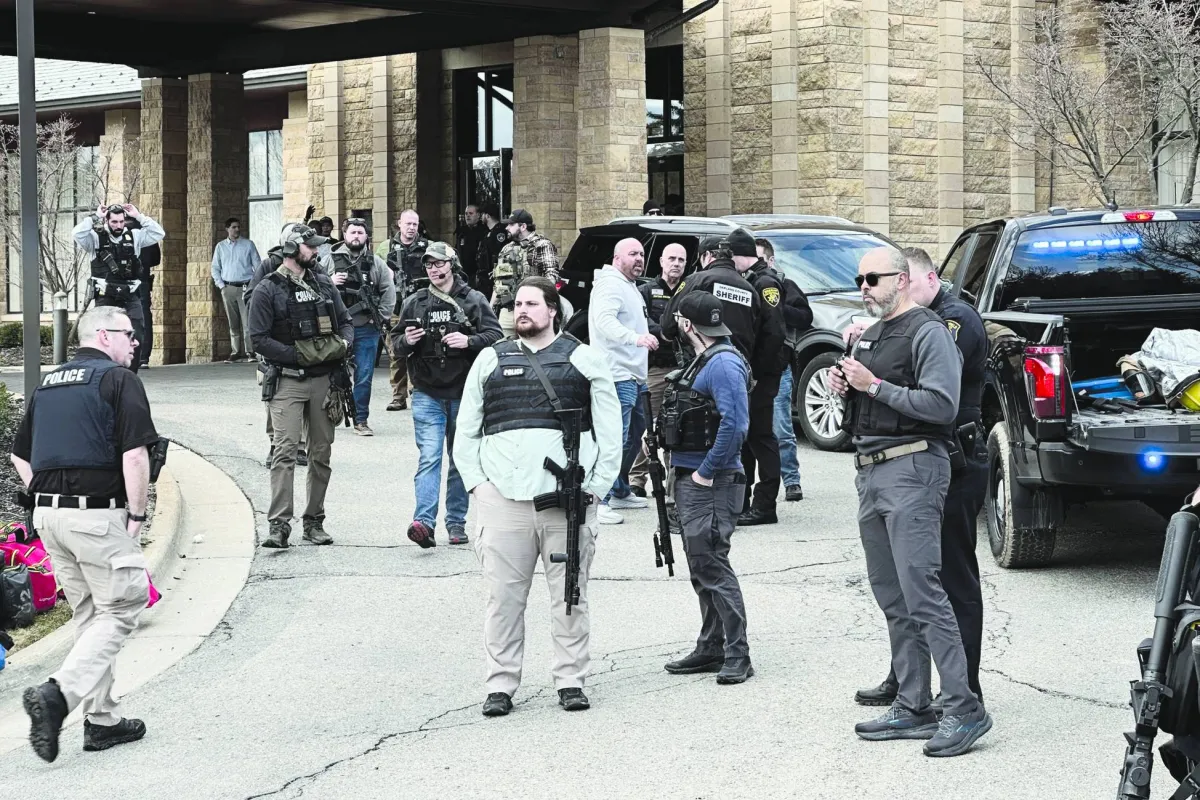
The FBI (Federal Bureau of Investigation) disclosed that the man who invaded a Jewish synagogue in Detroit in early March was plotting a terrorist attack inspired by the Lebanese group Hezbollah. According to the Associated Press, the incident occurred in West Bloomfield, where the accused, Ayman Ghazali, demonstrated his intentions by filming a video prior to the attack, in which he declared his aim to "kill as many of them as possible."
Ghazali, aged 41, spent several hours in the parking lot before crashing his truck into the synagogue, resulting in the injury of a security guard. He exchanged gunfire with another guard, causing panic within the synagogue, which housed around 150 children and staff members. Fortunately, none of them were harmed, as rescue teams were able to evacuate the building swiftly.
Details of the Incident
In detail, Jennifer Rounian, head of the FBI office in Detroit, explained that Ghazali had meticulously prepared his plan, using a truck loaded with fireworks and gasoline containers, which heightened the danger of the attack. After crashing into the synagogue, the truck caught fire, leading to smoke rising in the area.
This incident is part of a series of attacks targeting Jewish communities in the United States, which have increased in recent years. These incidents have raised significant concern among Jewish communities, prompting authorities to enhance security measures around places of worship.
Background & Context
This incident comes at a time when tensions between various communities in the United States are escalating, with anti-Semitic attacks noticeably increasing. According to previous reports, attacks on Jewish communities have risen significantly in recent years, reflecting a surge in hatred and violence within American society.
Hezbollah, which is considered a terrorist organization by many countries, including the United States, has a significant influence in the region, and some individuals exploit its ideologies to justify acts of violence. This raises questions about how these groups affect individuals in Western communities.
Impact & Consequences
The repercussions of this attack could be far-reaching, potentially leading to increased tensions between different communities in the United States, as well as bolstering security measures around places of worship. Additionally, this incident may contribute to the reinforcement of anti-Islamic rhetoric, which could exacerbate social conditions.
It is also important to note how this attack might affect relations between the United States and countries considered allies of Hezbollah, as this incident could be used as a pretext to justify further actions against those nations.
Regional Significance
Although the incident occurred in the United States, it has implications for the Arab region, as it could be used as a tool to justify military or political interventions in countries viewed as allies of Hezbollah. Furthermore, the rise of violence in the United States may amplify extremist rhetoric in some Arab countries, increasing tensions in the region.
Ultimately, it requires the international community to address the root causes of these phenomena by promoting dialogue and understanding among different cultures and providing support to communities affected by violence.