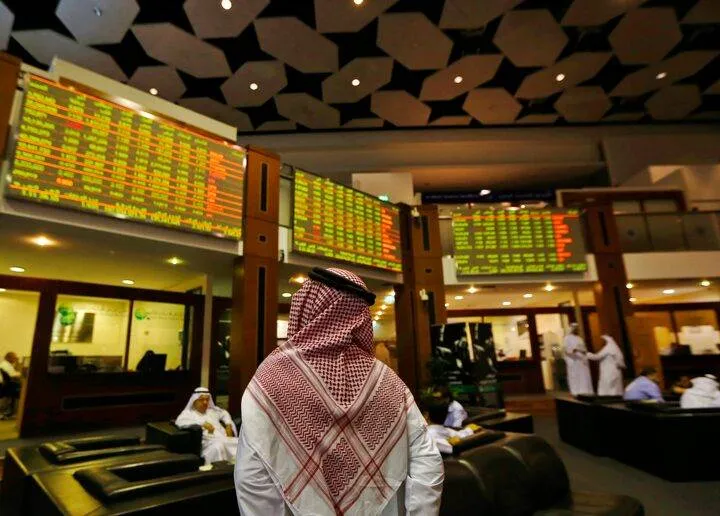
There is a calm prevailing in the Gulf stock markets during early trading on Tuesday, as caution grips investors ahead of the deadline set by U.S. President Donald Trump for Iran to reopen the Strait of Hormuz for shipping traffic. This comes amidst ongoing tensions stemming from the conflict between the United States, Iran, and Israel.
Since the outbreak of war in late February, Iran has effectively disrupted shipping in the Strait of Hormuz, which is considered a vital corridor for global oil supplies, raising concerns about rising inflation and its impact on financial markets.
Details of the Event
The Trump administration has set a deadline until 8 PM Eastern Time on Tuesday (00:00 GMT Wednesday) to reach an agreement with Iran. Meanwhile, Iran has announced its desire for a permanent end to the war but has rejected pressures to reopen the strait, further increasing uncertainty in the markets.
In Saudi Arabia, the main index fell by 0.5%, with shares of Al Rajhi Bank declining by 0.2% and shares of Saudi Basic Industries Corporation (SABIC) dropping by 1.6%. In Dubai, the index decreased by 0.3%, with leading real estate company Emaar's shares falling by 2.3%. Conversely, the Qatari index saw a slight increase of 0.1%, supported by a 0.8% rise in Qatar Islamic Bank shares.
Background & Context
The Strait of Hormuz is a critical point through which approximately 20% of global oil supplies pass, making any disruption in shipping there have significant implications for the global economy. As tensions escalate, concerns grow that any military escalation could exacerbate economic conditions, particularly with rising oil prices.
These events come at a time when the global economy is grappling with the repercussions of the COVID-19 pandemic, complicating the economic landscape further. The war in the Middle East has affected supply chains and energy prices, putting additional pressure on financial markets.
Impact & Consequences
Attention is focused on how these tensions will affect financial markets, as investors shy away from risks amid uncertainty. Some analysts have noted that Trump's recent statements could lead to greater market volatility, as investors are no longer reacting with the same sensitivity to every statement.
In Japan, the Nikkei index showed notable fluctuations, closing up by 0.03% after experiencing swings between gains and losses. The Japanese economy is particularly vulnerable to the effects of conflict on shipments and prices, given that the country relies on the Middle East for about 90% of its oil needs.
Regional Significance
Arab countries are significantly affected by the tensions in the Strait of Hormuz, as oil is one of the main sources of revenue. Any escalation in the conflict could lead to rising oil prices, impacting Arab economies and increasing inflationary pressures.
As this situation unfolds, the question remains about how events will develop in the coming days and whether diplomatic efforts will lead to a calming of tensions or if uncertainty will continue to affect the markets.